What Limb Regeneration Means
Whole-limb regeneration means an animal replaces a missing appendage with a new structure that includes the right tissues and a useful arrangement, rather than merely sealing the wound. An adult axolotl can regrow an amputated forelimb, including skin, cartilage, bone, muscle, blood vessels, and nerves. A review of salamander models reports that visible complex features can return in about one month, followed by another month of growth toward the original size. These timings vary with species, age, temperature, injury level, and laboratory conditions.
Salamanders are the clearest vertebrate examples. Newts and other urodeles also rebuild complete limbs, while frogs lose much of this capacity as they mature. Some fish replace entire fins, but a fin is not a tetrapod limb: it has a different skeleton, muscle plan, and developmental history. Invertebrates add a wider range of examples. Crabs and spiders can replace legs after moulting, and some sea stars regrow arms, although the new arm may depend on how much of the central disc remains.
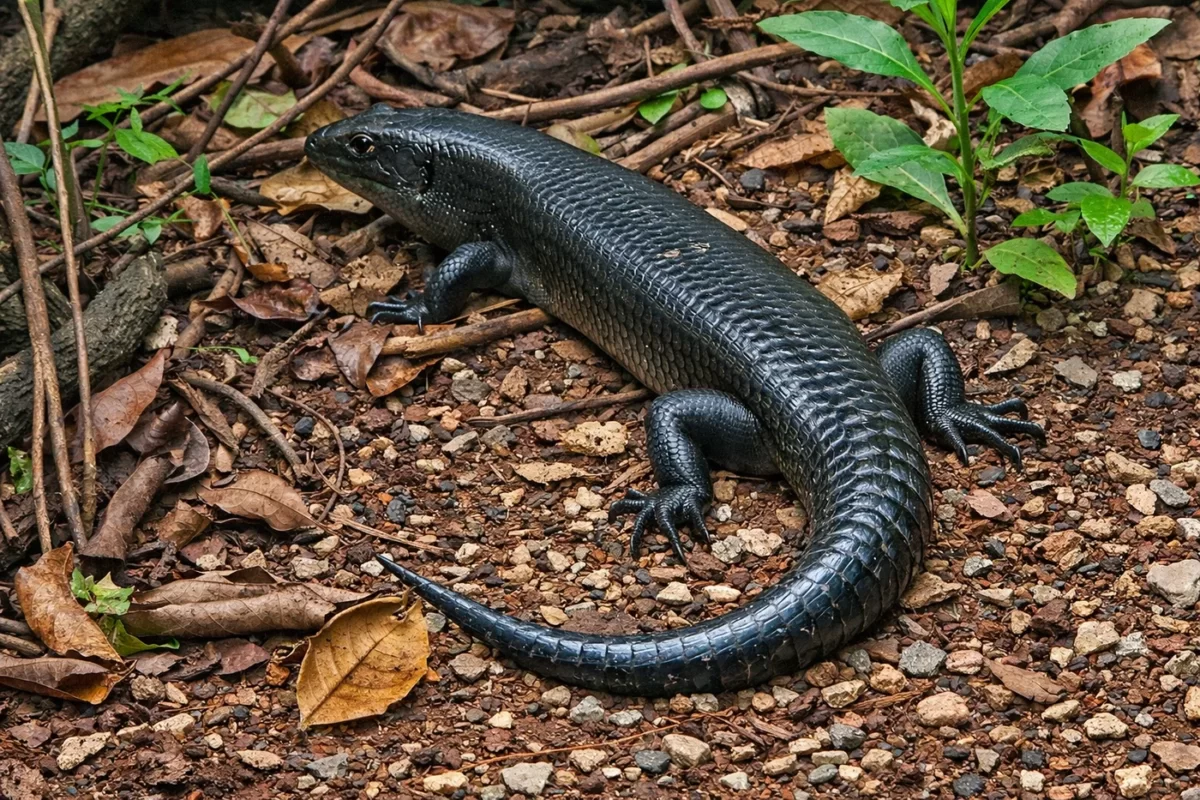
The word “entire” needs care. A replacement may match the missing part in outward form while differing internally, as seen in lizard tails. A regenerated limb can also be smaller during early growth or have subtle defects that a casual view misses. Regeneration is therefore a biological process with measurable boundaries, not a universal repair power.
Where Regrowth Goes Wrong
The first error is treating every replacement appendage as a complete limb. A lizard tail, a crab claw, and an axolotl leg do not rebuild through the same sequence. The lizard tail usually has a cartilage tube instead of the original vertebral column, while an axolotl can recreate a patterned limb with its major tissue classes. Comparing them without naming the anatomy turns a useful fact into a misleading claim.
A second error is assuming that any cut triggers a new limb. In salamanders, wound closure must be followed by a permissive wound epidermis, nerve signals, inflammatory coordination, and cells carrying positional information. A shallow wound can heal as skin. In some experiments, denervation or dense scar-like tissue blocks the later steps. The location and shape of the wound matter as much as the animal’s reputation for regrowth.
Readers also encounter exaggerated human-medicine claims. An axolotl’s blastema is a research model, not a ready-made treatment for an amputee. Human adults generally repair skin and bone to a limited degree, and people can regenerate only narrow structures such as some fingertip tissue under restricted conditions. Laboratory findings can suggest mechanisms, yet they do not prove that a human limb can be regrown.
How Regeneration Proceeds
Close The Wound Carefully
After an axolotl limb is cut, skin cells spread across the exposed surface and form a wound epidermis. This covering is not just a scab. Signals from the wound surface interact with nerves and nearby tissues, creating conditions in which a blastema can emerge. In a laboratory time course, the wound epidermis begins forming within roughly 24 hours, although the exact pace depends on the animal and the injury. The lesson is practical: healing and regeneration overlap, but they are not synonyms.
Researchers assess the wound by looking at closure, tissue architecture, inflammation, and later outgrowth. A closed wound with no blastema is a successful repair of the surface, not proof of limb replacement. In a study or classroom observation, record the injury level and the day on which a visible bump appears instead of relying on a final photograph alone.
Build A Blastema
The blastema is a growing collection of progenitor cells beneath the wound epidermis. It is not a bag of unrestricted stem cells. Connective-tissue cells, muscle progenitors, nerve-associated signals, immune cells, and other local contributors take part, with lineage limits that vary by tissue and species. The cells multiply, move toward the injury, and respond to signals that shape the next part of the limb.
Macrophages help coordinate the response to injury, and nerves support the wound environment. This does not mean inflammation is simply good or bad. Too little coordination can interrupt regeneration, while uncontrolled damage can destroy the conditions the blastema needs. Researchers therefore examine cell behavior and signaling instead of describing the blastema as an unexplained miracle.
Read Positional Signals
A new limb must know where a wrist belongs relative to an elbow and shoulder. Salamander connective-tissue cells retain positional information about their place in the original limb. When these cells meet across the wound, their interactions help fill missing intermediate structures. Grafting experiments have shown that blastemas retain regional identity: a distal blastema can form a foot-like structure, while a more proximal one can generate a longer segment under the right conditions.
This positional memory explains why a partial injury can sometimes regenerate the missing distal portion without rebuilding the section that remains. It also explains why the same cell types cannot simply be mixed at random and expected to form a normal limb. Pattern depends on relationships among cells, signals, nerves, and the wound surface.
Differentiate And Integrate
Once the blastema reaches a suitable stage, cartilage, muscle, skin, blood vessels, and nerves develop in an ordered pattern. The new tissues connect with the stump, restore movement, and grow toward an appropriate scale. A review describes salamander regeneration as a sequence from wound closure to blastema formation, patterning, tissue differentiation, and later growth. Researchers often call this epimorphic regeneration because a new structure forms from a proliferating mass of cells at the injury site.
Integration is the test that separates a mound of tissue from a functioning limb. Scientists inspect joints, skeletal alignment, nerve connections, circulation, muscle contraction, and behavior. The time needed can span weeks or months. A dated lab note, such as a day-30 imaging record, is more useful than the vague statement that a limb “grew back.”
Evidence From Real Animals
Consider an anonymized teaching-lab scenario: a juvenile axolotl loses a forelimb at a measured level. The researcher photographs the stump daily, records water temperature, and notes wound closure followed by a small blastema. Over subsequent weeks, the outgrowth develops a hand-like end and then grows toward the animal’s other limb size. The result illustrates a repeatable biological pattern, but it does not establish that every axolotl, injury level, or housing condition will produce an identical result.
A second scenario involves a shore crab that loses a walking leg before a moult. A small replacement appendage may appear inside the limb bud and expand after the old exoskeleton is shed. The crab’s cycle matters because the rigid exoskeleton limits expansion between moults. This is whole-appendage replacement in a different body plan, not evidence that crabs use an axolotl-style blastema or that their result maps directly to human anatomy.
Sea stars show another boundary. An arm can regrow when the remaining central disc contains enough tissue, but an arm fragment may not become a whole animal in every species. Reports must state the species, fragment location, and outcome. A headline that says “starfish regrow limbs” compresses several distinct experiments into one phrase.
Compare Regenerative Abilities
| Animal group | Replacement | Main limit | What to check |
|---|---|---|---|
| Axolotl | Complete limb | Injury and age affect the result | Blastema, pattern, function |
| Newt | Complete limb | Species and conditions vary | Tissue integration |
| Crab or spider | Leg or claw | Moulting cycle | Segment and size match |
| Sea star | Arm, sometimes more | Central disc tissue | Species and fragment position |
| Lizard | Tail, not a true limb | Simpler internal structure | Vertebrae and muscle anatomy |
Use the table as a reading checklist: identify the appendage, ask what counts as a match, then look for evidence of structure and function. A claim is stronger when it names the species, life stage, injury level, observation period, and measurement method. A photograph alone cannot show nerve function or internal bone arrangement.
Mistakes Reading The Evidence
Do not call a fin a leg because both help an animal move. Fins contain rays or other supporting structures and follow a different body plan. Do not call a lizard tail a perfect replacement when the regenerated tail has a cartilage rod. Do not transfer a crab’s moult-dependent regrowth to mammals without explaining the anatomical and physiological gap.
Another mistake is citing a review as if it were a new experiment. Reviews are useful maps, but readers should trace a striking number back to the original paper and its methods. Check whether an outcome came from a controlled laboratory study, a field observation, or a diagrammatic summary. A 2015 review of the axolotl blastema, for example, synthesizes decades of grafting and wound-healing research; it is not a single trial.
Finally, avoid reading “regeneration” as “immortality.” Regrowth costs energy, depends on a suitable wound response, and can slow with age or poor conditions. Even a well-regenerated limb must reconnect with the body. A careful account describes both the impressive repair and the biological conditions that make it possible.
FAQ
Which animal regrows a complete limb best?
Adult axolotls and other salamanders are among the clearest vertebrate examples because they can rebuild a patterned limb with bone, muscle, skin, nerves, and blood vessels.
Can humans regenerate an entire arm?
No. Human adults do not naturally regrow an entire arm, although limited repair occurs in tissues such as skin, bone, and some fingertip injuries.
Do lizards regenerate their legs?
No. Many lizards regenerate tails, not complete legs, and the replacement tail usually has a simpler internal skeleton than the original.
What is a regeneration blastema?
It is a temporary, growing group of injury-responsive progenitor cells and supporting signals that forms beneath the wound surface and develops into missing structures.
Does regeneration happen after every amputation?
No. Success depends on species, age, injury location, wound geometry, nerve input, immune coordination, and the local signals that start pattern formation.
Author's Insight
The strongest evidence comes from matching anatomy with function, not from a dramatic before-and-after image.
Salamanders show that adult tissues can retain positional information and cooperate after severe injury, yet their biology is not a ready blueprint for human care.
Comparisons become useful when each animal’s body plan, life stage, wound conditions, and definition of “complete” are stated.
The most productive lesson is conditional: regeneration depends on a coordinated environment, not on a single magical cell type.
Key Takeaways
Axolotls and newts can regenerate complete adult limbs, while crabs, spiders, and some sea stars replace appendages through different body-plan rules. The axolotl sequence includes wound closure, a blastema, positional patterning, tissue differentiation, and functional integration. Evidence should name the species and measure structure as well as use. These animals help researchers study repair, but their abilities do not show that human limbs can currently regrow.