The Color Story
A flamingo’s pink plumage begins with a meal, not a pink feather gene. Young birds hatch covered in soft white or gray down, then grow darker or rosier feathers as they eat foods containing carotenoids, a family of natural pigments. Algae, brine shrimp, small crustaceans, mollusks, and other aquatic food can carry these yellow, orange, or red compounds. The bird digests them, modifies some of them, and sends selected pigments into growing feathers.
The shift takes time because feathers are made from keratin and do not refill with color after they finish growing. A new feather receives pigment while it develops inside a follicle. Once that feather is fully formed, its shade changes little until it is replaced by a molt. Smithsonian’s National Zoo reports that chicks develop some pink at about six months, light pink plumage by their first birthday, and darker pink tones around two or three years. Adult color therefore reflects diet across repeated feather growth, not a sudden change after hatching.
Color varies among species, colonies, seasons, and individual birds. American flamingos can show vivid pink, orange, or red on the head, neck, legs, and wings, while black flight feathers appear when the wings open. A pale bird is not automatically sick, and a deeper shade is not proof of superior fitness. Food supply, age, molt timing, feather wear, and breeding demands all shape what an observer sees.
Why Young Birds Look Gray
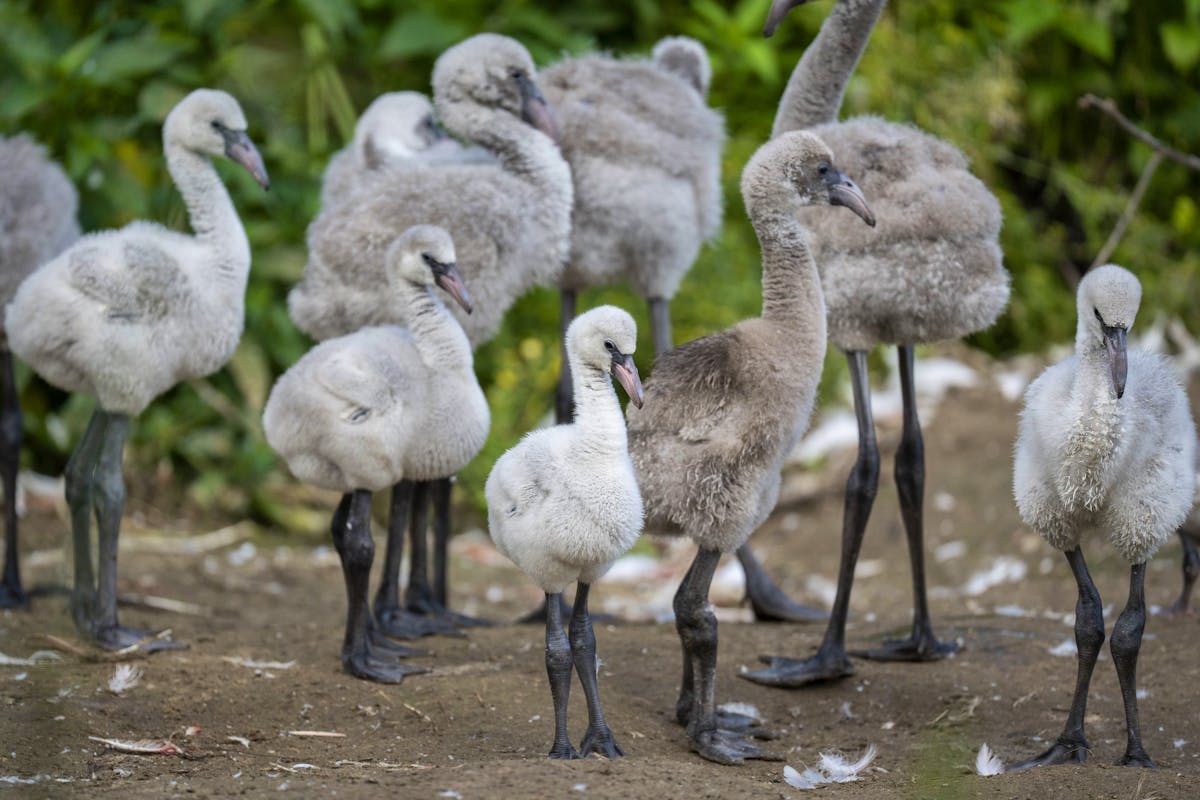
A chick’s gray or white down suits a life that begins on a nest mound rather than in a fashion display. It is soft insulation, not an adult signal, and it is replaced through normal growth. The first feathers are not simply adult feathers waiting to turn pink; they are part of a different juvenile coat with different timing and pigment exposure.
Flamingo parents feed hatchlings crop milk, a nutritious liquid made in the crop or upper digestive tract. Both parents can produce it. The liquid contains fat, protein, and the same general pigment pathway linked with adult color, but a chick does not begin by filtering a mature bird’s full menu. As the young bird becomes able to walk, swim, and feed itself, algae and tiny aquatic animals enter its diet and pigment intake becomes more direct.
A young flamingo may join a creche, a group of juveniles watched by adults, after it gains mobility. That social setting can make a colony look like a patchwork of gray, brown, pale pink, and bright adult birds. The pattern is normal. It reflects age and feather replacement rather than separate bird species.
Feeding For Color
Follow The Pigment Path
Carotenoids begin in the food web. Algae make or contain pigment compounds; brine shrimp and other small animals eat algae; flamingos consume both kinds of prey. Digestion releases the compounds, and the bird’s metabolism changes some molecules before they reach skin, bill, legs, or feather follicles. Astaxanthin, a red carotenoid associated with aquatic food, is one compound linked with flamingo plumage.
This pathway explains why a captive flock receives a diet formulated for flamingos rather than a random bowl of vegetables. San Diego Zoo describes special pellets containing nutrients and pigment, served beside water so birds can use their normal pumping-and-filtering feeding motion. The goal is a balanced ration that meets the bird’s biology, not an attempt to dye feathers from the outside.
Read The Bill And Tongue
Flamingos feed with the bill submerged and often held upside down. Their tongue pumps water through comb-like lamellae along the bill edges. The lamellae trap food while water leaves. Fine-particle feeders favor algae and very small organisms; larger flamingo species also take brine flies, shrimp, mollusks, and other invertebrates from mud or shallow water.
That design links anatomy to color. A bird must reach pigment-rich food, filter or collect it, digest it, and deposit the resulting compounds during feather growth. A habitat with shallow saline or brackish water can support this chain, but water depth, salinity, rainfall, algae abundance, and disturbance can change what is available.
Track Feather Timing
Inspecting one feather cannot reveal a bird’s entire diet. Older feathers may be faded by sun, abraded at the tips, stained by mud, or close to replacement. Fresh feathers can look richer because their surface is intact. A molt creates a moving record: newly grown feathers may show current food conditions while retained feathers show an earlier period.
Keepers and researchers compare several body areas, age classes, and dates rather than relying on one photograph. A simple observation log can record location, age estimate, lighting, visible feather wear, and whether the bird is feeding. A note made on 12 May cannot be compared fairly with a backlit image from October unless those conditions are recorded.
Use A Whole-Bird Check
Color is one clue among many. Watch appetite, posture, movement, breathing, droppings, feather condition, and interactions with flock mates when assessing a captive bird. A wild bird should be observed from a respectful distance. Brightness alone cannot diagnose nutrition, disease, or stress.
In a managed setting, diet changes belong to trained veterinary and nutrition teams. Extra shrimp or pigment powder is not a safe shortcut: dose, calories, minerals, water quality, and the bird’s species all matter. A food plan should be matched to the bird’s life stage and reviewed when growth, breeding, illness, or molt changes its needs.
Case Examples
Consider an anonymized zoo chick named Bird A. At six months, its bill is becoming more curved and a few new feathers are pale pink, while most down remains gray. Keepers do not treat that contrast as a defect. They check growth, feeding behavior, and the transition from crop milk to the flock diet, then watch later feather growth. By the next molt, the color map offers more information than a single early photograph.
Bird B lives in a shallow coastal lagoon and appears paler than nearby adults after a season of poor rainfall. That observation does not prove hunger: age, breeding effort, feather wear, and cloud cover could also contribute. A field team records water conditions, food samples, plumage, and flock behavior over time. The useful conclusion is cautious: pigment access may have changed, but the cause requires repeated evidence.
A Practical Checklist
Use this checklist when interpreting a flamingo’s color. It supports observation and questions; it is not a veterinary diagnosis.
| Clue | What It May Show | What It Cannot Show Alone | Useful Next Step |
|---|---|---|---|
| Gray down | Juvenile stage | Poor health | Check age and growth |
| Pale new feathers | Early pigment exposure or variation | A definite deficiency | Compare across molts |
| Deep pink feathers | Pigment-rich diet and mature plumage | A health guarantee | Observe the whole bird |
| Patchy color | Molt or feather wear | A single cause | Record date and conditions |
Common Mistakes
The first mistake is treating pink as paint. Pigments are part of a biological route from food to a growing feather, so rubbing a feather or adding color to water does nothing useful. A second mistake is assuming every flamingo eats the same menu. Species differ in bill structure and prey, and local conditions change the balance between algae, crustaceans, mollusks, seeds, and other food.
A third mistake is comparing photographs without checking light. Sunset, reflected water, camera settings, wet feathers, and background color can make a bird look warmer or cooler. Take several views in neutral light when possible. Do not use an image alone to judge a wild bird’s condition.
A fourth mistake is confusing a juvenile with a pale adult. Ask about age and molt before drawing conclusions. A fifth is assuming a darker bird is healthier. Color can signal access to carotenoids, yet it does not replace checks of body condition, behavior, feather structure, or veterinary findings.
FAQ
Why are flamingos pink?
They gain carotenoids from foods such as algae and small aquatic animals, then deposit processed pigments in growing feathers and other tissues.
Are flamingo chicks born pink?
No. Chicks hatch with white or gray down and acquire pink feathers gradually as they grow, feed independently, and replace juvenile plumage.
Can a flamingo lose its pink color?
Yes. New feathers may be paler when pigment intake changes, and breeding, molt, wear, age, or food access can shift the visible shade.
What do flamingos eat for their color?
The menu varies by species and habitat, but algae, brine shrimp, other crustaceans, mollusks, insect larvae, and related aquatic food can supply carotenoids.
Does bright pink mean a healthy bird?
Not by itself. Plumage shade is one observation; appetite, movement, feather condition, body condition, and professional assessment give a fuller picture.
Author's Insight
Flamingo color is a visible record of biology connecting food webs, anatomy, metabolism, and feather growth. The gray-to-pink transition also shows why age matters when people interpret wildlife photographs. A careful observer separates what the color suggests from what it proves, then checks season, molt, lighting, and behavior. That habit turns a striking visual detail into a more accurate understanding of the bird’s life.
Key Takeaways
Flamingos are pink because carotenoids enter their bodies through food and reach feathers during growth. Gray or white chicks are normal, and adult shades emerge across months and several molts. Species, habitat, diet, age, feather wear, and breeding demands can all affect the result. Watch the whole bird, record conditions, and treat color as evidence to interpret rather than a stand-alone health test.