Forgotten Marvels
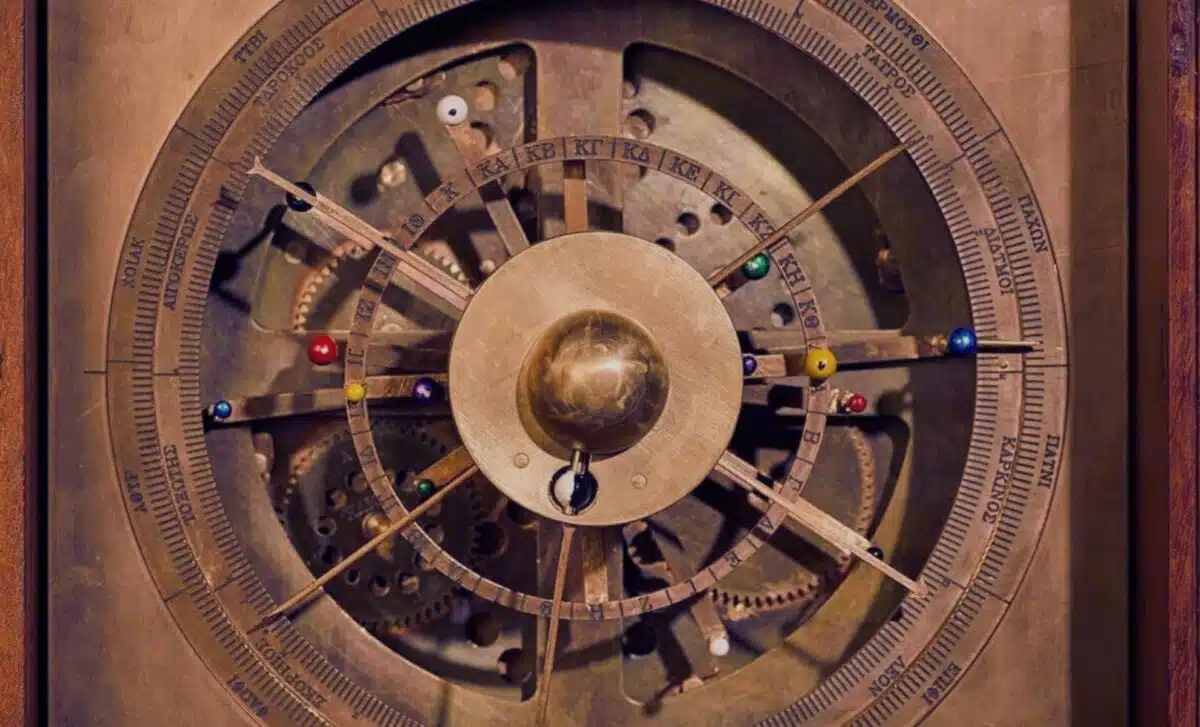
History remembers pyramids, aqueducts, and cathedrals because their scale is easy to see. Smaller systems often disappear from the story even when they demanded sharper reasoning. A bronze instrument recovered from a shipwreck used at least 30 surviving gear wheels with teeth about 1.5 millimetres long. In 793, Charlemagne’s builders cut a canal across the watershed between the Rhine-Main and Danube catchments. These are not myths about lost superpowers: they are physical remains, excavated layers, inscriptions, and calculations that reveal what people could design with the materials at hand.
The phrase “history forgot” needs care. None of these works vanished completely; specialists, local communities, and museum records kept them alive. The forgotten part is their absence from the usual public timeline. Their stories matter because an impressive result is never just a clever object. It depends on skilled labour, supply chains, maintenance, measurements, and a setting that rewards the design. A failed canal can teach as much about planning as a working instrument.
This survey follows four cases with different outcomes. The Antikythera mechanism compressed astronomical knowledge into a portable display. Fossa Carolina attempted to connect two river networks but met unstable ground and water problems. Hero’s aeolipile turned heated water into rotary motion, though its surviving description does not show an industrial use. At Hegra, Nabataean channels and cisterns made life possible in a dry settlement. Together they show why old engineering deserves analysis rather than automatic praise.
Why Marvels Disappear
A design can be forgotten after its use case ends. A calendar instrument loses its audience when a different calendar becomes standard; a canal loses its purpose when shipping routes and political priorities change. Written knowledge may survive in a manuscript while the workshop practice behind it disappears. Bronze parts can be melted down, timber rots, and earthworks flatten into fields. The physical record becomes partial long before the human memory becomes clear.
Modern observers also misread fragments. A gear train invites a confident reconstruction, but missing teeth and plates leave several plausible arrangements. A large ditch looks like a canal, yet excavation must establish its date, water level, banks, and intended connection. A steam device can demonstrate a principle without serving as a practical engine. Calling every unusual object a “lost invention” confuses possibility with proof.
Scale creates another trap. A project may look simple because its surviving feature is simple. The difficult work could have been surveying a watershed, controlling a spring, cutting a stable slope, or keeping a machine aligned. Ancient builders rarely left a modern specification sheet. Researchers combine tool marks, sediment, corrosion, inscriptions, site data, and comparisons with related sites to reconstruct the chain of decisions.
How To Read Old Designs
Start With The Evidence
Separate what survives from what a reconstruction adds. The Antikythera fragments contain gears, plates, and engraved instructions; a complete wooden case is an inference. The Fossa Carolina has excavated canal sections and dated structural timbers; a fully navigable route from sea to sea remains a larger claim. This distinction makes an article more reliable and gives readers a way to check its language.
Look for the evidence type behind each statement. A date may come from stratigraphy, radiocarbon testing, an inscription, or a historical record, and those methods answer different questions. A gear tooth count is a direct observation, while the calendar cycle inferred from that count is an interpretation. In practice, a good museum catalogue or peer-reviewed excavation report is more useful than a dramatic caption with no provenance.
Rebuild The Operating Context
Ask who used the design, where it worked, and what maintenance it demanded. An astronomical display might have served a scholar, navigator, or wealthy patron rather than a whole population. A desert settlement needed collection surfaces, storage, channels, and rules for distributing water; one clever pipe could not solve drought alone. Context turns an isolated artefact into a system with labour and operating costs.
Materials reveal similar limits. Bronze gears tolerate fine tooth profiles but require casting, cutting, drilling, and careful assembly. Earthen banks are cheap to extend but vulnerable to seepage and collapse. Stone-lined cisterns reduce losses but consume quarrying and transport effort. When reading a reconstruction, match the proposed performance to the material record and to the tools that were available at the site.
Compare Claims With Measurements
Numbers make old designs easier to test. Record dimensions, slopes, dates, tooth counts, storage volumes, and distances instead of repeating adjectives. The Fossa Carolina research identified a built length of at least 2,300 metres in surveyed remains, with a conceptual channel width of roughly 5 to 6 metres and water depth of at least 0.6 to 0.8 metres. Those figures describe an ambitious earthwork without proving that large cargo vessels used the whole route.
Experimental archaeology can then test a narrow question. A replica gear can examine motion; a scaled channel can explore flow; a reconstructed cistern can estimate evaporation and leakage. Such trials do not recreate the past perfectly. They identify which assumptions are physically plausible and which fail under stated conditions. A side detail matters here: even a one-millimetre error in a small gear tooth can alter how two wheels mesh.
Case Examples
The Antikythera mechanism is the clearest case of compact calculation. Greek sponge divers recovered it in 1901 from a Roman-era shipwreck, and later imaging revealed a complex arrangement of bronze gears and inscriptions. Current research dates the instrument broadly from the second half of the second century BC to the early first century BC. Its displays model cycles linked to the Sun, Moon, eclipses, and calendars. The surviving fragments do not answer every question about its maker, case, or user, but they do establish a level of fine mechanical work rarely represented in surviving ancient objects.
Fossa Carolina shows a different kind of ambition. Charlemagne initiated the work in 792–793 to bridge the European watershed between the Swabian Rezat and the Altmühl. The intended connection would have joined the Rhine-Main and Danube systems. Excavation and geoarchaeology indicate a canal at least 2.3 kilometres long in the preserved area. Historical accounts describe heavy rain and collapsing ground, while later research maps construction traces and sediment. Its failure was not proof of foolishness; a summit canal had to balance excavation, water supply, slope stability, and traffic needs at once.
Hero of Alexandria described the aeolipile, a hollow sphere that spun as heated water produced escaping steam through bent tubes. The device is a real early demonstration of reaction force, not evidence of a hidden industrial age. Its low power, heat losses, awkward fuel handling, and limited control made it a poor substitute for later engines. The lesson is useful: showing that a principle works and turning that principle into a dependable machine are separate engineering achievements.
Hegra, known in antiquity as al-Hijr, illustrates infrastructure rather than a single spectacular object. Nabataean communities in northwest Arabia used wells, channels, cisterns, and rock-cut features to collect and manage scarce water. The site’s monumental tombs attract attention, yet settlement depended on less photogenic works that moved and stored water through a dry environment. Archaeological interpretation must distinguish a channel’s date and function from a modern assumption about its exact flow. The system’s success came from many modest elements arranged around rainfall, terrain, and demand.
Consider a planning team studying an old canal trace before a walking trail is routed across it. The team first checks maps, sediment, sections, and drainage rather than treating the ditch as a decorative relic. If the bed still channels stormwater, the trail needs a crossing that does not block flow. The case connects historical research with a present safety decision while leaving the old builders’ original success or failure open to evidence.
Quick Comparison Guide
| Case | Main problem | Evidence | Main limit |
|---|---|---|---|
| Antikythera | Representing repeating sky cycles | Gears, plates, inscriptions | Many parts are missing |
| Fossa Carolina | Crossing a watershed | Earthworks, timbers, sediments | Stability and water supply |
| Aeolipile | Turning steam into motion | Written description and replicas | Low practical power |
| Hegra water works | Collecting scarce rainfall | Wells, channels, cisterns, site data | Flow histories remain partial |
Use the guide as a starting checklist. Identify the resource being controlled, the measurable feature that survives, the labour hidden behind it, and the failure mode. Then ask what the design did for its users rather than ranking it by how strange it looks today. This method keeps a small instrument, a failed canal, a steam demonstration, and a water network in the same conversation without pretending they solved the same problem.
Common Mistakes
The first mistake is treating absence as proof. A missing manual does not prove that a machine was secret, and a missing machine does not prove that a written description was never built. The second is treating a modern reconstruction as an original. Replicas often use better tools, safer materials, and simplified parts; their performance answers a new question.
The third mistake is ignoring upkeep. Channels silt up, gears wear, banks slump, and cisterns need cleaning. A design that worked for one season may have required a labour schedule that no longer existed. The fourth is confusing a principle with a product. Hero’s spinning sphere demonstrates steam reaction, but that fact alone says nothing about useful torque, operating time, or cost.
Avoid these errors by naming the evidence, dating the claim, and stating its limit in the same paragraph. Check measurements against a scholarly excavation or museum record. When sources disagree, describe the disagreement and explain what each side can actually support. Curiosity becomes more durable when it can survive correction.
FAQ
What is the Antikythera mechanism?
It is a geared bronze astronomical instrument recovered from a shipwreck, built to represent calendrical and celestial cycles; its complete appearance and user remain partly uncertain.
Did Charlemagne finish Fossa Carolina?
Archaeology confirms substantial construction in 792–793, but the canal did not become the fully reliable Rhine-to-Danube shipping route its planners intended.
Was Hero’s aeolipile a steam engine?
It was a working demonstration of steam-driven rotation, but its recorded form lacked the control, power, and practical arrangement needed for sustained industrial work.
How did Nabataeans manage water at Hegra?
They combined wells, channels, cisterns, and shaped collection areas so rainfall and groundwater could support settlement in an arid setting.
How can old engineering claims be checked?
Compare the claim with excavation reports, dated materials, measurements, inscriptions, and repeatable reconstructions, then separate direct evidence from proposed function.
Author's Insight
These cases suggest that forgotten engineering is usually a story of context, not vanished genius. A device survives when its parts, records, and use remain legible; a system fades when maintenance and institutions disappear. The strongest interpretations connect material traces to measurable behaviour while admitting gaps in the record. That balance makes the past more interesting because it replaces mystery with difficult, testable questions.
Key Takeaways
The Antikythera mechanism, Fossa Carolina, aeolipile, and Hegra water works solved different problems with different levels of success. Their shared lesson is practical: judge a design by evidence, setting, upkeep, and limits. A strange object may reveal a precise calculation, a bold failure, or a modest system that kept a settlement alive. Read the surviving measurements first, then treat every reconstruction as an argument that can be improved when new evidence appears.