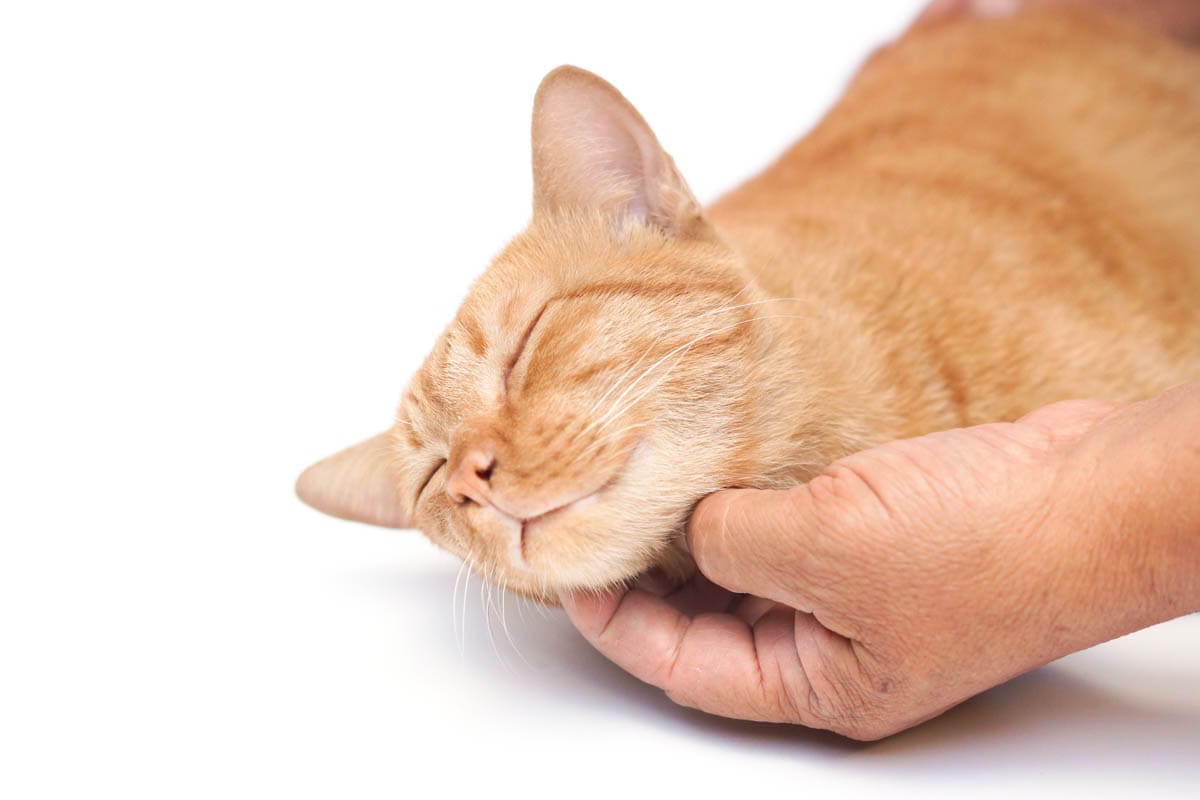
Why Cats Purr
A cat’s purr is a quiet, pulsing sound made during both breathing in and breathing out. In domestic cats, its fundamental frequency commonly sits near 25–30 Hz, far below the pitch of a meow. Researchers have found that an excised larynx can produce these frequencies without neural input or active muscle contraction, although living cats may add muscular control. The physical source is the larynx, while breathing supplies the airflow that sustains the vibration.
Kittens can purr very early in life, including while nursing. A mother and her young are close together, so a soft low-frequency signal can maintain contact without carrying far. Adult cats retain that social use. A relaxed cat may purr while being stroked, settling beside a familiar person, or greeting another trusted cat.
Contentment is only part of the explanation. Cats also purr while seeking food, waiting in a clinic, recovering from an injury, or coping with an unpleasant situation. A food-solicitation purr may contain a higher-pitched element that people hear as urgent. The same basic sound can therefore carry different messages. Context, timing, body posture, and changes from the cat’s normal behavior matter more than the noise by itself.
Studies of feline vocal communication often involve small numbers of animals, and purr duration and pitch vary between individuals. That limit matters: a single universal translation such as “I am happy” goes beyond the evidence. A purr is a clue, not a mood meter.
Read The Full Context
Start with the cat’s body. A loose posture, half-closed eyes, neutral or forward ears, normal movement, and a tail held without sharp flicking fit a comfortable interaction. Kneading, leaning into a hand, and choosing to remain nearby add support for a friendly interpretation. A cat that pauses petting by moving away is still communicating clearly, even if the purr continues for a few seconds.
Look for mismatch. A purring cat with flattened ears, wide pupils, crouched muscles, a tucked tail, rapid retreat, or repeated lip licking may be frightened or conflicted. A cat in pain may hide, stop jumping, groom less, react to touch, sleep unusually, or change its eating and litter habits. Purring can mask those signs rather than cancel them.
Place the sound on a timeline. Did it begin when food appeared, after a painful movement, during a car ride, or when a stranger entered the room? Does it stop when the cat has space, or continue while the animal remains rigid and withdrawn? The trigger and the recovery pattern often say more than volume.
Breathing deserves separate attention. Open-mouth breathing, visible effort, blue or gray gums, collapse, repeated coughing, or a resting breathing rate that stays unusually high calls for urgent veterinary advice. Do not interpret a soothing sound as evidence that breathing is fine. A video of the episode, recorded from a respectful distance, can help a clinic assess the change.
Helpful Responses
Match Contact To Consent
Offer a hand for the cat to inspect, then stroke briefly around the cheeks, chin, or shoulders if the cat stays engaged. Pause after a few seconds. Leaning closer or presenting the head suggests continuation; turning away, tensing, or swishing the tail suggests a break. This pause-and-check method reduces accidental overstimulation and gives the cat control over distance.
Keep sessions short at first, perhaps 30–60 seconds, then observe the recovery. Do not restrain a cat to create a cuddling opportunity. A purr during forced handling is not permission to continue. Children benefit from the same rule: sit still, touch gently, and stop when the cat leaves.
Track Changes At Home
Record what happened before the purr, how long it lasted, and what the cat did afterward. Add appetite, water intake, litter-box use, mobility, grooming, sleep, and reactions to touch. A simple note dated “8 August” is more useful than a vague memory that the cat “seemed off.” Compare the behavior with that individual cat’s usual pattern, not with a different cat online.
Patterns can reveal a practical next step. A purr that appears only during breakfast may be a learned request. A newly frequent purr paired with hiding or reduced appetite deserves a call to a veterinarian. A short video can capture posture and breathing that are hard to describe by phone.
Reduce Predictable Stress
Give the cat a quiet retreat with familiar bedding, water, and a litter tray kept away from food. During visitors, loud cleaning, or a move, leave the retreat open and let the cat choose when to emerge. Use a carrier left out in advance rather than presenting it only on clinic days. Familiar scent and gradual exposure can make the carrier less alarming.
During transport, secure the carrier, cover part of it without blocking ventilation, and keep the trip calm. Never use human pain medicine or calming products without veterinary direction. A purr may reflect an attempt to regulate arousal, but that possibility does not replace treatment for illness or injury.
Seek A Clinical Assessment
Contact a veterinary practice when purring changes alongside pain signs, vomiting, diarrhea, poor appetite, weight loss, lethargy, lameness, hiding, urinary difficulty, or a sudden personality change. Seek urgent help for breathing trouble, collapse, severe weakness, trauma, or inability to urinate. Cats often conceal illness, so a cluster of mild changes can matter even when the animal still accepts a stroke.
Bring the behavior log, medication list, and a short video if safe. A clinician may examine the mouth, heart, lungs, abdomen, joints, and nervous system before deciding whether blood work or imaging is needed. The goal is to explain the whole change, not to stop a sound.
Everyday Scenarios
Consider an anonymized indoor cat that purrs loudly when a person opens a food cupboard. The cat walks with the tail upright, rubs against a leg, eats normally, and settles after the meal. The timing, posture, and predictable result fit solicitation. The household can respond with a measured feeding routine rather than adding snacks every time the sound starts, while still checking that appetite and weight remain stable.
Now consider an older cat that begins purring under a bed after a jump from a sofa. It refuses a favorite treat, resists being lifted, and stays crouched. Here the purr cannot reassure the household that the cat is comfortable. Limiting further jumping, avoiding pressure on the sore area, and calling a veterinary practice are safer responses than prolonged petting or waiting for the sound to stop.
A third pattern can occur at a clinic: a cat purrs while trembling in a carrier and keeps its pupils wide. The sound may coexist with fear. The team can reduce handling, use a quiet room, and assess the cat’s physical signs. The lesson in each scenario is the same: interpret the event around the purr.
Purr Meaning Checklist
Use this comparison as a quick decision aid. It is not a diagnostic chart, and mixed signals are common.
| Pattern | Other clues | Useful response | When to escalate |
|---|---|---|---|
| Social comfort | Loose body, normal appetite, voluntary contact | Pause during petting and respect departure | A sudden change from baseline |
| Food request | Predictable timing, upright tail, cupboard focus | Keep meals measured and regular | Unusual hunger or weight change |
| Fear or pain | Crouching, hiding, tense muscles, altered routine | Give space and record the trigger | Breathing trouble, injury, or several signs |
For a day-to-day check, ask four questions: What happened just before the purr? Is the body loose or guarded? Are eating, movement, and elimination normal? Does the cat recover after the trigger ends? Three reassuring answers do not rule out disease, but guarded behavior or a new physical change raises the value of professional advice.
Common Mistakes
The first mistake is treating purring as proof of happiness. Cats may purr in a stressful carrier or while unwell, so the sound should be weighed with posture and routine.
The second is assuming a quiet cat is unhappy. Some cats purr softly, briefly, or rarely. Personality, age, hearing, social history, and the setting shape vocal behavior. A healthy cat does not need to purr on a schedule.
The third is touching a cat that is trying to leave. Continued handling can turn a mild interaction into a defensive one. Let the cat create distance, then invite contact later.
The fourth is searching for a fixed healing frequency. Low-frequency vibration is a real acoustic feature, but popular claims that a purr repairs bones, cures illness, or replaces medical care have not been established for household cats. A soothing effect for a person may be real as an experience without proving a treatment effect for the animal.
The fifth is delaying help because the cat still eats a small amount or still purrs. Watch trends across a day, and act sooner for severe signs. Cats can compensate until a problem is advanced.
FAQ
Do cats purr only when happy?
No. Friendly contact is one setting, but cats may also purr while requesting food, feeling frightened, experiencing pain, or undergoing clinical handling.
How is a cat purr made?
Airflow through the larynx sustains low-frequency vocal-fold oscillation during inhalation and exhalation; muscle activity may modulate the sound in a living cat.
Can purring mean my cat is in pain?
Yes. Purring alone cannot identify pain, so look for hiding, reduced appetite, altered movement, tense posture, touch sensitivity, or a new routine change.
Why does my cat purr before eating?
The cat may have learned that a particular sound or posture brings food, and some solicitation purrs include a higher-pitched element that sounds urgent to people.
Should I stop my cat from purring?
No. Let a comfortable cat purr, but reduce handling when body language shows fear and seek veterinary advice when the sound accompanies illness, injury, or breathing changes.
Author's Insight
The strongest interpretation treats a purr as a flexible social signal built on unusual laryngeal anatomy; its low pitch and ability to continue across the breathing cycle help explain why it works at close range, but acoustics do not reveal emotional state by themselves.
For owners, the most reliable habit is baseline comparison: learn how the individual cat eats, moves, rests, greets, and reacts to touch. A new combination of purring and withdrawal deserves more attention than a familiar purr beside a relaxed body.
Research on purring has made real progress, yet studies still include few cats and cannot translate every variation. Good care therefore combines curiosity about the sound with restraint about what it proves.
Key Takeaways
Cat purring can support bonding, kitten–mother contact, food solicitation, and self-soothing during stress. It can also accompany pain or illness. Read posture, pupils, ears, movement, appetite, litter habits, and breathing alongside the sound. Offer contact by invitation, record meaningful changes, reduce predictable stress, and call a veterinarian when several warning signs appear or an urgent symptom develops. The purr is worth listening to, but the whole cat tells the fuller story.