Why The Air Was So Strong
Medieval cities did not have one smell. A crowded lane beside a tannery, a market near a river, and an open square after rain would each have had its own mixture. The strongest sources were human waste, animal manure, rotting food, smoke, wet earth, and the chemical smells of crafts. Most European towns lacked the continuous underground sewer networks familiar today, but that does not mean every resident dumped excrement wherever convenient. Toilets often emptied into cesspits, while gutters carried rainwater and household liquids. Archaeologists have found cesspits beneath or beside medieval houses, including a late-thirteenth-century example behind a property on London’s Milk Street.
Odor also depended on crowding and weather. A hot, still day slowed the dispersal of smells; rain could wash waste into a channel, yet it could also turn organic refuse into a stronger, humid mixture. Windy streets near a river might seem less offensive than a narrow court with little air movement. The period itself covers roughly a thousand years, from the fifth to the fifteenth century, across cities with very different climates, drainage, laws, and building materials. “Medieval smell” is therefore a useful question, but not a single answer.
People interpreted bad air through ideas about miasma, the belief that foul vapors could carry illness. That explanation was wrong about germs, yet it encouraged attention to stagnant water, decomposing matter, and crowded quarters. Odor was not just an annoyance: it could signal a blocked drain, an overflowing pit, a slaughter area, or a workshop that threatened neighbors.
Where Smells Came From
Human waste formed one layer of the urban odor profile. A privy might sit over a pit, beside a house, or at the rear of a plot. Some pits were lined with stone or timber; others leaked into surrounding soil. When a pit filled, a specialist worker had to remove the contents, cover the space, or dig another one. The work could happen at night, when traffic was lighter, but the material still had to pass through inhabited streets and gates.
Animal life added another layer. Horses, oxen, pigs, dogs, and poultry moved through cities that depended on carts and pack animals. Manure collected near stables and in ruts. Slaughterers, fish sellers, tanners, dyers, and skinners handled materials that spoiled or released sharp odors. These trades were often pushed toward edges of town, near water or a gate, but expansion could bring houses closer to them. A marketplace could smell of straw, ale, blood, smoke, spices, fish, and manure within a few steps.
Households produced their own waste. Ash, bones, broken pottery, sweepings, wash water, and food scraps went into pits, heaps, drains, or nearby watercourses. Coal was not the main domestic fuel across medieval Europe; wood, charcoal, peat, and regional fuels changed the character of indoor and outdoor smoke. Damp timber, thatch, and crowded rooms made smoke linger, especially in winter. Rivers and streams received industrial waste in some towns, which could create a different smell from a dry street: stagnant, mineral, tannic, or fishy.
Ways Cities Responded
Separate Waste By Source
The first useful response was physical separation. A latrine at the rear of a plot reduced contact between waste and living rooms. A pit placed away from a well lowered the chance of direct contamination, though soil and groundwater conditions made the result uneven. Workshops could be grouped near a river, a downstream bank, or the town edge. This arrangement did not erase odor; it concentrated it in places where fewer households had to pass every hour.
Builders also used distance, covers, lining, and ventilation. Castle garderobes sometimes projected from walls so waste fell outside the main structure. Urban privies could connect to a cesspit through a chute. A cover reduced exposed surface, while a lined pit limited seepage. These measures worked best when someone inspected, emptied, and repaired them. A neglected pit could reverse the benefit within a season.
Keep Water Moving
Gutters, channels, drains, wells, springs, and rivers shaped the smell of a neighborhood. Moving water could carry diluted waste away from a house, but a shallow channel clogged with straw and mud became a strip of decay. Some streets were paved and sloped toward a gutter; others were packed earth, where rain created mud and trapped organic matter. The same channel might carry storm water in one month and household discharge in another.
Good drainage required repeated labor. Residents swept fronts, cleared channels, and reported obstructions. In late medieval England and Scandinavia, surviving rules show that sanitation involved both municipal officers and individual householders. A city could issue a fine, but a blocked drain still needed a person with a shovel, cart, and place to take the material. A short note in a town ordinance could represent a recurring chore rather than a one-time cure.
Move Organic Matter Quickly
Speed mattered because fresh waste and decaying waste smelled different. Market sellers could remove spoiled produce, fish offal, and animal remains before heat intensified decomposition. Stable owners could collect manure for fields, where its nutrients had a use. Night soil from cesspits could also be valued as fertilizer, although handling it exposed workers and nearby residents to unpleasant odors and disease risks.
This system depended on routes and timing. A cart leaving before dawn caused less disruption than one crossing a busy market at midday. A river crossing or town gate could become a disposal point, shifting the smell outward rather than eliminating it. Where fields were close and demand for manure was high, reuse made sense. Where population rose faster than collection capacity, heaps accumulated and the air worsened.
Regulate Risky Trades
Authorities sometimes regulated activities that affected shared air and water. Rules could restrict slaughtering, tanning, dumping, or keeping pigs in certain streets. The goal was not modern zero odor; it was a workable boundary between private livelihood and public nuisance. Tanners needed water and space for hides, while residents wanted distance from lime, urine, animal fat, and rotting scraps.
Enforcement varied with wealth, status, season, and local politics. A wealthy workshop might negotiate, relocate slowly, or absorb a fine. A poorer household could have fewer options for storing waste. Cities also changed their rules because old orders failed, new districts grew, or a river became too polluted for earlier uses. Regulation was a tool, not proof that every street was clean.
Two Streets, Two Experiences
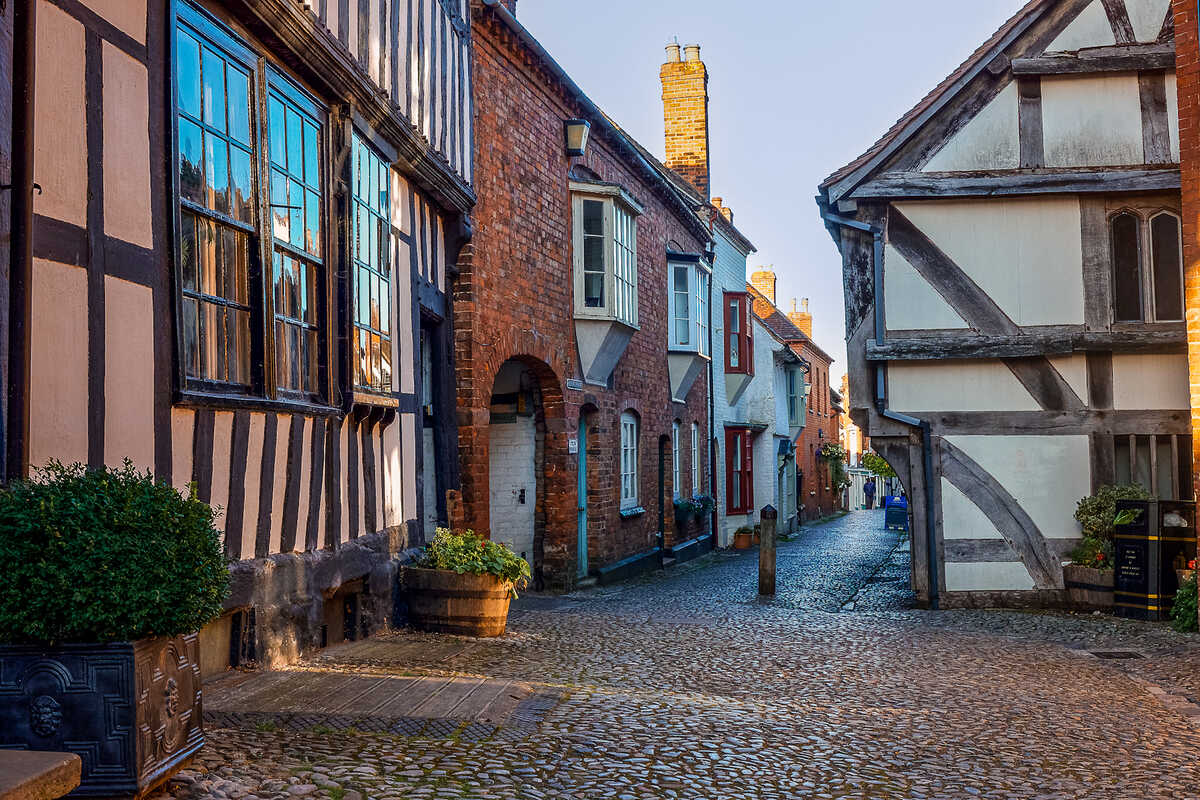
Imagine a small English town in the late thirteenth century. A family lives on a narrow plot with a rear privy and a lined cesspit. Their front door opens onto a paved lane with a shallow gutter. On a dry morning, the dominant smells may be wood smoke, bread, damp straw, and nearby horses. After heavy rain, the gutter carries muddy water and waste from several homes. If the pit is near full, the rear of the plot becomes the strongest-smelling place, while the market smells of fish and onions.
Now imagine a larger port district a century later. Merchants, sailors, carts, animals, and workshops crowd the same route. A river brings traffic and fresh air, but it also receives discharge from homes and crafts. A tannery or fish-processing yard may overpower the smell of ordinary household refuse. The quay may smell better at high water and worse when mud and waste are exposed. Neither scene represents every medieval city; each shows how local activity and water level could matter more than the city’s name.
These scenarios also explain why travelers’ descriptions can sound extreme. A visitor may pass a refuse heap, slaughter yard, or packed lodging district and remember the worst smell. Residents knew routes, wind direction, market days, and the hours when waste carts moved. Familiarity did not make an overflowing pit pleasant, but it helped people avoid the most offensive locations.
Reading A Medieval Street
A useful historical reading starts with the source of the smell, its path, and the response available to residents. The checklist below helps separate evidence from a modern stereotype.
- Locate the source: identify a privy, pit, stable, market, workshop, riverbank, fireplace, or refuse heap.
- Check the route: ask whether wind, slope, gutter flow, tidal water, or traffic moved the material.
- Check the season: heat, drought, rain, frost, and low water changed decomposition and dispersal.
- Check the records: look for ordinances, fines, complaints, excavation reports, or plant and animal remains.
- Check the scale: distinguish a bad corner, a trade district, and a citywide condition.
- Check the limit: note what the evidence cannot show, such as the exact intensity of an odor.
Archaeology can reveal layers in a cesspit, the position of drains, and the waste associated with a building. Written rules reveal what officials wanted people to do, not always what happened. A complaint reveals conflict and perception, but it may focus on an exceptional event. Combining those sources gives a better picture than treating a colorful phrase as a measurement.
Common Misreadings
The first mistake is treating “medieval” as one place and one date. A stone-built town in northern Europe differed from a canal city, a Mediterranean port, or a settlement in the Islamic world. Water systems, climate, urban density, and municipal authority changed the result.
The second mistake is saying that everyone threw human waste into the street. Street dumping did happen, and chamber pots could spill into public space, but privies, cesspits, drains, collection work, and local prohibitions also existed. Repeated laws may show persistent misconduct, yet they also show that authorities recognized a shared problem.
The third mistake is equating smell with disease in a simple way. Medieval observers connected foul air with illness, while modern evidence points to pathogens, vectors, contaminated water, and other routes. Bad odor can mark decay or pollution, but a pleasant smell does not certify safety.
The fourth mistake is assuming that bathing or perfume would solve the problem. Washing bodies and clothes could reduce some odors, and herbs or incense could mask others, but neither addressed a leaking pit, a dead animal, or a blocked drain. The durable responses were separation, removal, drainage, and local control.
FAQ
Did every medieval city smell like sewage?
No. Smells changed from neighborhood to neighborhood with weather, density, trade, drainage, and waste collection. Some places smelled of smoke, animals, food, leather, or wet earth more than human waste.
How did medieval toilets work?
Many toilets emptied into cesspits or vaults, while some garderobes discharged outside walls or into channels. Design and maintenance differed by building, wealth, and location.
What made medieval markets smell?
Markets combined food scraps, fish offal, livestock, manure, damp straw, smoke, and crowded bodies. Heat and slow removal made organic material smell stronger.
Did medieval people try to clean their streets?
Yes. Rules and officials in many towns addressed gutters, dumping, animals, drains, and street maintenance, though compliance and municipal capacity were uneven.
How reliable are stories about medieval stench?
They can identify complaints and striking conditions, but they rarely measure odor. Archaeology, environmental evidence, building remains, and regulations help test a vivid description.
Author's Insight
The smell of a medieval city came from systems interacting at close range: housing, trade, animals, fuel, water, weather, and labor. Cesspits and open gutters mattered, yet so did the way a city assigned responsibility for cleaning them. The strongest interpretation combines material evidence with complaints and rules, while admitting that odor itself cannot be recovered from a dig. The result is less theatrical than the sewer stereotype and more revealing about how urban communities managed shared space.
Key Takeaways
Urban air reflected organic waste, smoke, animals, crafts, and damp conditions met in dense neighborhoods without modern sewage networks. Cesspits, gutters, drains, collection carts, trade rules, and river flows could reduce or relocate the problem. Conditions changed from street to street and season to season. The fairest conclusion is neither that medieval towns were clean nor that every lane was a sewer: they were working environments with partial systems, recurring failures, and practical efforts to control the air.