Why Roman Concrete Lasts
Roman concrete is not one universal recipe, and modern concrete is not one universal material. A harbor wall, a Pantheon dome, a highway bridge, and a house foundation face 4 different combinations of loads, moisture levels, chemicals, and maintenance schedules. Some Roman structures have remained standing for nearly 2,000 years, while modern concrete can deteriorate within a few decades when water reaches cracks, reinforcement, or vulnerable minerals. Context changes the answer.
The clearest explanation combines chemistry and context. Roman builders often mixed lime with volcanic ash called pozzolana, stone fragments, and water; some recipes therefore contained 3 major solid components. In maritime structures, seawater helped form minerals such as aluminous tobermorite inside the concrete. In terrestrial samples studied in 2023, researchers found lime clasts linked to hot mixing and crack-filling reactions.
Durability has several causes.
Modern Portland-cement concrete can be stronger at 28 days, the common early testing point, yet strength alone does not predict a structure's full service life. Water-to-cement ratio, curing, crack width, reinforcement cover, salt exposure, freeze-thaw cycles, and inspection all shape the outcome. Roman concrete often behaved more like a slowly changing mineral composite, while many modern structures depend on steel bars that can corrode when protective chemistry or cover is lost.
Where Concrete Breaks Down
Concrete is strong in compression but weak in tension. A beam can carry heavy weight while still developing narrow cracks on its tension side, sometimes before reaching 100 percent of its design load. Cracks start the process. Cracks are not automatically a structural emergency, but they create paths for water, chlorides, carbon dioxide, and other agents that can change the material around embedded steel.
Reinforced concrete adds a second material with a different failure route. Fresh cement paste is often above pH 12, which helps keep steel passive. Carbonation gradually lowers that alkalinity as carbon dioxide moves inward. Chloride ions from seawater or deicing salts can also reach steel and start corrosion, producing rust that occupies more volume than the original metal.
Exposure decides the pace.
Construction mistakes can shorten that pace. Excess mixing water raises porosity after hardening. Poor vibration leaves voids in the slab. Short curing can dry the surface within 24 hours, before hydration develops a dense network. A 2005 Federal Highway Administration guide explains that curing affects strength, permeability, and resistance to environmental attack, so a mix design cannot rescue careless placement. Moisture changes the outcome.
Roman examples also need careful comparison. A massive unreinforced wall may tolerate surface cracking differently from a thin 10-centimeter reinforced balcony. Ancient structures that survived were selected by time, while failed examples disappeared from view. That survival bias, frankly, makes historical comparisons sound cleaner than they are. History is not a specification.
How The Chemistry Works
Choose Reactive Ingredients
Roman hydraulic concrete often used volcanic ash rich in reactive silica and alumina. When lime and water interacted with that ash, the mixture formed binding phases that differed from the calcium-silicate-hydrate system found in ordinary Portland cement. The exact minerals varied with local rock, water, temperature, and proportion.
A modern imitation must begin with characterization, not a copied shopping list. Test the ash or supplementary cementitious material at 7 and 28 days for chemical composition, fineness, impurities, and reaction under the intended curing conditions. Test the ingredients first. A gray powder sold as volcanic ash may behave differently from the material used near the Bay of Naples.
Understand Hot Mixing
The 2023 Science Advances study examined lime clasts in Roman concrete from Privernum, Italy. The researchers linked their structure to the use of quicklime, calcium oxide, during hot mixing. Adding water to quicklime produces heat and creates reactive lime particles that can remain inside the hardened matrix. Heat changes the mix.
In laboratory samples, the team made Roman-inspired concrete, induced cracks up to about 0.5 millimeters wide, and exposed the cracks to water. The lime clasts dissolved and helped form calcium carbonate that filled the openings. Cracks healed within two weeks in the reported tests, while comparison samples without quicklime continued to pass water.
This is a laboratory result.
Control Water And Curing
Modern concrete needs enough water for cement hydration but not so much that excess capillary space remains after drying. The water-to-cement ratio is therefore a central design variable. Lower is not automatically better: a very low ratio may hinder placement or hydration unless the mix contains suitable admixtures and receives careful curing. Water remains the trigger.
Keep newly placed concrete moist and within a suitable temperature range for the specified 7-day or longer curing period. Protect slabs from rapid evaporation, wind, freezing, and extreme heat. NIST research on carbonation found that internal curing and shrinkage-control methods can alter carbonation resistance, sometimes independently of 28-day compressive strength. Curing takes time.
Match Concrete To Exposure
List the actual threats before selecting a mix. A coastal pier may face chlorides, wetting and drying, abrasion, and wave impact across a 50-year design life. A northern parking deck may face salt, freezing, thawing, and repeated wheel loads. A basement wall may face groundwater pressure and a narrow crack-control requirement. Exposure sets the terms.
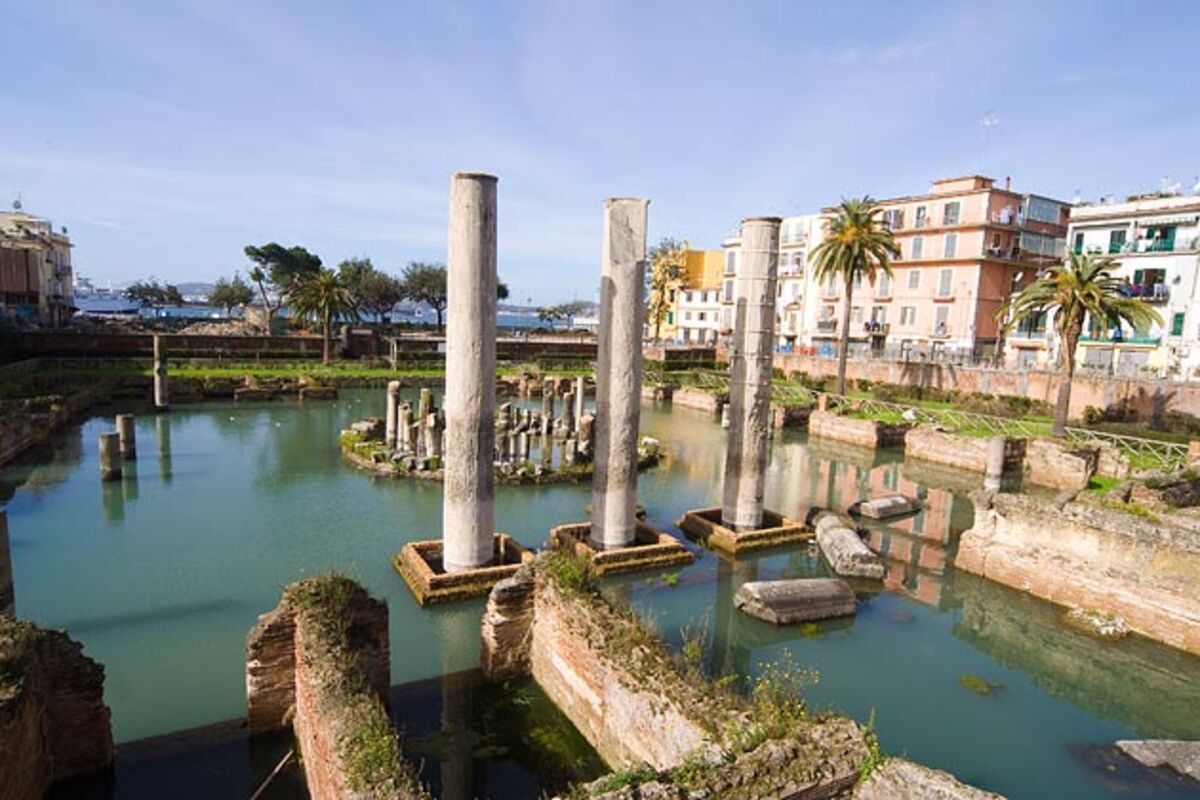
Roman marine concrete benefited from a particular combination of volcanic ash, lime, aggregate, and seawater. Research on samples from ancient harbors found reactions that formed aluminous tobermorite and related minerals as seawater moved through the material. Pouring an ancient-style mix into a modern highway does not reproduce those conditions. Conditions do the work.
Design For Inspection
Long service life depends on the structure around the concrete. Specify adequate cover over reinforcement, control joints, drainage, crack widths, compatible repair materials, and access for inspection. Record batch details, placement temperature, curing conditions, and test results so later engineers can interpret defects. Inspection finds trouble.
Plan inspection intervals around exposure and consequences. A small surface crack on a sheltered garden wall differs from a crack above a coastal column. Repair water entry early, because a narrow opening that stays wet can become a corrosion route over many seasons. Water finds weak paths.
Lessons From Ancient Sites
Imagine an educational team examining fragments from a Roman harbor. They find volcanic aggregate surrounded by a mortar that has changed through contact with seawater. The team can infer mineral growth and chemical exchange, but it cannot claim that every Roman wall used the same proportions or that the wall never received repairs. Records matter here.
Consider a second scenario involving a small modern retaining wall. Its designer wants to copy the Roman recipe after reading about self-healing lime clasts. A materials laboratory instead compares 3 mixes: a conventional Portland-cement control, a blend with a tested pozzolan, and a hot-mixed lime formulation. The team measures water flow through induced cracks at 7, 14, and 28 days, then continues exposure testing. Measure before claiming.
The safer conclusion may be less dramatic. The lime mix could heal some cracks under wet conditions while showing slower strength gain, difficult handling, or uncertain performance after 50 freeze-thaw cycles. A construction decision must weigh the whole exposure profile, not one attractive mechanism. Testing comes before adoption.
Compare The Materials
The table separates 4 broad tendencies from claims that require testing.
| Feature | Roman examples | Modern concrete | Practical limit |
|---|---|---|---|
| Main binder system | Lime and reactive volcanic ash | Portland cement and selected additions | Local ingredients behave differently |
| Crack response | Some lime clasts may dissolve and recrystallize | Autogenous healing can occur in narrow, wet cracks | Wide or moving cracks still need repair |
| Marine behavior | Seawater supported mineral growth in some structures | Chlorides can reach and corrode reinforcement | Exposure and reinforcement design control risk |
| Early strength | Often developed through slower mineral reactions | Commonly assessed at 28 days | Early strength is not lifetime durability |
Use the comparison as a decision aid rather than a ranking. A modern mix can last for many decades when its water content, curing, cover, drainage, and exposure class are properly managed. A Roman-inspired formulation needs the same discipline, plus testing against present-day codes and construction equipment. Design still sets limits.
Common Mistakes
The first mistake is saying that Roman concrete was simply stronger. Many Roman mortars had lower early compressive strength at 28 days than modern structural concrete, yet some gained durability from slow reactions and favorable exposure. Strength and service life overlap, but they are not synonyms. Healing has limits.
The second mistake is treating self-healing as an invisible repair crew. Autogenous healing usually depends on crack width, moisture, unhydrated material, and time. A crack that closes visually may still admit water, and a structural crack may need assessment before any chemical healing is considered. Small cracks are different.
The third mistake is copying seawater as an ingredient. Ancient marine concrete formed under long exposure, unusual mineral sources, and specific environmental conditions. Salt water can damage reinforced concrete by carrying chlorides toward steel, which, annoyingly, makes a simple recipe especially risky. Salt leaves traces.
The fourth mistake is ignoring reinforcement. Roman structures often relied on mass, geometry, arches, and compressive load paths. Modern bridges and buildings frequently use steel to carry tension. A binder that resists cracking does not remove the need to design, protect, and inspect reinforcement. Reinforcement needs cover.
The fifth mistake is overlooking curing. A carefully proportioned mix can lose durability if its surface dries after one day, freezes during early hydration, or receives water that changes the designed ratio. Follow the specified curing method and record what happened on site. Maintenance changes the result.
FAQ
Why has Roman concrete survived so long?
Its survival reflects several factors, including lime, volcanic ash, aggregate, slow mineral reactions, structural form, favorable exposure, and long-term maintenance or repair in some sites.
Did Romans use quicklime?
Evidence from Roman samples and the 2023 hot-mixing study indicates that quicklime may have been used in some formulations, leaving reactive lime clasts that can participate in crack filling.
Can Roman concrete repair itself?
Some Roman-inspired laboratory samples healed water-carrying cracks about 0.5 millimeters wide within two weeks, but healing depends on moisture, chemistry, crack movement, and the mix. Only narrow cracks heal.
Why does seawater help some Roman concrete?
In certain marine structures, seawater supported reactions that formed reinforcing mineral phases such as aluminous tobermorite; this does not mean seawater is safe for reinforced concrete generally.
Should modern builders copy Roman concrete?
Builders should test individual Roman-inspired ingredients and processes for the intended exposure, strength, code requirements, construction method, and reinforcement system before use. Builders should test each mix before approval.
Author's Insight
Roman concrete is best understood as a family of material strategies rather than a lost universal formula. Context matters. Its durability came from chemistry, geometry, exposure, workmanship, and time acting together. Time changes the material slowly in place. Modern research is useful when it isolates one mechanism, measures trade-offs under realistic conditions, and reinforces a practical lesson: design concrete for its environment instead of treating early strength as the whole story.
Key Takeaways
Several factors align. Roman concrete outlasted many modern examples because some ancient mixtures exchanged minerals with water, used reactive lime and volcanic ash, and worked within structures designed for compression. Modern concrete can also achieve long service lives through controlled water content, adequate curing, reinforcement cover, crack control, drainage, and inspection. Roman-inspired chemistry may improve selected formulations, but no ancient recipe automatically solves corrosion, freeze-thaw damage, poor placement, or unsuitable design. Compare materials by exposure and measured performance.