Accidental Tools
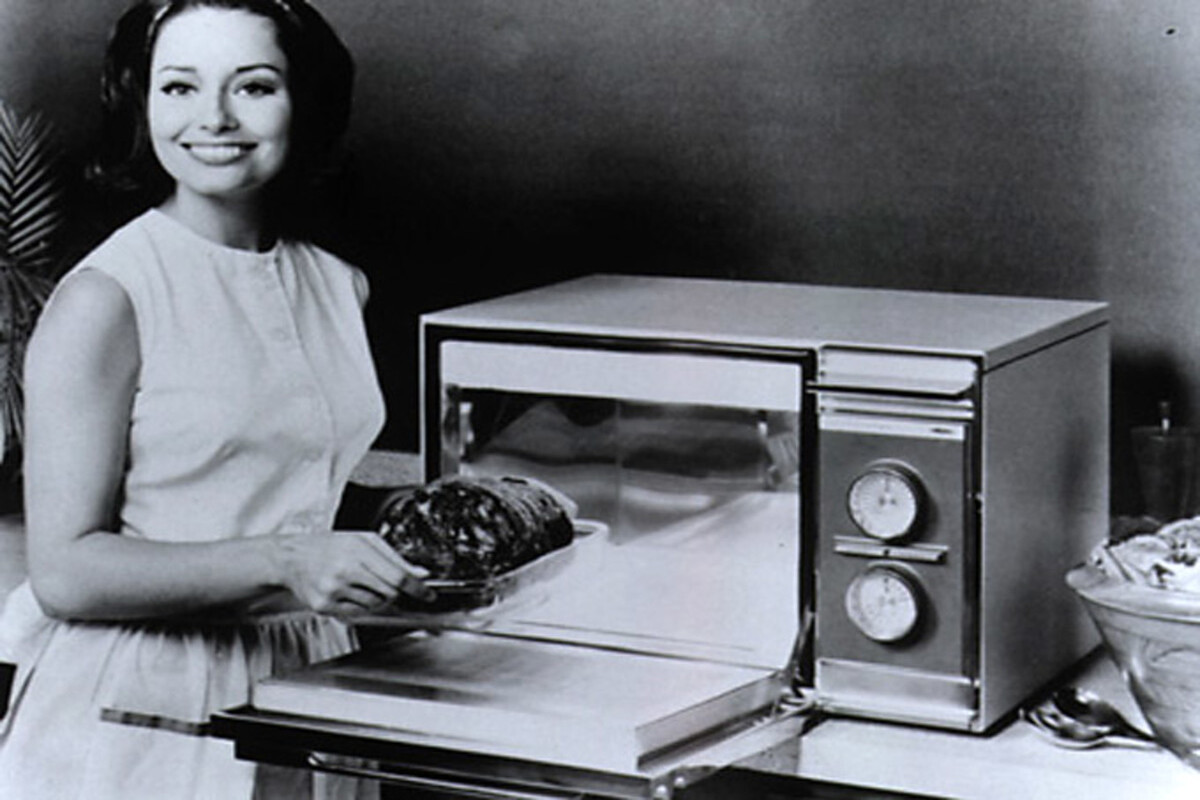
Some household products began with a result their creators did not seek. A candy bar melted beside a radar magnetron in 1945 or 1946, leading Raytheon engineer Percy Spencer to test popcorn and eggs before the microwave oven became a product. At 3M, Spencer Silver’s 1968 adhesive formed removable microspheres instead of the strong bond he wanted; Art Fry later paired it with paper to create Post-it Notes. These stories are not claims that useful objects appear without skill. The accident creates an observation, while repeated tests, material choices, patents, production work, and user feedback turn it into a dependable object.
Accidental origins also differ in scale. George de Mestral noticed burrs clinging to his dog’s fur in 1941 and copied their tiny hooks in a fastening system. Frank Epperson’s account places the first ice pop in 1905, after a drink froze around its stirring stick. In 1952, an overheated oven changed Donald Stookey’s glass sample into a heat-resistant glass ceramic that led to CorningWare. Each case includes a date, a physical mechanism, and a later development period. That combination is stronger evidence than a tidy slogan about a single flash of genius.
For readers, the practical lesson is simple: an unexpected result deserves a safe, recorded check. A spill, failed bond, unusual sound, or material that survives heat may reveal a property worth studying, but it may also signal danger. Curiosity works best beside labels, protective equipment, controlled comparisons, and a clear record of what actually happened.
Why Chance Gets Misread
Popular invention stories often compress years into one dramatic moment. The melted candy bar did not itself become a countertop oven. Spencer had expertise with magnetrons, recognized a likely cause, and ran follow-up trials. Raytheon’s first commercial Radarange appeared in 1947, yet early machines were large and costly; a home appliance required later work on size, controls, shielding, manufacturing, and price.
A second error is confusing discovery with final design. Silver found a removable adhesive, but a useful note needed a coating process, suitable paper, consistent tack, packaging, and a reason for people to reach for it. De Mestral observed burrs, then spent years developing hooks and loops that could be made in fabric. The chance event points toward a property; engineering decides if that property can survive daily handling.
A third error is treating a disputed or simplified origin as settled fact. Epperson’s ice-pop story is supported by later legal records and the National Archives, but the product’s commercial identity formed in the 1920s. Sources may describe a family memory, a patent claim, or a company history, and those are not interchangeable. Readers should ask what was observed, what was documented at the time, and what happened before mass sales.
Finally, hindsight makes accidents look obvious. A failed adhesive might be discarded when no use is visible. A scorched sample might be mistaken for waste. The people who notice useful anomalies usually stay with the result long enough to describe it, reproduce it, and test its limits. That habit is teachable, even when the original coincidence cannot be planned.
How To Learn From Accidents
Record The Odd Result
Write down the date, materials, amounts, temperature, time, tools, and visible result as soon as a safe experiment ends. Silver’s adhesive became useful partly because its unusual behavior remained known inside 3M until another researcher found a fit. A record also separates what was seen from what was guessed. “Paper lifted cleanly after ten minutes” is more useful than “the glue worked.”
Include the failed aim. If a coating was meant to resist peeling but instead released cleanly, that contrast defines its possible use. Do not edit out an inconvenient observation because it seems irrelevant. In practical work, the unwanted property may be the one that solves another person’s problem. Keep samples labeled when safe, and store chemical or biological materials according to their instructions rather than preserving them casually.
Test One Variable
Repeat the observation with one change at a time. For a removable adhesive, compare paper type, pressure, contact time, and removal angle separately. For a heat-resistant dish, compare the same shape after controlled heating and cooling cycles. This does not require a research facility; it requires a fair comparison and a written result. Three repeated trials can reveal a pattern, while one lucky outcome may only reflect moisture, temperature, contamination, or handling.
Use modest scales and stop if pressure, heat, electricity, fumes, or sharp fragments are involved. A kitchen thermometer, a ruler, a timer, and a simple table of observations can answer many early questions. Never put an unknown material in a microwave, mix household cleaners, or test a sealed container under heat. The discovery stories are invitations to observe, not instructions to recreate hazardous conditions.
Find The Useful Property
Translate the odd result into a property that a person could use. “Burrs stick” becomes hooks engaging loops. “The note lifts” becomes temporary attachment. “The glass survived an overheat and a drop” becomes resistance to thermal shock and shattering. This wording moves attention from the story to the function. It also exposes limits: a removable note is not a structural fastener, and an ice pop is a frozen confection rather than a preservation method for every food.
Ask who has the problem, what conditions the object must tolerate, and how often it will be used. A fastening system for clothing faces different loads from one used on equipment. A cookware material must handle food contact, heat, cleaning, and sudden temperature changes. Product claims need a specification or test method behind them. If the source only says “strong,” look for a measurable impact, temperature, load, cycle count, or use condition before repeating that claim.
Move From Story To Prototype
Build the smallest safe version that tests the proposed use. Fry’s insight was not merely a new adhesive; it was adhesive on paper with a convenient edge and a message surface. Epperson’s frozen drink gained a handle and a form that could be sold one unit at a time. A prototype should answer one practical question, such as “Can a note be removed without tearing this paper?” or “Does this fastener hold after ten openings?”
Then ask someone who did not make it to try the object while you watch. Their hesitation may reveal a sharp edge, confusing orientation, poor grip, or cleaning problem. Before sale or broad household use, check relevant safety labels, food-contact rules, electrical protections, and intellectual-property restrictions. Commercial success is a separate stage from discovery, and many clever observations never become products because the cost, risk, or repeatability does not work.
Six Familiar Case Examples
An anonymized school laboratory group notices that a polymer sample meant to form a hard bond instead grips lightly and peels away in one piece. The students first want to call it a failed glue. After recording the result, they test paper types and contact times under teacher supervision. Their conclusion is narrower and more useful: the sample may suit temporary labels, but they lack the evidence to claim safe use on painted walls or delicate surfaces. The exercise mirrors the logic behind Silver’s adhesive without pretending that a classroom sample is a commercial formulation.
In a second educational scenario, a home cook finds that a glass-ceramic baking dish tolerates a hot oven but is unsure about moving it onto a cold stone counter. The safe response is not to repeat an internet challenge. The cook reads the maker’s care instructions, checks the temperature limits, and avoids sudden thermal shock. Stookey’s 1952 accident explains why the material drew attention, while the current product instructions define actual use. A historic discovery can guide questions without replacing present-day directions.
The larger set of examples shows different paths. The microwave grew from magnetron work and a melted snack; hook-and-loop fastening came from studying burrs; instant glue emerged from a compound rejected for one wartime optical use and later recognized for its extreme stickiness; CorningWare followed an overheated glass experiment; and the ice pop came from a frozen drink on a stick. “Accident” describes the trigger, not the full product-development process.
Compare The Accidental Path
Use this checklist before repeating an invention story or buying into a claim about accidental discovery:
| Question | What To Check | Good Evidence | Warning Sign |
|---|---|---|---|
| Trigger | What unexpected event occurred? | Dated account or lab record | A story with no named source |
| Property | What physical behavior was noticed? | Repeatable observation | A broad claim such as “better” |
| Development | What changed before ordinary use? | Patent, prototype, or manufacturer history | The accident is presented as the finished product |
| Limit | Where might the property fail? | Instructions or test conditions | Advice to recreate danger at home |
This checklist works for a museum label, a classroom project, or a product page. It rewards a clear chain from event to property to tested use. It also leaves room for uncertainty, which is preferable to turning a memorable anecdote into a false guarantee.
Common Mistakes To Avoid
Do not treat every mistake as a discovery. Most failed mixtures, broken parts, and burnt food have no useful new property. Look for a repeatable behavior that solves a defined problem, then test it under safe conditions. A surprising result becomes evidence only after another trial supports it.
Do not copy a famous experiment with household materials. Microwave radiation, reactive chemicals, pressure, electricity, and high heat can injure people or damage property. Read the manual and safety data for the actual product in front of you. The historical account may omit controls that were present in a professional lab.
Do not confuse a brand with the whole category. Post-it is a brand of notes, Velcro is a brand associated with hook-and-loop fasteners, and CorningWare names a cookware line. Category names, patents, trademarks, and current ownership can differ. Careful writing uses the product name only when the source and context support it.
Do not quote a single date without checking what it marks. A discovery date, patent date, first sale, and mass-market launch may be years apart. The Radarange appeared in 1947, while home microwave adoption required later changes. That timeline is more informative than a claim that one accident instantly changed every kitchen.
FAQ
What is an accidental invention?
It is a useful product or process that begins with an unintended observation, followed by deliberate testing and development.
Was the microwave oven found by accident?
Percy Spencer noticed a melted candy bar near a magnetron, then performed follow-up experiments that led to microwave cooking equipment.
How did Post-it Notes begin?
3M scientist Spencer Silver made a removable adhesive in 1968, and Art Fry later used it on paper for temporary notes.
Are all invention stories fully verified?
No. Some rely on later recollections or company histories, so dates, patents, court records, and independent sources should be compared.
Can I recreate these accidents at home?
Do not recreate hazardous events; study the documented history and run only low-risk, supervised tests with suitable materials.
Author's Insight
The strongest lesson in these stories is attention, not luck. An anomaly becomes useful when someone names the property, repeats the observation, and connects it to a real need. The timeline also matters: Post-it Notes, microwave ovens, and glass-ceramic cookware all required substantial work after the original surprise. Consumers can admire the coincidence while still asking for test conditions, instructions, and limits.
Key Takeaways
Accidental discoveries have a recognizable pattern: an unexpected result, a careful observer, a repeatable property, and a long period of refinement. The candy bar, burrs, removable adhesive, frozen drink, instant-bond compound, and overheated glass each supplied a clue rather than a finished object. To learn from them, record anomalies, test one variable at a time, describe measurable properties, and respect safety boundaries. When reading an origin story, separate the first observation from the first patent and the first mass-market product. That approach keeps the wonder while giving ordinary readers a more accurate way to judge claims and experiments.