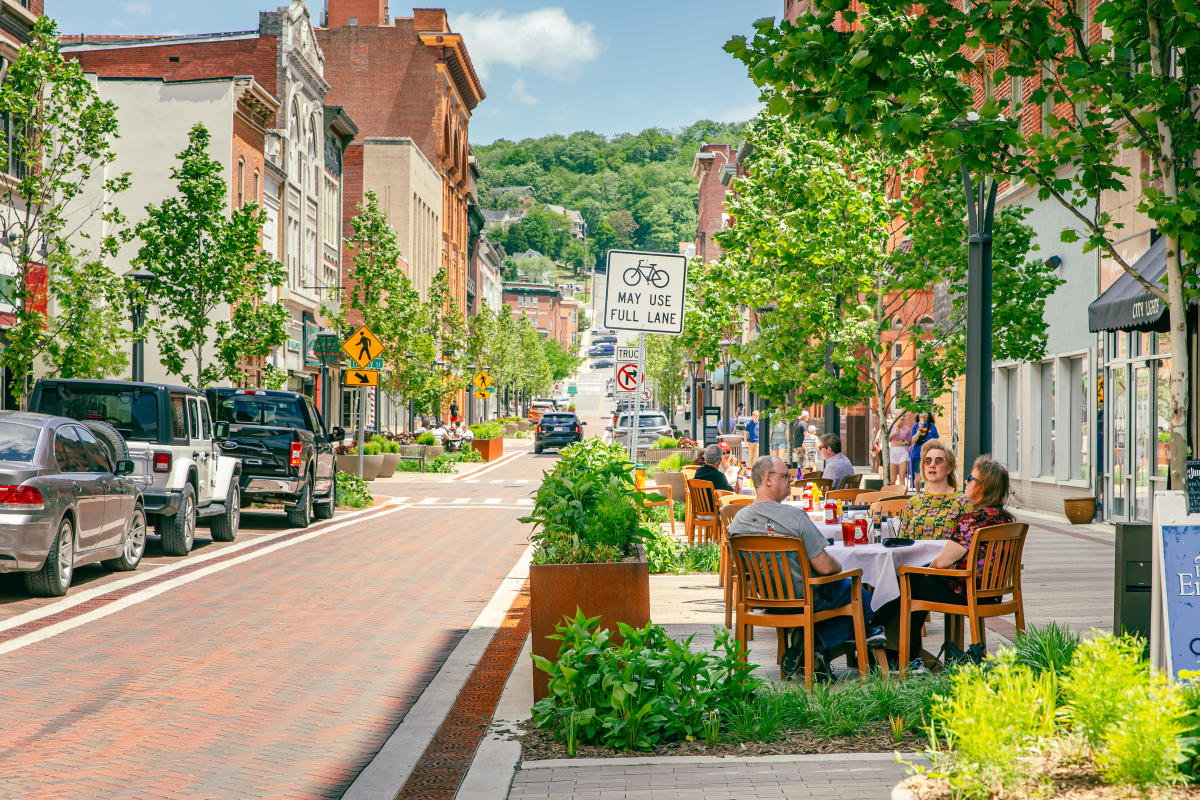
Road Width Has A Purpose
Road width is not a random leftover from old surveys. It reflects vehicle dimensions, the need for two-way traffic to pass, and the space required for safe stopping and recovery. In many countries, lane widths and right-of-way widths follow standards tied to design speed, vehicle mix, and sight distance.
Lane width is often 3.0–3.7 m on many road classes, while shoulders may be 0.5–3.0 m depending on speed and function. A practical example: a typical passenger car is about 1.8–2.0 m wide, and a lane that is 3.3 m wide leaves limited lateral margin when two vehicles meet. That margin shrinks further when drivers drift, tires ride over worn edges, or trucks pull slightly toward the centerline.
Standards also account for vehicle tracking. A long truck does not follow the same path as a car because its wheels steer at different angles, so it needs extra space at curves and during lane changes. That is why road geometry and lane width often change together, rather than being chosen independently.
Roads are measured in meters.
Standards Shape Width
Road design standards translate vehicle dimensions into usable clearances. Agencies choose lane width and shoulder width based on design speed, expected vehicle types, and the need for safe passing. They also consider sight distance, because a driver must see enough of the road ahead to decide whether to brake, merge, or avoid an obstacle.
In the United States, the Federal Highway Administration’s A Policy on Geometric Design of Highways and Streets (commonly called the “Green Book”) provides guidance on lane and shoulder widths by road type and speed. Exact values vary by context, but the logic stays consistent: higher speeds and higher truck percentages generally require more lateral margin.
In Europe, national standards and the European road design practice similarly tie width to design speed and functional class. The details differ, yet the underlying mechanism is the same: width is a safety tool, not a decorative one.
Standards vary by country.
Geometry matters too. A road with tight curves often needs additional width or banking to reduce lateral forces and to keep vehicles on their intended paths. If a road is widened without adjusting curves, drivers may still feel “pinched” because the path constraints remain.
Solutions And Choices
Read the Road Class First
Start by identifying the road’s function: local street, arterial, highway, or ramp. Road class predicts typical lane and shoulder widths and the expected vehicle mix, which changes how much lateral margin you actually have. In practice, you can treat narrow lanes on local streets as a cue to reduce speed and increase following distance, because passing gaps shrink quickly.
Look for truck frequency signs.
Use Positioning, Not Guessing
When lanes feel narrow, your goal is stable positioning rather than “threading the needle.” Keep a consistent lateral position within your lane and avoid sudden steering inputs, which can push you toward the edge. If you drive a car with a wide mirror setup, remember that mirror clearance is not the same as tire clearance; the tire path is what matters.
Steady steering reduces drift.
Adjust Speed for Lateral Margin
Speed changes how much time you have to correct a line and how much lateral force you generate in steering. On narrow roads, reducing speed by even 10–20 km/h can materially change stopping distance and the severity of a correction. The exact effect depends on braking performance and tire grip, but the mechanism is consistent: less speed means less kinetic energy to manage.
Lower speed buys control time.
Respect Shoulders as Recovery Space
Shoulders are not “extra lanes” for normal driving. They are recovery zones designed to reduce the consequences of drifting or emergency braking, and their surface condition can vary from paved to gravel. If you must use the shoulder, do it deliberately and return to the lane only when you have clear sight and space.
Shoulders can be uneven.
For Cyclists, Choose Visibility
On roads with narrow lanes, cyclists often face reduced passing clearance. A practical approach is to ride where drivers can see you early and where you can maintain a predictable line, which may mean using a lane position that improves sightlines rather than hugging the curb. Local laws vary on where cyclists may ride, so check your jurisdiction’s rules for bike lane use, shoulder riding, and passing distance.
Visibility beats hugging the edge.
Educational Case Examples
Urban Street With Worn Lines
An anonymized driver reports a narrow downtown street where lane lines fade and the curb is close. The road width matches older drawings, but the effective guidance shrinks because drivers rely on markings to hold position. The driver’s near-miss occurs during a meeting with a delivery van, when both vehicles drift toward the centerline. A safer approach in that scenario is to slow slightly before meeting, keep a steady steering input, and avoid braking late, which can cause a lateral shift.
Worn lines change your path.
Rural Two-Lane With Frequent Trucks
An anonymized commuter uses a rural two-lane road where trucks pass each other at irregular intervals. The lane width feels “tight,” and the commuter notices that passing feels worse after rain. The likely mechanism is reduced tire grip plus truck-induced wake and crosswind effects, which increase lateral variability. The commuter reduces speed on wet days, increases following distance behind trucks, and avoids overtaking when sight distance is limited by cresting or roadside vegetation.
Wet tires reduce lateral control.
Width Checklist For Drivers
| Situation | What Narrow Width Changes | Driver Action | What To Watch |
|---|---|---|---|
| Meeting oncoming cars | Less lateral clearance margin | Hold lane position, reduce speed early | Edge drift, mirror-to-mirror illusion |
| Passing trucks | Wider tracking and wake effects | Avoid passing on limited sight distance | Crosswind, wet pavement, steering corrections |
| Night or rain | Lower contrast and grip | Increase following distance, reduce speed | Glare, hydroplaning risk, lane line visibility |
| Turning at intersections | Swing into adjacent space | Cross only with clear wheel visibility | Bus/truck turning radius, hidden curb lines |
Mistakes That Mislead
Drivers often blame the lane width while ignoring the real driver-variable: lane position changes with speed, steering habits, and road surface. If you brake late or turn the wheel abruptly, you create lateral motion that consumes the margin the road design assumed you would preserve.
Another mistake is trusting lane-keeping assist on roads with faded markings. Many systems require clear lane lines and can disengage or drift when contrast is low, which can feel like the car is “fighting” you. Treat driver-assistance as a supplement, not a substitute for positioning.
People also misread shoulders. A paved shoulder can look safe, but it may be narrower than it appears, may have a drop-off at the edge, or may be rough after plowing. Gravel shoulders can reduce braking effectiveness and increase steering instability.
FAQ
Why do some roads have 3.0 m lanes?
Lane widths often reflect a design compromise between vehicle clearance, right-of-way limits, and expected speed. Standards tie width to road function and design speed, so a local street may use narrower lanes than a higher-speed arterial.
Do lane markings change the real width?
Markings guide positioning but do not create physical space. When markings fade, drivers drift more, which reduces the effective clearance during passing and increases side-swipe risk.
How do shoulders affect safety?
Shoulders provide recovery space for drifting vehicles and a place to stop in emergencies. Their surface condition matters, since gravel, drop-offs, and uneven edges can reduce control compared with a smooth paved shoulder.
Why do trucks feel harder on narrow roads?
Trucks track differently because their wheelbase and steering geometry require more lateral space, especially on curves and during lane changes. Crosswinds and wake effects also increase lateral variability for nearby vehicles.
Can driver-assistance systems handle narrow lanes?
Some systems work only when lane lines are visible and the road geometry supports stable centering. On narrow roads with worn markings, performance can degrade, so drivers should keep hands on the wheel and be ready to take over.
Author's Insight
Road width is a safety margin translated into geometry, not a random measurement. The same lane width can feel different depending on speed, surface condition, marking quality, and vehicle mix, which explains why “narrow” is often a perception of changing margins. Standards such as the FHWA Green Book show that width choices connect to design speed, sight distance, and vehicle tracking, even when the public sees only the pavement. When you interpret a road, treat width as one variable in a system that includes braking distance, driver control limits, and how vehicles actually follow paths.
Width is only one variable.
Key Takeaways
- Road width reflects vehicle dimensions, passing needs, and recovery space, not decoration.
- Effective clearance depends on markings, surface condition, and speed, so narrow roads can feel worse in rain or at night.
- Shoulders are recovery zones with variable surfaces; treat them as emergency space, not a normal travel lane.
- Truck tracking and turning paths reduce lateral margin, so passing and crossing decisions should account for vehicle type.
- Driver-assistance systems may struggle with faded lines; keep active control and do not assume centering will stay stable.