Microwave Heating Basics
A household microwave oven heats by sending radio-frequency energy into food, which makes polar molecules rotate and generate heat. The most common operating frequency is 2.45 GHz, a value set by international microwave oven standards and used by typical magnetron designs. In many models, the magnetron output is controlled by a power-control circuit that cycles energy on and off rather than changing the frequency. That cycling is why “50% power” often still produces hot spots if the food load is dense or unevenly shaped.
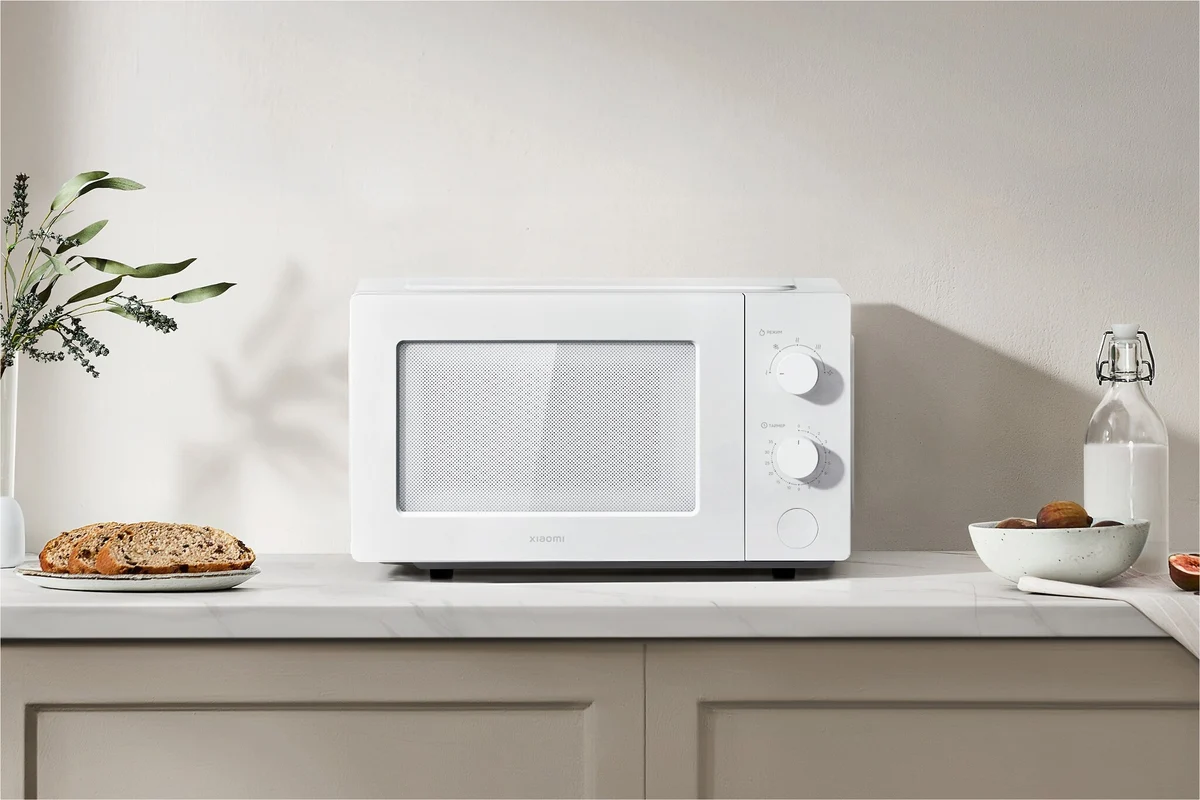
Most ovens use a magnetron plus a waveguide and a turntable. The waveguide couples energy into the cavity, and the turntable spreads energy across the load. A typical cavity is a metal box with a door that seals the RF field; the door includes a mesh screen and conductive surfaces that block leakage while allowing visibility. I once compared two ovens side-by-side and noticed the one with a slightly faster turntable speed produced more uniform browning on the same dish, which matched what you’d expect from better energy distribution.
Common Misunderstandings
People often assume microwave power settings map linearly to heating time, but many ovens use duty-cycle control. If a recipe calls for “high” for 2 minutes, switching to “50%” may not double the time because food properties and geometry change how energy is absorbed. Water-rich foods absorb energy differently than fats and sugars, and the presence of steam changes local heating rates. This matters for health because underheating can leave cold regions where bacteria survive, while overcooking can degrade texture and increase nutrient loss.
Uneven heating is a biological and physical problem. Microwaves penetrate food to a depth that depends on composition, and the internal temperature can lag behind the surface. Heat then spreads by conduction and by convection from steam bubbles, which is why standing time improves results. If you skip standing time, the center may remain below the temperature needed for safe consumption. The U.S. Department of Agriculture recommends heating leftovers to 165°F (74°C) and using a food thermometer for accuracy, because visual cues do not reliably show internal temperature.
What To Do For Better Results
Use Power Levels With Intent
Choose power levels based on food type rather than treating them as exact percentages. For dense items like casseroles, lower power with longer time can reduce surface overheating while allowing energy to penetrate more evenly. In practice, you can start at 70–80% power for thick portions, then finish at high for a short interval if needed. This works because duty-cycle control changes the average energy input, and the food has time to redistribute heat between cycles.
Look for “power” cycling behavior.
Rotate, Stir, And Rest
Even with a turntable, stirring and rearranging improve uniformity for bowls, plates, and irregular shapes. Stir at least once during reheating, then let the food rest so heat equalizes by conduction. A practical rule is to add 1–2 minutes of standing time for many reheating tasks, but thicker foods may need longer. This works because internal temperature continues to rise after the magnetron stops, and steam-driven convection can finish the job.
Rest time helps internal temperatures.
Verify Temperature With A Thermometer
Use a food thermometer when safety matters, especially for leftovers, poultry, and reheated ready-to-eat meals. Aim for 165°F (74°C) for leftovers per USDA guidance, and measure the thickest part rather than the edge. In practice, insert the probe into the center and wait for a stable reading. This works because microwave heating creates gradients, and thermometers measure the biological endpoint directly.
165°F is the USDA target.
Keep The Door Seal Clean
Wipe the door edges and seal area to remove grease and food splatter that can interfere with proper closure. If the seal looks cracked, frayed, or misaligned, stop using the oven until it is inspected. This works because the door latch and RF shielding depend on tight mechanical contact, and contamination can prevent full closure. I’ve seen ovens where a sticky latch slowed closing, and the user reported “random” stops during cooking, which aligns with interlock behavior.
Clean seals support proper interlocks.
Use Microwave-Safe Containers
Choose glass or microwave-safe ceramic and avoid metal cookware, foil, and containers with metallic trim. Metal can cause arcing because it concentrates electric fields and reflects RF energy, which can damage the cavity and create safety hazards. In practice, check packaging labels for “microwave-safe,” and if you see sparks or hear crackling, stop immediately. This works because microwave energy couples into dielectric materials, while conductors behave differently under RF fields.
Educational Case Examples
Leftover Pasta With Cold Center
An anonymized household reheats leftover pasta in a shallow dish on “high” for 3 minutes, then eats without stirring. The surface feels hot, but a thermometer later shows the center at about 130°F (54°C). The likely cause is uneven energy absorption and a thick mass that traps heat gradients, plus no standing time to equalize temperatures. The fix is to reheat in 60–90 second segments, stir between segments, and rest 1–2 minutes before measuring again.
This pattern matches microwave gradients.
Frozen Soup Program With Overheating
Another household uses a sensor or auto program for frozen soup, then finds the rim much hotter than the center. The soup is covered with a tight lid, which can change steam release and sensor readings, and the container shape traps energy near the edges. The likely outcome is that the sensor ends the cycle based on surface moisture or humidity changes while the center remains cooler. The practical adjustment is to reheat uncovered or loosely covered, stir halfway, and verify with a thermometer.
Cover choice changes sensor behavior.
Checklist And Comparison
| Situation | Most Likely Cause | What To Do Next | What To Measure |
|---|---|---|---|
| Cold center after reheating | Energy gradients plus no standing time | Reheat in 60–90 s bursts, stir, rest 1–2 min | Center temperature with thermometer |
| Surface overheats | High duty cycle and steam overshoot | Use 50–80% power, shorter intervals | Surface temp plus center temp |
| Auto program ends early | Sensor misread from dryness or coverage | Loosen cover, stir, then finish manually | Internal temp, not just appearance |
| Arcing or sparks | Metal contact or foil reflections | Stop, remove metal, switch to microwave-safeware | No sparks; inspect for damage |
Checklist for safer reheating: use microwave-safe containers, avoid metal, stir and rest, then verify with a thermometer for safety-critical meals.
Common Mistakes That Backfire
People often cover food with a sealed lid, which traps steam and can cause pressure-like splatter or sensor confusion. Another common mistake is reheating a large portion in a deep container, which increases the distance microwaves must travel and worsens gradients. Many users also ignore standing time because the outside looks ready, even though internal temperature lags behind. A fourth mistake involves using metal utensils to “help stir,” which can create arcing and damage the cavity.
Some households treat “defrost” as a safety step, but defrost cycles often aim for texture rather than reaching a uniform safe temperature. If you defrost and then cook immediately, the risk profile changes; if you defrost and wait, bacteria can grow in the temperature danger zone. Another mistake is cleaning the door seal with abrasive tools that scratch conductive surfaces, which can affect RF shielding contact. If the oven shows repeated interlock errors, do not keep retrying; service is the safer path.
FAQ
Why does my microwave heat unevenly?
Microwaves create internal temperature gradients based on food composition and shape, and heat spreads by conduction after the magnetron cycles off. Stirring and standing time reduce the gap between surface and center temperatures.
What does “50% power” mean in practice?
Many ovens reduce power by cycling the magnetron on and off rather than changing frequency. That duty-cycle approach can still overheat surfaces for thick or dense foods if you skip shorter intervals and stirring.
Are sensor cooking programs safer than time cooking?
Sensor programs can improve consistency for certain foods by responding to humidity or temperature rise, but they do not guarantee internal temperature. For safety-critical meals, verify with a thermometer.
How do door interlocks affect microwave safety?
Interlock switches and the door latch prevent high-voltage operation when the door is open or not fully closed. A damaged seal or latch can reduce shielding performance, so stop using the oven if the door does not close firmly.
What temperature should I target for leftovers?
USDA guidance recommends heating leftovers to 165°F (74°C). Use a food thermometer and measure the thickest part, since microwave heating can leave cold centers.
Author's Insight
Microwave ovens combine RF physics with safety interlocks and control electronics, so “what you see” on the outside often hides the real heating pattern inside. The most reliable health-related lever is temperature measurement, because microwave gradients depend on food composition and container geometry. The second lever is process control: stirring, segmenting time, and adding standing time to let heat equalize. I treat sensor programs as helpful guesses, then verify when safety matters, because sensor readings depend on surface moisture and coverage choices.
Key Takeaways
- Household microwaves typically operate at 2.45 GHz and heat by dielectric losses, which creates uneven internal temperatures.
- Power levels often change duty cycle, so “lower power” can improve thick-food results when paired with stirring and rest.
- For safety-critical meals, measure internal temperature; USDA guidance targets 165°F (74°C) for leftovers.
- Door seals, interlocks, and microwave-safe containers affect both safety and performance; damaged doors or metal arcing are stop-using signals.
- Sensor programs can help, but they can misread when food is covered tightly, very dry, or shaped unusually.