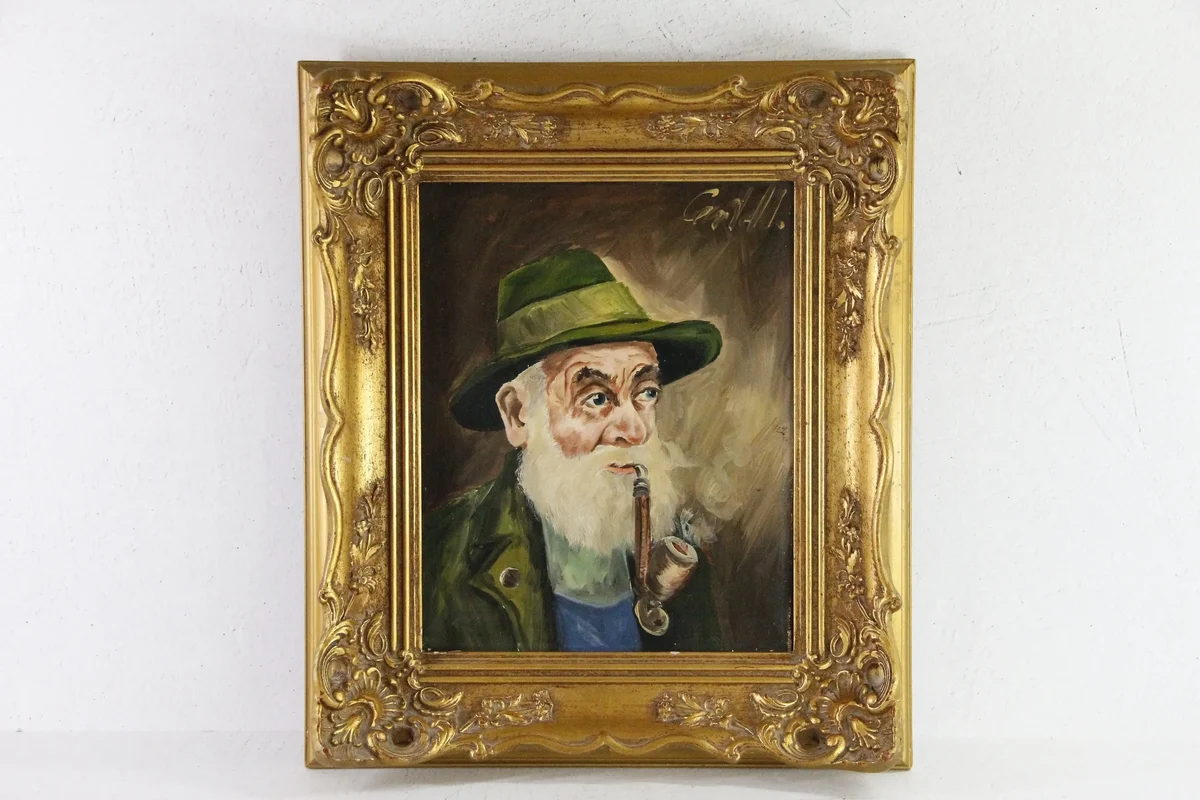
Why Faces Feel Unfamiliar
Old portraits look slightly odd because they record a different set of conditions from a phone snapshot. A painted sitter might hold a formal pose for hours, while an early photograph had to remain still during an exposure that could last minutes. The result is a face with little spontaneous movement: closed lips, a fixed gaze, raised shoulders, or hands that seem to have forgotten what to do. The image is not a neutral sample of everyday appearance. It is a meeting point between a person, a maker, a social script, and a recording process.
The date matters. Louis Daguerre's photographic process was announced publicly in 1839, and the 1840 Morse portrait cited by the Metropolitan Museum of Art used a 20-to-30-minute exposure; that figure describes that specific sitting, not early daguerreotype portraits in general. Later improvements shortened some exposures to a few minutes, while glass negatives in the 1850s made faster, sharper portrait work more practical. Even a one-second exposure demands concentration if the sitter is unfamiliar with a camera; several minutes make a relaxed smile a poor strategy.
Paintings have their own time scale. A portrait artist can revise an expression, combine several sittings, idealize a feature, or finish clothing from sketches. A photograph seems more direct, yet early portrait studios still used backdrops, head rests, strong window light, and rehearsed poses. That mixture explains why a historical face can feel both intensely specific and strangely impersonal.
The Problems Behind The Look
A common mistake is to read a closed mouth as misery. Keeping the jaw steady during a long exposure may have been more sensible than smiling. A second mistake is to treat a rigid torso as a personality trait. Chairs, columns, and hidden supports helped reduce movement, and the furniture sometimes dictated the pose more than the sitter did.
Lighting adds another layer. Nineteenth-century studios often relied on daylight from a large window, so the brightest side of a face could sit beside deep shadow. A painted portrait might imitate this contrast for depth or status. In either case, the viewer sees a designed arrangement rather than an unedited room.
Clothing and grooming can also make a familiar person look distant. High collars, bonnets, beards, corsets, dark wool, and carefully smoothed hair change the outline around the face. A small portrait may exaggerate the effect because the head fills most of the frame. The image is read today without the manners that once explained the pose, so restraint can look like unease.
Selection changes the sample. Surviving portraits often belonged to families who could pay for a sitting, institutions that preserved notable people, or archives that favored unusual subjects. A gallery wall is not a random census of historical faces. It contains images chosen for survival, provenance, artistry, or public interest, which can make a period seem more uniform than it was.
How To Read The Image
Start With The Process
First identify the medium if the label gives one. A daguerreotype is a one-of-a-kind image on a polished, silver-plated copper sheet; it may look mirror-like as the viewing angle changes. A paper print from a glass negative belongs to a later stage of photographic practice and usually supports more copies. An oil painting, miniature, albumen print, and modern reproduction can all soften detail in different ways. The process does not reveal a person's mood, but it narrows the list of physical reasons for stillness or blur.
Use the date as a working clue rather than a verdict. A portrait marked 1840 does not guarantee a 30-minute exposure, and a later studio could still favor a formal pose. The Metropolitan Museum of Art describes a 1840 portrait by Samuel F. B. Morse in which the sitter strains to keep his eyes open during a 20-to-30-minute exposure. That detail makes the expression easier to interpret: effort may be more plausible than gloom.
Separate Pose From Mood
Describe visible actions before naming emotions. Write “chin lifted, lips closed, right hand on the chair” before writing “proud” or “sad.” This two-step habit keeps an interpretation tied to evidence. A sideways gaze might follow a photographer's direction, a painted convention, or a person's preference. It might also result from the need to avoid blinking during a lengthy exposure.
Look for strain in the body. Raised shoulders, fingers pressed into fabric, a tense mouth, and an asymmetrical head can signal the work of staying still. Yet no single cue settles the question. A formal sitter may have chosen a serious face because seriousness suited the occasion. The safest reading combines pose, medium, date, clothing, and the portrait's setting.
Read The Studio Furniture
Furniture is evidence, not mere decoration. A chair with a high back gives the body a repeatable position; a small head rest can steady the skull; a table gives hands a place to land. A column or curtain may be a painted prop, a studio support, or both. Check where the body bears weight and whether the pose would be comfortable without the furniture.
In practice, compare the face with the rest of the body. If the head is sharp but a hand is blurred, movement occurred during the exposure. If both face and hands are crisp but the shoulders are squared, a chosen convention may explain more than the camera. A magnifying glass or a high-resolution museum scan can reveal these clues, though a screen image may hide fine surface detail.
Compare Period Conventions
Compare several portraits from the same place and decade before judging one person. Repeated three-quarter turns, hand positions, dark backgrounds, and direct gazes point toward studio practice. Differences in age, dress, posture, and facial tension then become more informative. Museum collection pages often identify the medium, date, dimensions, and maker, so a small comparison set can be built without treating a single image as typical.
Notice what the portrait tries to communicate. A lawyer may be shown with books, a child with a toy, and a military sitter in uniform. Such objects direct attention toward rank, occupation, family role, or memory. The oddness may come from a mismatch between that symbolic language and modern expectations of an informal likeness.
Two Everyday Case Examples
Imagine a family album with a 1852 paper photograph of a woman seated beside a small table. Her shoulders are square, her mouth is closed, and one hand grips a handkerchief. A modern viewer might call her anxious. A closer reading finds a studio pose, a support for the arm, a long exposure inherited from early photographic practice, and clothing that restricts movement. Anxiety remains possible, but the picture does not prove it. The physical arrangement explains more than the expression alone.
Now imagine a painted portrait of a merchant from the 1780s. The face is smoother than the hands, the coat is carefully finished, and the gaze meets the viewer with controlled calm. The painter may have combined several sittings and adjusted the face to fit a social ideal. The result can look less lively than a later candid photograph while still carrying deliberate information about wealth, education, and self-presentation.
These examples are not reconstructions of named individuals. They are reading exercises. Their lesson is modest: identify what the image records, what the maker arranged, and what the viewer is adding.
A Practical Reading Checklist
Use this short checklist before assigning a mood to an old portrait. It works for a museum label, a family photograph, or a scanned archive image.
- Record the date and medium. Note the process, approximate year, object type, and whether you are viewing an original or a reproduction.
- Describe the body. Mark head angle, gaze, mouth, hands, weight, clothing, and any visible support.
- Inspect the light. Look for window direction, shadow, painted highlights, glare, and details lost in dark areas.
- Study the setting. Separate useful clues from studio props such as curtains, columns, books, or artificial backdrops.
- Compare nearby examples. Check two or three portraits from a similar date, region, or maker before calling the pose unusual.
- State limits. Use “the sitter appears” or “the arrangement suggests,” and keep private feelings separate from visible evidence.
| Clue | Likely influence | Question to ask | Reading limit |
|---|---|---|---|
| Closed mouth | Stillness or convention | Was the exposure long? | It does not prove sadness |
| Blurred hand | Movement during exposure | Is the face sharper? | Movement timing stays unknown |
| Dark backdrop | Studio design or symbolism | What does the setting frame? | It may be a prop, not a room |
Common Reading Mistakes
The first mistake is assuming that nobody smiled before the twentieth century. People smiled in life and in art, but a long photographic exposure, social formality, dental conventions, and the wish for a dignified likeness could make a closed expression preferable. The second is treating every old image as a photograph. Paintings and photographs have different production times, surfaces, and editing practices.
A third mistake is trusting a low-quality scan. Compression can erase eyelashes, flatten shadows, and turn a slight smile into a straight line. The opposite problem occurs with aggressive restoration, which may invent smooth skin or sharpen edges beyond what the original records. Consult the institution's catalog entry and, when possible, inspect multiple views of the object.
A fourth mistake is turning a period pattern into a biological claim. Historical images cannot show that an entire population lacked emotion, humor, or individuality. They show what makers and sitters chose, what processes captured, and what later owners saved. A fifth mistake is ignoring the photographer's or painter's role: framing, retouching, pose direction, and object placement shape the evidence.
FAQ
Why do old photos look so serious?
Long exposures made movement risky, and formal studio customs favored a steady, closed expression. Seriousness was also a useful visual language for dignity.
Did people smile in the nineteenth century?
Yes. Smiling existed in daily life and some art, but early photographic conditions made a sustained smile difficult and often less desirable for a formal likeness.
Why are heads held so stiffly?
Head rests, high-backed chairs, and photographer direction reduced movement during exposure. Their presence can make the pose look more rigid than ordinary sitting.
Are painted portraits more accurate than photos?
Neither medium is automatically more accurate. A painting can idealize features, while a photograph can freeze an awkward instant or be altered through printing and retouching.
How can I identify a daguerreotype?
Look for a reflective silver-toned surface, a one-of-a-kind plate, a small protective case, and a label naming the process; confirm the identification with a museum or archive record.
Author's Insight
The oddness of an old portrait is often a clue about production rather than a window into hidden character. The strongest interpretation joins technical evidence with social context and leaves room for uncertainty. A date, medium, support, or blur can change the reading of a face more than a modern guess about expression. Looking slowly turns the portrait from a strange-looking person into a record of choices made by sitter, maker, and later keeper.
Key Takeaways
Old portraits look unusual because stillness, lighting, clothing, studio direction, artistic convention, and selective preservation all meet in one frame. Check the medium and date, describe visible details before naming emotion, and compare related images. Early photographic exposure times explain many fixed expressions, but they do not explain every portrait. A careful reading can recover the practical conditions behind the image while respecting what the object cannot reveal about the person's private feelings.