252,756 Miles Explained
The number 252,756 miles tied to Artemis II refers to a mission distance figure used in public summaries, but the exact definition can vary by source. In many spaceflight communications, a “distance” value reflects a planned path length along the trajectory, not the straight-line separation between Earth and the Moon. That distinction matters because spacecraft follow curved paths shaped by gravity assists and engine burns, so the path length can be much longer than a simple Earth-to-Moon line.
For Artemis II, the mission profile includes leaving Earth, entering a translunar trajectory, passing near the Moon, and returning to Earth. The spacecraft does not “drive” the distance in a single segment; it follows multiple phases with different thrusting and coasting periods. If you see 252,756 miles paired with a launch-to-return timeline, the number still does not directly tell you how long each phase lasts or how much propellant gets used.
As a practical example, a car trip from one city to another might be 300 miles by road even if the cities are only 150 miles apart as the crow flies. Space missions use the same logic, except the “road” is a gravity-shaped curve and the “vehicle” is a spacecraft with limited thrust. When the public number is presented without the measurement method, you have to treat it as a trajectory-length estimate rather than a universal truth.
What People Commonly Misread
People often treat a single distance number as a proxy for speed, difficulty, or exposure. Distance alone does not determine how fast the spacecraft moves at each point, because velocity changes continuously along the trajectory. A mission can cover a long path while spending more time in slower segments, or it can cover a shorter path with faster segments, depending on the planned geometry and burn timing.
Another frequent misunderstanding comes from mixing “distance traveled” with “distance from Earth.” The spacecraft’s distance from Earth changes dramatically during translunar flight, but the public figure may represent the total path length. Those two quantities move in different ways, so comparing them to everyday experiences can produce misleading intuition.
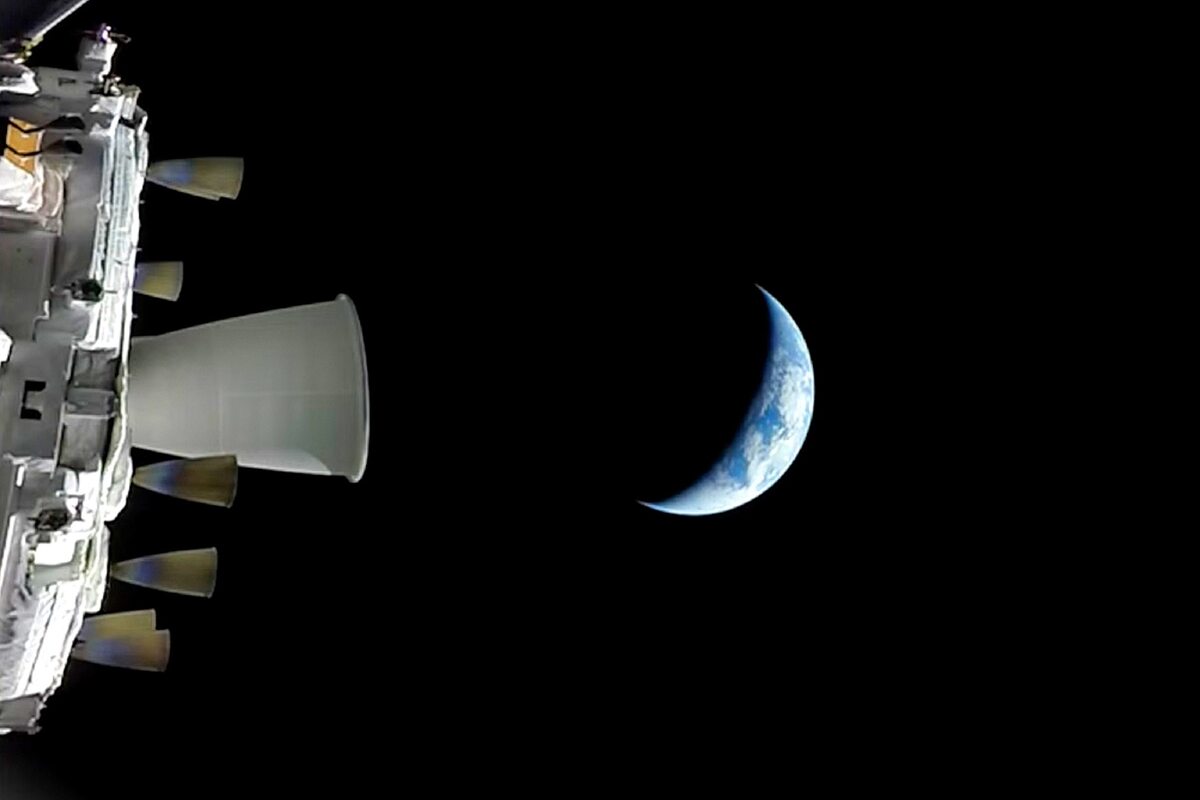
Supporting technologies also shape what the number means. Artemis II uses a spacecraft stack that includes the Orion crew module and service module, and the trajectory depends on propulsion performance, navigation accuracy, and guidance software. Even small differences in launch conditions can shift the path slightly, which is why mission teams track the flight using continuous navigation updates rather than relying on a single pre-launch distance.
Finally, public summaries sometimes combine multiple mission elements into one figure, such as including certain coast segments or accounting for specific maneuver arcs. If a source does not state whether it is “trajectory length,” “total mission distance,” or “distance from Earth at a reference point,” you should assume the number is a planning metric rather than a measured outcome.
How To Interpret The Number
Check The Measurement Definition
Look for wording that indicates whether the figure is “trajectory length,” “total distance,” or “path length.” If the source does not specify, treat 252,756 miles as an approximate planning value. A quick sanity check is whether the number is consistent with a translunar round trip: Earth-to-Moon straight-line distance is about 238,900 to 252,000 miles depending on orbital positions, while a curved trajectory path is typically longer than the straight-line distance.
When you compare sources, note whether they cite a specific NASA document or a press kit. I’ve seen public pages update formatting without changing the underlying number, and the definition can lag behind the presentation. If you want the most defensible interpretation, use the figure tied to a specific mission reference document and keep the definition attached to the number.
Separate Distance From Time
Use the mission timeline to interpret what the distance implies about pacing. Artemis II’s planned duration is on the order of days, and the spacecraft will not travel at a constant speed. Coasting phases dominate much of the journey, while engine burns occur at specific points to adjust trajectory and timing.
To connect distance to time without overreaching, you can compute an average speed by dividing distance by total mission duration. That average still hides the real variation in velocity, but it helps you avoid the common error of assuming “miles” equals “constant speed.” If a source lists both distance and duration, the average speed calculation can reveal whether the number is plausible for a translunar mission.
Use Reference Distances Carefully
Reference comparisons help intuition, but they can also mislead. For example, 252,756 miles is roughly 407,000 kilometers, which is about the distance from New York to Los Angeles by road plus extra detours. That analogy works for scale, not for physics, because road distance includes stops and turns while a spacecraft trajectory is continuous and gravity-driven.
A more physics-aligned comparison is to relate the number to Earth–Moon geometry. Straight-line Earth-to-Moon distance varies with lunar position, while trajectory length depends on the planned path and maneuver strategy. If your goal is understanding exposure or mission risk, you should not infer it from miles alone; you need radiation and operations data.
Track What The Number Does Not Cover
Distance does not directly quantify radiation dose, life-support workload, or landing or splashdown conditions. Radiation exposure depends on factors like trajectory inclination, time spent in specific regions, solar activity, and shielding configuration. Life-support demands depend on crew schedules, power generation, thermal control, and consumables management.
Also, “miles” does not tell you how much propellant gets used or how many major burns occur. Those details come from mission design and propulsion performance, not from a single distance figure. If you see a claim that links the miles number to a specific risk outcome, treat it as an unsupported inference unless it cites the underlying analysis.
Educational Case Examples
Case 1: Confusing Path Length With Earth-Moon Distance
A reader sees “252,756 miles” and concludes the spacecraft will be that far from Earth at all times. In reality, the spacecraft’s range from Earth changes continuously, and the number represents a planned trajectory length. The reader then tries to compare it to a “maximum distance” claim and gets conflicting results across sources.
What resolves the confusion is separating “total path length” from “distance at a given moment.” The mission’s public distance figure can be consistent with a trajectory that passes near the Moon and then returns, even though the spacecraft is not constantly at the maximum range. This is the same kind of mismatch you’d see if you compared a road-trip total mileage to the distance between cities at a single timestamp.
Case 2: Inferring Speed From Miles Alone
Another reader divides 252,756 miles by the mission duration and reports a single “speed” as if it were the spacecraft’s cruising speed. The calculation produces an average speed, but the reader then compares it to a constant-speed aircraft and concludes the mission is “slow” or “fast” in a way that does not match orbital mechanics.
The fix is to treat the average as a rough scale indicator, not a physical description. Artemis II includes coasting and maneuver burns, so instantaneous speed varies. If you want a more accurate picture, you need time-stamped velocity or trajectory plots, not a single distance figure.
Distance Checklist And Tradeoffs
| What You See | What It Usually Means | What It Does Not Tell You | How To Verify |
|---|---|---|---|
| 252,756 miles | Planned trajectory length or total mission path estimate | Instantaneous speed, range at a specific time, radiation dose | Find the source document and look for “trajectory length” wording |
| Mission duration | Total time from launch to return | How speed changes during coasts and burns | Use official timeline and, if available, burn schedule summaries |
| Earth–Moon distance | Straight-line geometry varies with lunar position | Curved path length and maneuver strategy | Compare to the planned trajectory definition, not the straight-line number |
Step-by-step checklist for interpreting the miles figure:
- Locate the exact source that states 252,756 miles and capture the surrounding wording.
- Identify whether it describes trajectory length, total mission distance, or a distance at a reference point.
- Pair the distance with the mission duration to compute an average speed only as a scale check.
- Do not infer radiation exposure, risk level, or crew workload from miles alone.
- If you need operational meaning, look for official summaries of trajectory phases and major burns.
Common Mistakes To Avoid
One mistake is treating the miles number as a measured outcome. Artemis II planning values can change with trajectory updates, and public numbers may lag behind revisions. If a source does not state “planned” or “final,” you should assume it is a planning metric.
Another mistake is mixing units and reference frames. Some sources use miles, others use kilometers, and some describe straight-line distances while others describe path length. Converting units without matching the definition can produce a number that looks “wrong” even when the underlying concept is consistent.
People also overfit the number to a single narrative about difficulty. Distance does not capture the engineering constraints that drive mission design, such as thermal limits, communications windows, abort options, and navigation margins. A miles figure can be accurate while still being a poor predictor of what most readers care about.
Finally, promotional writing sometimes uses the miles number to imply a direct link to health outcomes. Radiation dose and crew safety depend on shielding, trajectory timing, and space weather conditions, which require analysis beyond a distance headline. If a claim skips those details, it reads like a guess.
FAQ
Does 252,756 Miles Mean The Craft Is That Far Away?
No. The figure is typically a planned trajectory length or total path estimate, while the spacecraft’s distance from Earth changes continuously during translunar flight and return.
Is The Number A Straight-Line Earth-To-Moon Distance?
Usually not. Straight-line Earth–Moon distance varies with lunar position, and a spacecraft follows a curved path that is longer than the straight-line separation.
Can I Convert The Miles Into A Real Speed?
You can compute an average speed by dividing by total mission duration, but instantaneous speed varies due to coasting and maneuver burns, so the average does not describe the full flight.
Does More Miles Mean More Radiation Exposure?
Not automatically. Radiation exposure depends on trajectory details, time spent in particular regions, shielding, and solar activity, so miles alone cannot predict dose.
Where Should I Look For The Best Definition?
Use the official mission materials that state how the distance is defined, such as NASA mission fact sheets or reference documents tied to the specific Artemis II trajectory description.
Author's Insight
Public mission numbers often compress a complex trajectory into a single headline figure, and 252,756 miles fits that pattern. The most defensible interpretation treats the number as a planned trajectory-length estimate, not a constant distance from Earth and not a direct proxy for speed or health risk.
When readers connect miles to outcomes like exposure or difficulty, the missing link is usually the trajectory phase timing and the analysis behind radiation and operations. A careful approach pairs the distance with official definitions and with the mission timeline, then avoids drawing conclusions that require data not contained in the miles figure.
I also recommend checking whether the number appears in a specific document version; I’ve seen mission pages update formatting around 2024–2025 without changing the underlying trajectory numbers, which can still confuse readers who compare screenshots.
Key Takeaways
- 252,756 miles is best treated as a planned trajectory-length or total path estimate, not a constant Earth–Moon separation.
- Distance alone does not determine speed at any moment, radiation dose, or crew workload.
- Pair the miles figure with mission duration for a rough scale check, then rely on official definitions for meaning.
- When sources omit the measurement method, assume uncertainty and avoid health or risk claims based on miles alone.