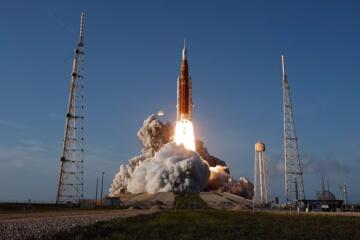
Artemis III Prelanding Tests
Artemis III is built around a sequence of rehearsals and verification steps that reduce risk before any crewed lunar landing attempt. The mission uses a crewed spacecraft, a launch vehicle, and a lunar lander, then relies on ground control to confirm that navigation, communications, propulsion, and life-support systems behave as expected under mission-like conditions. The prelanding phase does not test “everything at once”; it tests specific failure modes and performance margins, then carries forward only the data that meets acceptance criteria.
Before the first lunar touchdown, the program must demonstrate that the spacecraft can reach the right trajectory, maintain stable guidance and control, communicate reliably across long distances, and execute burns that match the planned timeline. The lander portion adds its own set of checks, including propellant readiness, landing radar behavior, and the ability to throttle and land with controlled descent. Some tests happen in space with uncrewed hardware, and others happen with crewed vehicles during the mission’s early phases, which is why the order of events matters.
Common Misreads And Dependencies
People often treat “a successful launch” as proof that the lunar landing will work, but the landing depends on different subsystems than ascent. A rocket can place a stack into the correct orbit while the later phases still face risks in rendezvous, docking, descent guidance, or landing sensors. Even a minor mismatch in timing between navigation updates and engine burns can shift the landing ellipse, which is why prelanding verification focuses on closed-loop performance rather than single-point measurements.
Another frequent misunderstanding involves communications. Deep-space links are not just “on or off”; they include link budgets, antenna pointing, data rates, and latency that affect how quickly ground control can command changes. If the spacecraft uses autonomous guidance during certain phases, the mission must prove that autonomy logic works with the expected sensor inputs, which is harder to judge from headlines than from test telemetry.
Life support is also misread as a single checklist item. The crewed spacecraft must manage oxygen partial pressure, carbon dioxide removal, humidity control, and thermal regulation while power generation and heat rejection remain stable. Those functions depend on sensors, valves, fans, and software control loops, so the prelanding tests often look like “watch the system respond over time,” not “pass a single static test.”
Finally, abort planning gets overlooked. A landing attempt requires a plan for what happens if a propulsion burn underperforms, if a sensor disagrees with other sensors, or if docking conditions degrade. Those abort paths depend on propellant reserves, communication availability, and the ability to reconfigure guidance modes quickly—details that rarely fit into short mission summaries.
How To Interpret The Tests
Navigation, Guidance, And Timing
Watch for evidence that the spacecraft can maintain attitude and follow planned trajectories using star tracking, inertial measurements, and onboard navigation filters. In practice, analysts look at how closely the vehicle’s measured state matches predicted ephemerides after each burn, and whether the guidance system converges without oscillation. A useful way to read updates is to track “post-burn dispersions” and “navigation solution consistency” rather than only the fact that a burn occurred. If you see repeated confirmation across multiple maneuvers, that pattern usually indicates the guidance loop is behaving predictably.
One small aside: mission teams often reference software and flight software baselines in release notes, and those baselines can change between test flights. For example, a flight software version number shown in a technical briefing can help you understand whether the crewed vehicle is running the same logic tested earlier, or a revised build that still needs verification during the mission.
Communications And Ground Links
Prelanding readiness depends on stable command and telemetry paths, including antenna pointing constraints during coast phases and higher-rate data windows during critical events. Analysts typically check whether the spacecraft maintains link margins at expected ranges and whether ground stations can acquire and track the vehicle without excessive re-pointing. If the mission uses relay paths or multiple ground assets, the handoff behavior matters, because a missed handoff can delay commands during a narrow time window.
When you read mission updates, look for phrases that indicate “acquisition,” “tracking,” and “data return” during the same time windows as navigation and propulsion events. Those are the moments where communications issues would most directly affect the ability to correct trajectory or manage contingencies. If updates only mention that communications were “nominal,” that tells you less than whether the link supported the required command latency and telemetry volume.
Descent, Landing Sensors, And Control
The lunar lander’s descent sequence depends on sensor fusion and controlled thrust modulation. The landing radar (or equivalent ranging sensors) must provide reliable altitude and velocity estimates, and the guidance system must translate those measurements into engine commands that keep the vehicle within attitude and thrust limits. Prelanding tests therefore focus on sensor calibration, ranging accuracy, and the ability to throttle and stabilize during a simulated descent profile.
In educational briefings, you may see references to “landing ellipse” targeting and “touchdown dispersions.” Those terms matter because they connect sensor performance to landing safety margins. If the radar solution is biased, the vehicle can still land, but it may land off-target, which can cascade into issues with surface operations and crew egress planning.
Life Support, Power, And Thermal Stability
Life support checks before landing often involve verifying that oxygen generation or supply, carbon dioxide removal, and cabin pressure control remain stable across changing power loads and thermal conditions. Power systems also matter because fans, pumps, and avionics draw from electrical buses that must remain within voltage and current limits. Thermal control affects sensor performance too; a sensor that drifts due to temperature gradients can degrade navigation and landing accuracy.
Practical interpretation: if telemetry shows stable cabin pressure trends, consistent CO2 scrubber performance, and predictable thermal gradients during the mission’s early phases, that pattern supports confidence that the life-support system can handle the later, more demanding timeline. A mild frustration for readers is that life-support details are often summarized without the time-series behavior that actually demonstrates stability.
Educational Case Examples
Example 1: A Burn That Looks Fine On Paper
In one anonymized scenario, a mission team reports that a translunar injection burn met its target delta-v within expected tolerances. During the next navigation update, the onboard filter shows a larger-than-expected discrepancy between predicted and measured position, but the discrepancy shrinks after subsequent tracking passes. The team treats the first discrepancy as a sensor calibration or tracking geometry issue rather than a propulsion failure, because the guidance solution converges and the vehicle remains on a recoverable corridor.
What a reader should learn: “burn success” does not end the story. The prelanding test is the closed-loop behavior—how quickly the system returns to a consistent navigation solution after the burn.
Example 2: Communications Nominal, Command Timing Not
In another anonymized scenario, telemetry return remains stable, but command execution shows a delay that pushes a maneuver window later than planned. Ground controllers can still execute the maneuver, yet the timing shift reduces margin for a later docking or sensor calibration step. The mission team responds by adjusting the sequence, using additional onboard autonomy during the coast phase while waiting for the next ground contact window.
What a reader should learn: communications readiness includes timing and command latency, not only the presence of a data link.
Prelanding Test Checklist
Use this checklist to evaluate whether reported milestones actually reduce landing risk. It focuses on what to look for in telemetry summaries and technical briefings.
| Test Area | What To Look For | Why It Matters For Landing | Red Flag |
|---|---|---|---|
| Navigation After Burns | Convergence of state estimates within expected dispersions | Reduces landing ellipse drift and improves targeting | Persistent bias that does not shrink after additional tracking |
| Communications Timing | Command latency and data return during maneuver windows | Affects ability to correct trajectory and manage contingencies | Repeated missed windows or delayed execution without a clear mitigation |
| Descent Sensor Behavior | Ranging accuracy and stable sensor fusion during simulated descent | Controls altitude/velocity estimates used by guidance | Sensor disagreement that forces frequent mode switching |
| Life Support Stability | Stable cabin pressure trends and CO2 removal performance over time | Supports crew safety during the landing timeline | Frequent control oscillations or repeated filter/scrubber resets |
Step-by-step use: pick one milestone update, identify which test area it claims to cover, then check whether the update includes time-series behavior or only a binary “nominal” statement. If the update lacks the second part, treat it as a status note rather than evidence of landing readiness.
Common Mistakes To Avoid
One mistake is treating uncrewed test results as directly transferable to a crewed landing attempt. Hardware can share designs, yet differences in software configuration, operational modes, and mission timelines change what gets tested. A reader should look for whether the same guidance and control logic ran in the relevant phase, not just whether the vehicle flew successfully.
Another mistake is confusing “system works” with “system works under constraints.” Landing depends on constraints like propellant margins, sensor line-of-sight, and attitude limits during specific time windows. If a report does not mention margins or dispersions, it may not answer the risk question.
A third mistake is over-weighting a single metric such as altitude at one moment. Descent guidance relies on trends: how altitude error evolves, how velocity estimates track, and whether the control system remains stable through throttling. Readers can often spot this by checking whether updates mention multiple points across the descent profile rather than one headline number.
Finally, avoid promotional interpretation of official language. If a briefing says a subsystem is “nominal,” that phrase usually means it met its immediate checks, not that it has been proven for every contingency path. The prelanding tests matter most when they show how the system behaves when something drifts—sensor bias, timing offsets, or partial degradation.
FAQ
What phases count as prelanding?
Prelanding includes the mission segments that verify navigation and communications performance, rendezvous and docking readiness, and the lander’s descent sensor and control behavior before touchdown. The exact phase boundaries vary by mission design, but the risk-reduction logic stays consistent.
Do Artemis III tests happen only on the Moon?
No. Many checks occur in Earth orbit or during translunar cruise, where navigation filters, communications links, and life-support control loops can be exercised without the added complexity of surface operations.
How do crews verify life support before landing?
They rely on onboard monitoring of cabin pressure, oxygen and carbon dioxide management, humidity and thermal control, and power draw stability. The key evidence is time-series stability during mission operations, not a single pass/fail snapshot.
Why does descent radar performance matter?
Landing guidance uses ranging and velocity estimates to control altitude and thrust commands. If radar measurements drift or disagree with other sensors, the guidance system may switch modes or reduce margin, which affects landing accuracy and safety margins.
What counts as a communications “success”?
Success includes reliable telemetry return and command execution within the timing needed for maneuver windows. A link can be “up” while still failing the timing or data-rate needs for critical operations.
Author's Insight
Artemis III’s prelanding tests can be understood as a chain of closed-loop verifications: navigation after burns, communications during maneuver windows, and sensor-driven descent control. The most informative updates usually include how estimates converge over time and whether the system stays within dispersions across multiple events. When reports omit time-series behavior, readers should treat them as status rather than proof of landing readiness. A careful way to follow the mission is to map each public milestone to a specific risk area and ask whether the evidence addresses trends, margins, and contingency behavior.
Key Takeaways
- Launch success does not replace prelanding verification of navigation, communications timing, descent sensors, and life-support stability.
- Look for evidence of closed-loop convergence and stable trends, not only binary “nominal” statements.
- Descent readiness depends on sensor fusion and controlled thrust modulation, which can’t be inferred from ascent performance alone.
- Communications readiness includes command latency and data return during narrow maneuver windows.
- Use the checklist to judge whether a milestone reduces landing risk or merely reports system status.