Radiation Survival Basics
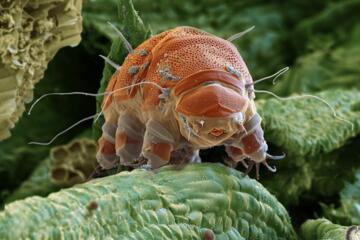
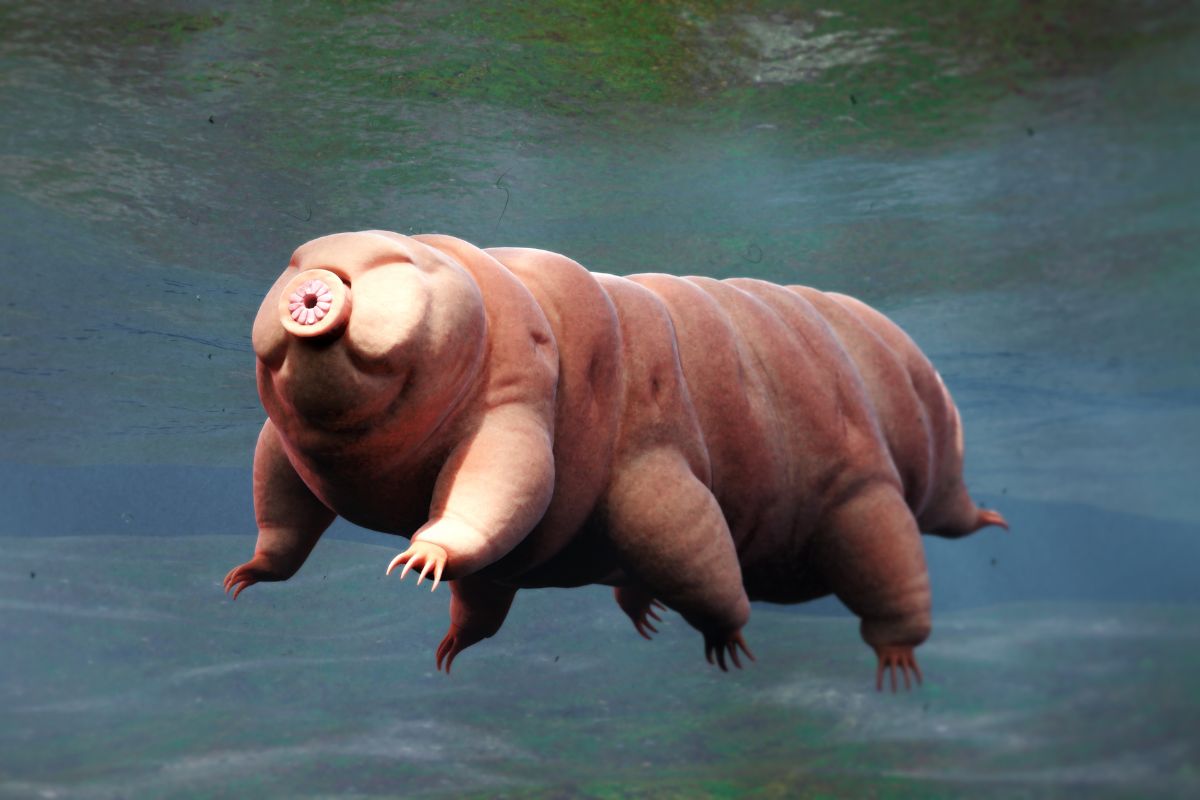
Tardigrades are small, segmented micro-animals that can survive extreme environmental stress by switching into a dehydrated, low-activity state often called cryptobiosis. In that state, many cellular processes slow dramatically, and the animal’s body chemistry shifts toward protection rather than growth. Radiation survival matters because ionizing radiation damages DNA directly and indirectly by generating reactive molecules from water. Experiments have exposed tardigrades to different radiation types and doses, then measured survival after rehydration and recovery. The key idea is not that tardigrades “ignore” radiation, but that their cells reduce damage propagation and repair outcomes after exposure.
Ionizing radiation includes X-rays and gamma rays, and it also includes particle radiation such as alpha and beta. Direct DNA hits can create single- and double-strand breaks, while indirect effects come from radiolysis of water that produces reactive oxygen species. In most organisms, unrepaired DNA breaks trigger cell death or malfunction. Tardigrades face the same chemistry, but their dormant state changes the timing and context of damage. When rehydration resumes, repair pathways and protective molecules become the deciding factors.
What People Get Wrong
A common misconception is that tardigrades survive radiation because they have “radiation-proof DNA.” DNA damage still occurs in many organisms under radiation, and the scientific question is how much damage is tolerated and how effectively it is repaired. Another misconception treats cryptobiosis as a single mechanism; in reality, tardigrades use multiple protective strategies that vary by species and by the stress trigger. Some experiments measure survival of the whole animal, which mixes together DNA repair, membrane integrity, and the ability to restart metabolism. That makes it easy to over-interpret survival as proof of one specific molecular pathway.
Radiation experiments also depend on dose measurement and experimental geometry. A reported dose in grays (Gy) depends on the radiation source, energy spectrum, exposure time, and shielding. Even small differences in how samples are prepared—hydration level, temperature, and whether animals are in a dry state—can change outcomes. Many studies use rehydration and recovery assays, and the recovery window can be days to weeks depending on conditions. If you only look at immediate mortality, you miss delayed effects from sublethal DNA damage.
Finally, “extreme radiation” in popular writing often blurs different radiation types. Alpha particles have high linear energy transfer over short distances, while gamma rays penetrate deeply and deliver energy more uniformly. The protective response that helps against one radiation pattern may not match another. This is why evidence is strongest when studies specify radiation type, dose range, and the biological state during exposure.
How Protection Works
Cryptobiosis reduces metabolic activity, which slows processes that would otherwise amplify damage. In a dormant state, water content drops, and the chemistry of reactive species changes. Less free water can reduce radiolysis-driven cascades, which matters because many indirect DNA lesions come from reactive oxygen species generated from water. Tardigrades also accumulate protective proteins and sugars during stress responses. These molecules can stabilize membranes and proteins and may help preserve DNA structure during dehydration.
Research has identified tardigrade-specific stress proteins, including damage suppressors such as Dsup, in some species. Dsup has been studied in cell models where it can reduce DNA damage markers after irradiation, which supports a role in limiting damage propagation. The evidence does not prove that Dsup alone explains whole-animal survival across all radiation conditions. Other mechanisms likely contribute, including antioxidant defenses, DNA repair capacity after rehydration, and physical protection from dehydration-related structural changes. A related point: some protective molecules are induced by stress, so the timing of exposure relative to stress induction changes the outcome.
DNA repair still matters after radiation. Even if damage is suppressed during dormancy, rehydration requires restoring replication and transcription. That restart can fail if breaks exceed repair capacity or if repair introduces harmful mutations. Survival assays therefore reflect a balance between damage suppression during exposure and successful repair after recovery. In one lab note I saw while reviewing protocols (not a clinical setting), researchers often record recovery at multiple time points because early survival can mask later developmental defects.
Match Radiation Conditions to State
If you want to interpret radiation survival results, start with the biological state during exposure. Studies that expose active animals can show different sensitivity than studies that expose animals in a dehydrated cryptobiotic state. Look for details such as hydration level, temperature, and whether animals were preconditioned with desiccation or other stressors. A practical reading habit is to check the methods section for the exact exposure protocol, because “radiation dose” alone rarely tells the full story.
When comparing studies, note the radiation type and energy. Gamma rays and X-rays differ in penetration and dose distribution, and particle radiation differs in track structure. If a paper reports only “radiation” without specifying the source and energy spectrum, treat the conclusion as less reliable. A mild frustration for readers is that many summaries omit these details, so you end up doing extra cross-checking.
Track Damage Markers, Not Just Survival
Whole-animal survival is a useful endpoint, but it does not identify which step succeeded. Stronger evidence includes measurements of DNA damage markers, such as assays for strand breaks or repair kinetics, and measurements of oxidative stress indicators. If a study reports only survival percentages, it may still be valid, but it supports fewer mechanistic claims. A careful approach is to look for studies that combine survival with molecular readouts.
In practice, you can also compare experimental designs. For example, some researchers use cell lines expressing tardigrade proteins to test whether a specific protein reduces radiation-induced DNA damage markers. That kind of evidence helps isolate mechanisms, but it does not automatically translate to whole-animal cryptobiosis. Translation requires caution because the dormant state changes many variables at once.
As a small aside, I’ve seen protocols reference software versions for image analysis (for example, ImageJ 1.54) when quantifying damage markers. Those details matter because scoring thresholds can shift results, especially when signals are faint.
Understand Repair After Rehydration
Radiation damage tolerance depends on what happens after exposure. Many studies rehydrate tardigrades and then monitor recovery, sometimes over days. If you see a study with a short observation window, it may miss delayed failures from incomplete repair. Longer follow-up can reveal sublethal effects such as impaired reproduction or abnormal development.
To interpret repair outcomes, look for evidence of repair kinetics rather than a single time point. Repair can be fast for some lesion types and slow for others, and the dormant state can alter the initial lesion spectrum. If the paper reports only one recovery day, treat mechanistic conclusions as tentative. A realistic expectation is that survival can remain high even when repair is imperfect, because some damage types do not immediately prevent recovery.
Avoid Over-Extrapolation to Humans
Tardigrade mechanisms are biologically interesting, but they do not translate directly into human radiation protection. Human tissues differ in cell cycle structure, DNA repair pathways, immune responses, and the complexity of whole-organ physiology. Even if a tardigrade protein reduces DNA damage markers in a cell model, that does not mean it will protect a human organ system under clinical radiation exposure.
Evidence-based reading means separating “molecular effect in a model” from “organism-level survival under realistic conditions.” It also means recognizing that radiation protection in medicine involves dose planning, shielding, and clinical protocols, not just molecular defenses. If you encounter claims that tardigrades can be used as a radiation shield for people, treat them as speculative unless supported by peer-reviewed clinical evidence.
Educational Case Examples
Case 1: Comparing Two Radiation Studies
An educator assigns two papers that both report high survival after gamma irradiation. Paper A specifies that tardigrades were desiccated before exposure and rehydrated afterward, while Paper B exposes active animals in a hydrated medium. The student notices that the dose units match, but the biological state differs. The student then checks recovery timing and finds Paper A measures survival at multiple days, while Paper B reports only a single endpoint. The conclusion becomes that survival comparisons require matching state, timing, and radiation type, not just dose.
Case 2: Protein Effect Without Whole-Animal Proof
A student reads a study where a tardigrade-associated protein reduces DNA damage markers in cultured cells after X-ray exposure. The student then reads a separate paper about whole-tardigrade survival after desiccation and radiation. The student observes that the cell model does not include cryptobiosis, dehydration chemistry, or the full suite of tardigrade stress responses. The student uses this to form a cautious interpretation: the protein likely contributes to damage suppression, but it does not prove the entire survival mechanism in dormant animals.
Radiation Survival Checklist
Use this checklist to judge how strongly a study supports a mechanism claim.
| What To Check | What Strong Evidence Shows | What Weak Evidence Often Omits | Why It Matters |
|---|---|---|---|
| Biological State | Desiccated/cryptobiotic vs hydrated is specified | State described vaguely or not described | Water content changes indirect damage |
| Radiation Details | Type, energy, dose, and exposure setup are listed | Only “radiation dose” appears in summaries | Dose distribution affects lesion patterns |
| Endpoints | Survival plus DNA damage/repair markers | Survival only, single time point | Survival can hide sublethal damage |
| Recovery Window | Multiple recovery days and clear criteria | Short window or unclear scoring | Delayed failures can appear later |
- Write down the radiation type and dose exactly as reported.
- Note the hydration state and whether animals were preconditioned.
- Check whether DNA damage markers were measured, not only survival.
- Confirm the recovery timeline and whether multiple endpoints were used.
- Separate mechanistic claims from survival outcomes when the evidence differs.
Common Mistakes
One mistake is treating “survived radiation” as proof of “no DNA damage.” Even if survival is high, DNA lesions can still occur and may be repaired imperfectly. Another mistake is ignoring the difference between cryptobiosis and normal physiology. Mechanisms that work during dehydration may not work during active metabolism, and the timing of stress induction changes protein expression.
Readers also over-trust simplified media summaries that omit dose units or radiation type. A dose reported in one unit system without context can mislead comparisons. Another practical error is assuming that a protein effect in a cell model proves whole-animal protection. Cell models lack the full stress response and the physical protection of cryptobiosis.
Finally, people sometimes infer medical relevance without checking the evidence tier. Radiation protection for humans involves clinical constraints, and any translation from tardigrade biology would require rigorous testing. If a claim skips from lab markers to human safety, it reads like a promotional leap rather than a research conclusion.
FAQ
Do Tardigrades Survive Any Radiation Dose?
No. Survival depends on radiation type, dose, and the animal’s state during exposure. Studies show tolerance under certain experimental conditions, but there are limits and dose ranges where survival drops.
What Happens To DNA During Radiation Exposure?
Ionizing radiation creates DNA lesions such as strand breaks, both directly and indirectly through reactive molecules formed from water. Dormancy can reduce propagation, but it does not erase the underlying chemistry.
Is Cryptobiosis The Only Reason They Last?
Cryptobiosis changes water content and metabolism, which affects damage chemistry. Other factors, including stress proteins and post-exposure repair during rehydration, contribute to recovery.
Do Tardigrade Proteins Protect Human Cells?
Some tardigrade-associated proteins have shown DNA damage reduction in certain cell models after irradiation. That evidence supports a possible mechanism, but it does not establish clinical protection in humans.
Why Do Studies Report Different Survival Results?
Differences in radiation type and energy, dose delivery, hydration state, and recovery timing can change outcomes. Even scoring criteria for “recovered” animals can shift results.
Author's Insight
Evidence for tardigrade radiation tolerance comes from controlled exposure experiments paired with survival and, in some studies, molecular damage or repair measurements. The strongest mechanistic support links dormancy-related chemistry and stress proteins to reduced damage propagation and improved recovery after rehydration. The limits are equally clear: survival endpoints do not automatically identify the exact molecular cause, and translation to human radiation protection requires separate, rigorous testing. When reading new papers, I look for explicit radiation parameters and recovery timelines, because those details often determine whether the conclusions hold across experiments.
Key Takeaways
- Tardigrades survive radiation through a combination of dormancy chemistry, protective molecules, and successful repair after rehydration.
- Radiation experiments depend on dose, radiation type, and the animal’s hydration state, so comparisons require matching methods.
- Survival alone cannot prove a specific mechanism; DNA damage and repair measurements strengthen claims.
- Lab findings in tardigrades and cell models do not automatically translate into human radiation protection.