Tardigrades And Radiation Survival
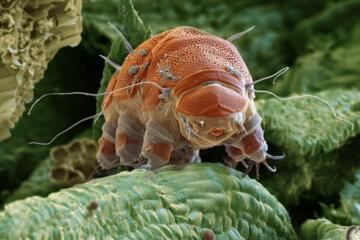
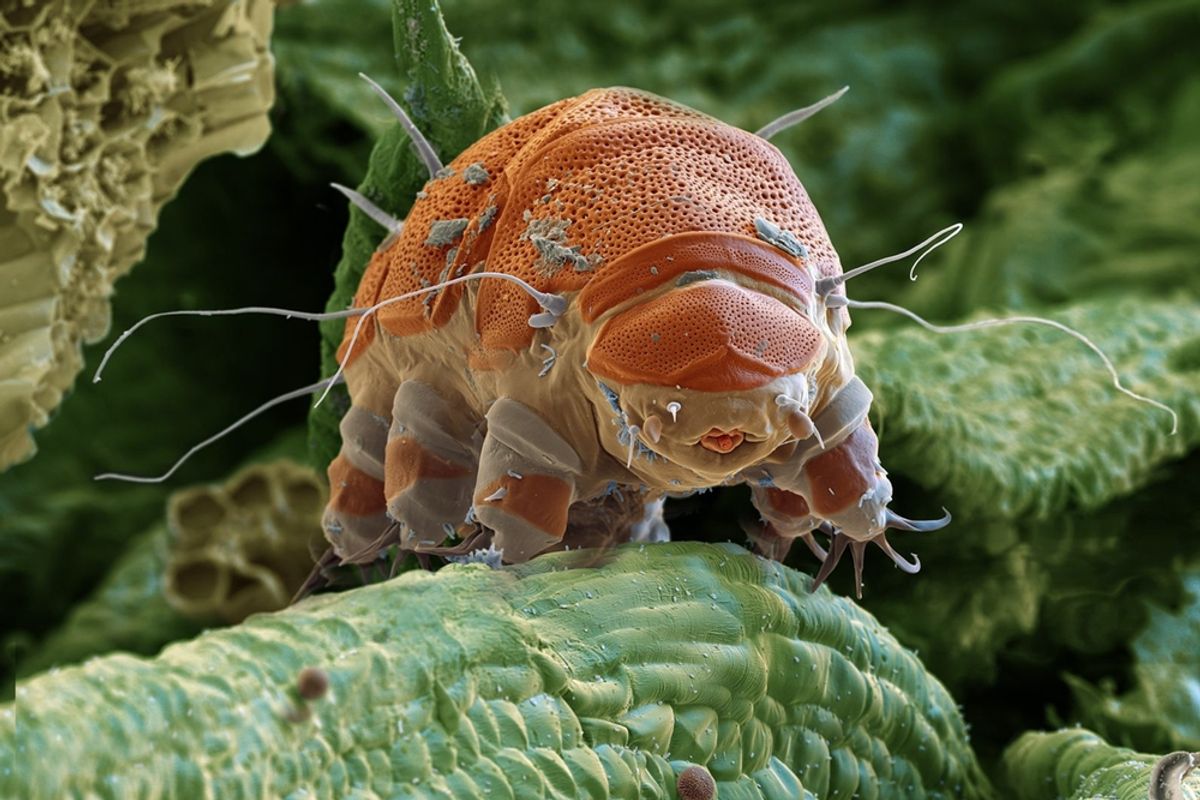
Tardigrades survive extreme radiation because their cells can switch into a protective, low-activity state and because their DNA damage responses differ from what many other animals do. In lab studies, some species tolerate doses that would be lethal to most multicellular organisms, mainly by limiting DNA breakage and by repairing damage after exposure. The key point is not that tardigrades “ignore” radiation, but that they manage the chemical aftermath inside cells.
Radiation harms living tissue through ionization. That ionization creates reactive molecules such as free radicals, which attack DNA bases and the sugar-phosphate backbone. The result can be single-strand breaks, double-strand breaks, and base modifications. Double-strand breaks are especially dangerous because they can scramble genetic information unless repair pathways work quickly and accurately.
Tardigrades also enter a cryptobiotic state when conditions become harsh, often involving dehydration and a dramatic slowdown of metabolism. During this state, biochemical reactions that would otherwise amplify damage are reduced. When conditions improve, the organism rehydrates and resumes cellular activity, including DNA repair. A side observation from reading experimental protocols: many studies use controlled dehydration times and rehydration schedules, because the timing affects survival rates.
What People Often Get Wrong
A common misunderstanding is that radiation survival means “no DNA damage occurs.” Radiation still creates lesions; the survival claim comes from the ability to tolerate or repair those lesions. Another misconception treats tardigrades as a single uniform organism. Different species show different tolerance ranges, and even within a species, life stage and prior stress history can shift outcomes.
People also overgeneralize from the idea of “extreme resistance” to the idea of “unlimited resistance.” In experiments, survival drops as dose increases, and the dose-response curve depends on the type of radiation. Gamma rays, X-rays, and charged particles deposit energy differently, producing different patterns of DNA damage. If you compare results across papers without matching radiation type, dose, and sample preparation, the conclusions can look contradictory.
Supporting technologies matter for interpreting results. Many studies use dosimetry instruments to quantify dose, and they often measure survival after rehydration rather than during exposure. That means the reported outcome reflects both damage tolerance during the stress and repair capacity after rehydration. The experimental design can also influence results; for example, whether tardigrades are in a dehydrated state at the moment of irradiation changes the chemistry of the cell environment.
Finally, it helps to separate “mechanism” from “correlation.” Some protective molecules are detected in tardigrades during cryptobiosis, but detecting a molecule does not prove it is the only cause of survival. Mechanistic claims need functional tests, such as observing survival changes when specific pathways or molecules are disrupted. Many studies are careful about this, but the popular summaries rarely are.
Mechanisms And Practical Advice
DNA Protection And Repair
Evidence points to a combination of DNA protection and post-exposure repair. During cryptobiosis, tardigrades accumulate proteins and other molecules that can bind to DNA and help stabilize it. Some proteins are enriched during stress and are linked to protection against desiccation and other insults, which likely reduces the chance that radiation-induced lesions expand into lethal damage.
After rehydration, repair pathways become active. Double-strand breaks require coordinated repair, and the organism must manage the balance between accurate repair and apoptosis-like pathways that remove severely damaged cells. In practice, the “survival” outcome depends on whether repair is fast enough and whether the protective state prevented damage from becoming irreparable.
A practical way to interpret claims is to look for studies that measure DNA damage markers alongside survival. When researchers report both lesion reduction and improved survival, the mechanism story becomes more credible. When they report survival only, the mechanism remains a hypothesis.
Cryptobiosis Changes Cell Chemistry
Cryptobiosis reduces metabolic activity and changes the physical state of the cell environment, often through dehydration. Lower water content can reduce the mobility of reactive species and slow many chemical reactions that would otherwise propagate damage. That shift does not remove radiation effects, but it can change how quickly lesions multiply.
In many experiments, tardigrades are irradiated while dehydrated and then rehydrated under controlled conditions. Survival depends on both the protective state and the reactivation process. A small detail that can matter: rehydration conditions such as temperature and timing can influence recovery, and protocols sometimes specify exact durations (for example, rehydration over hours rather than minutes).
Because cryptobiosis is a reversible state, the organism’s ability to restart cellular processes after stress becomes part of the radiation tolerance story. If rehydration is too harsh, survival drops even when irradiation dose is unchanged.
Radiation Type And Dose Matter
Radiation tolerance is not a single number. Gamma rays and X-rays are often discussed because they are common in lab settings, but charged particles and other radiation types can produce denser ionization tracks. Denser tracks can create clustered DNA damage that is harder to repair.
When comparing studies, match these variables: radiation type, dose rate, total dose, sample state (active versus cryptobiotic), and the species used. Even the container material and shielding can affect the effective dose delivered to the organisms. If a paper reports “high survival” without specifying dosimetry details, treat the claim cautiously.
For readers evaluating popular summaries, a useful rule is to look for dose-response data rather than a single headline dose. Dose-response curves show where survival begins to fall and help distinguish “tolerates a lot” from “tolerates everything.”
What This Means For Human Health
Tardigrades do not translate into a direct human treatment. Human cells differ in DNA repair capacity, cell cycle control, and tissue architecture. Radiation therapy and radiation exposure risk in humans depend on dose, fractionation, and the specific tissues involved.
Still, tardigrade biology informs research directions. Scientists study stress-protective molecules, DNA-binding proteins, and mechanisms of repair under low-water conditions. Some researchers explore whether protective compounds inspired by these mechanisms could reduce collateral damage in radiation contexts, but clinical translation requires extensive testing for safety and efficacy.
If you encounter claims that tardigrades can “cure radiation sickness,” treat them as misinformation. Radiation sickness in humans involves systemic effects, and survival depends on medical interventions such as supportive care, infection control, and sometimes specific countermeasures depending on exposure type and dose.
Educational Case Examples
Lab Survival After Gamma Exposure
An anonymized educational scenario: a graduate student reads two papers about tardigrade survival after gamma irradiation. Paper A reports survival after irradiation of dehydrated specimens, while Paper B irradiates active specimens. The student notices that Paper B’s survival curve drops at lower doses, which aligns with the idea that cryptobiosis changes the cell environment. The student then checks whether both papers used the same species and whether dosimetry methods were described.
The student’s takeaway is cautious: the survival difference likely reflects both biological state and experimental conditions. Without matching species, radiation type, and state, the student avoids concluding that one paper “proves” a stronger mechanism.
Comparing X-Ray And Particle Results
An anonymized educational scenario: a science communicator prepares a post about “extreme radiation resistance.” They find a study using X-rays and another using a different radiation source, such as charged particles. The communicator initially merges the numbers into a single claim, then revises the draft after realizing that clustered DNA damage patterns differ by radiation type. They also note that the studies used different rehydration schedules, which can change recovery outcomes.
The final version explains that radiation tolerance depends on dose, radiation quality, and whether the organism is in a protective state. The communicator keeps the message mechanistic rather than numeric, because the numeric comparisons would be misleading.
Radiation Survival Checklist
| What To Check | Why It Matters | What Good Evidence Looks Like | Common Red Flag |
|---|---|---|---|
| Radiation Type | Damage patterns differ by radiation quality | Clear description of gamma vs X-ray vs particles | Numbers quoted without radiation details |
| Dose And Dose Rate | Repair time and lesion density depend on delivery | Dose-response curve and dosimetry method | Single “max dose” headline |
| Specimen State | Cryptobiosis changes chemistry and repair timing | Active vs dehydrated clearly stated | Mixing active and cryptobiotic results |
| Readout | Survival after rehydration reflects repair capacity | Survival plus DNA damage markers | Survival only, no lesion data |
If you want a quick decision support checklist, use this sequence: match species, match radiation type, match specimen state, confirm dosimetry details, then check whether the paper reports both survival and damage/repair indicators. When any step is missing, treat the mechanism claims as tentative.
Common Mistakes
One mistake is treating cryptobiosis as a magic shield. Dehydration and metabolic slowdown change reaction kinetics, but radiation still creates lesions. Survival depends on the organism’s ability to repair after rehydration, so “survives exposure” does not mean “no damage occurred.”
Another mistake is copying survival numbers without context. A dose that produces high survival in one study might produce lower survival in another due to differences in radiation quality, dose rate, or the organism’s state. Even the way researchers score survival can vary, such as whether they count recovery after a fixed rehydration window.
People also conflate molecular correlation with causation. If a protective protein is detected during stress, it may contribute, but the strongest evidence comes from experiments that perturb the pathway and observe survival changes. Without that, the mechanism remains incomplete.
Finally, readers sometimes interpret tardigrade findings as a human medical promise. Human radiation risk involves tissue-specific factors and clinical dose constraints. Translating a protective mechanism from a microscopic animal into a therapy requires pharmacology, delivery methods, and safety testing that do not exist in the popular summaries.
FAQ
Do Tardigrades Prevent DNA Damage?
They reduce the impact of radiation and can stabilize DNA during protective states, but radiation still causes DNA lesions. Survival reflects tolerance and repair after exposure rather than zero damage.
Does Cryptobiosis Change Radiation Effects?
Yes. Dehydration and metabolic slowdown alter the chemical environment and reaction kinetics, which can reduce how quickly radiation-induced damage becomes lethal and how repair proceeds after rehydration.
Are All Tardigrades Equally Radiation Resistant?
No. Species differences and life-stage differences affect tolerance, and experimental conditions such as active versus dehydrated state change outcomes.
Why Do Dose Comparisons Often Mislead?
Radiation type, dose rate, and dosimetry methods change the pattern and clustering of DNA damage. Comparing headline doses without matching these variables can produce incorrect conclusions.
Can Tardigrades Be Used To Treat Radiation Exposure?
There is no established clinical treatment based on tardigrades for human radiation exposure. Research may explore tardigrade-inspired protective molecules, but medical countermeasures require rigorous human testing.
Author's Insight
Tardigrade radiation survival is best understood as a systems problem: radiation creates DNA lesions, and survival depends on how the organism’s protective state changes chemistry and how repair pathways handle the lesions afterward. The most credible studies report both survival outcomes and indicators of DNA damage or repair, which helps separate “tolerates damage” from “prevents damage.”
When I review summaries, I look for whether they specify radiation type, specimen state, and dosimetry details, because those variables explain many apparent contradictions. A small practical habit: I cross-check dates and methods in the original papers, since protocols and reporting standards vary across years (for example, a 2018-style methods section can differ from a 2022 one in how dosimetry is described). That discipline keeps the story grounded in evidence rather than in dramatic numbers.
Key Takeaways
- Tardigrades do not “ignore” radiation; they survive by limiting damage impact during protective states and repairing DNA after rehydration.
- Radiation tolerance depends on radiation type, dose rate, specimen state, and species, so headline dose numbers need context.
- Mechanistic claims are strongest when studies measure DNA damage or repair markers alongside survival.
- Human health implications require caution: tardigrade biology informs research, but it does not translate into a direct treatment for radiation exposure.