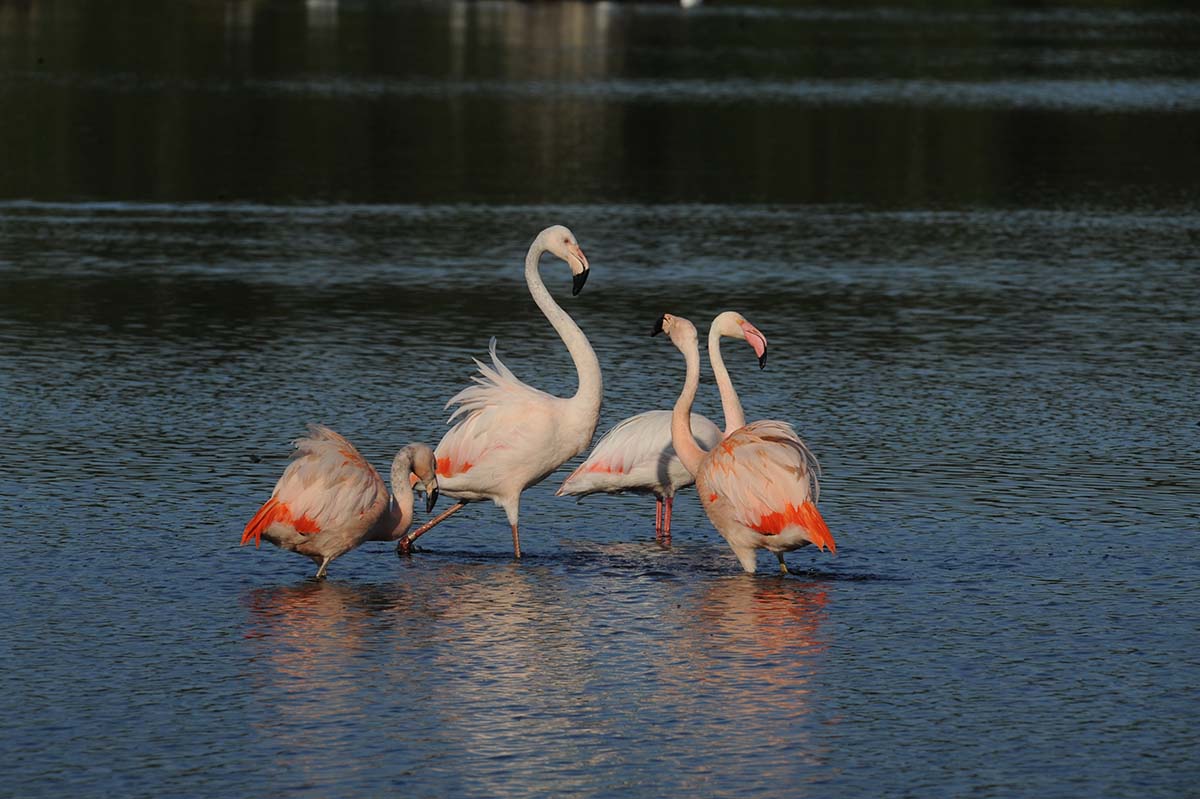
Why The Color Changes
Flamingos hatch covered in soft grey or whitish-grey down, not the pink feathers associated with adults. The change begins with diet and feather growth rather than a dye that appears all at once. Algae make carotenoids, natural yellow, orange, and red pigments; tiny crustaceans such as brine shrimp acquire those compounds by feeding on algae. A flamingo then ingests the pigments while filtering food from shallow water. Its body processes them and deposits related color compounds in growing feathers, skin, and parts of the bill.
A newly hatched chick is roughly the size of a tennis ball, and its straight bill looks unlike the curved bill of an adult. The chick also spends its first days on a mud nest mound before it begins moving farther with the group. Those details matter because a chick has a different diet and a different set of feathers from a mature bird. The grey down is a temporary covering, while pink flight and body feathers appear later through molt and growth.
Adult color is not identical across every flamingo. Species, food supply, age, health, and the stage of feather replacement all affect the final shade. Richer carotenoid intake can produce deeper pink, orange, or red tones, while a limited intake can leave a bird paler. Color therefore tells a story about food and feather timing, but it does not work as a simple age meter.
What Confuses Observers
Photographs often make the process look faster than it is. A close-up may show a grey chick beside a bright adult, leading viewers to imagine that the chick will turn pink within a few meals. In reality, the down is replaced gradually, and adult-looking plumage may take years to develop. A young bird can be healthy while still looking mostly grey.
Another error is treating pink as a pigment the bird manufactures from nothing. Flamingos cannot create the entire supply of dietary carotenoids internally. They must obtain pigment-bearing food, digest it, modify some compounds, and route the resulting molecules to tissues that are growing or being renewed. A bird in a habitat with different algae and crustaceans may show a different shade from a bird of the same species elsewhere.
People also confuse crop milk with ordinary mammal milk. Both male and female flamingos can feed a chick with a nutrient-rich secretion from the upper digestive tract. That food can carry carotenoid compounds, and producing it may temporarily drain color from a parent's plumage. A pale adult in a breeding colony is not automatically ill or starving; context, behavior, body condition, and veterinary records matter.
Finally, bill and leg color can change on a different schedule from feather color. In some chicks, the legs begin black, while American flamingo chicks can have pink legs; a chick's bill may start straight and later curve. These differences are useful clues, but they should be interpreted by species and age rather than used as a universal rule.
How To Read The Evidence
Start With The Chick Stage
Identify the bird's age stage before judging its color. A down-covered hatchling on a nest mound is expected to look grey or white-grey. A chick with emerging feathers may show uneven patches, darker juvenile down, or a mix of grey and pink. A bird in a crèche can be several weeks old while still looking unlike the adults around it. In a zoo, a dated hatch record and keeper notes are more reliable than a visitor's estimate from a photograph.
Observe posture, movement, appetite, and social behavior alongside plumage. Young flamingos commonly join crèches, walk and swim early, and continue receiving food from parents after leaving the nest. Color should be one observation among several. If a chick is weak, isolated, injured, or failing to eat, report it to wildlife staff rather than attempting to feed or handle it.
Trace The Food Chain
Ask what the bird eats and where that food gets its pigment. Microscopic algae are the starting point for many carotenoids in flamingo diets. Brine shrimp and other small aquatic animals can transfer those pigments to the bird. The flamingo's filter-feeding bill gathers food from water, mud, and suspended particles, so a lagoon's salinity, algae community, and invertebrate supply shape the available color compounds.
This food-chain view explains why a bird does not become pink simply by drinking colored water. The pigment must be in edible material and then pass through digestion. The bird's liver and other tissues process the compounds before they reach feathers and skin. If new feathers grow while dietary pigment is scarce, those feathers can be paler than feathers grown during a richer feeding period.
Compare Like With Like
Make comparisons within the same species, age class, season, and setting. American flamingos are known for strong orange-pink tones, while greater flamingo chicks can have black legs at hatching. A photo taken during breeding may show adults whose plumage is temporarily pale after feeding chicks. Another photo may show freshly grown feathers with a richer color. Light, camera settings, wet feathers, and distance can exaggerate these differences.
For a useful field note, record the date, location, estimated age, visible down or feathers, bill shape, leg color, behavior, and food setting. A one-line note such as “grey down, walking with crèche, adult feeding nearby, photographed in May” is more useful than “not pink yet.” This method separates what was observed from what was inferred.
Use Careful Expectations
In managed care, keepers formulate diets that meet nutritional needs and include suitable carotenoid sources. Do not copy a zoo diet for a wild bird or add color supplements to food without professional direction. The right question is whether the bird receives a balanced diet for its species and life stage, not whether its feathers reach a desired shade.
Expect several transitions rather than one dramatic event. A hatchling first develops stronger legs and feeding skills; later, down gives way to juvenile feathers, and still later molts replace those feathers. Adult pink or orange plumage is the visible result of repeated feather growth supported by diet. A practical timeline should therefore use “gradual development” unless a species account gives a more exact age range.
Two Realistic Scenarios
Imagine a school group visiting a wetland in early summer. The children see a grey chick near an adult and assume the chick is a different kind of bird. A guide checks the nest area, notes the chick's down, straight bill, and association with the adult flock, then explains the food chain. The group leaves with a testable observation: return later in the season and compare the same age class, not just any two flamingos.
In a second scenario, a zoo visitor sees an adult that looks nearly white beside several bright birds. The visitor worries that the pale bird is sick. A keeper explains that parents producing crop milk may temporarily lose some carotenoid color, while the chicks receive food and continue growing. The keeper also checks the bird's condition through routine records. The lesson is not that every pale flamingo is healthy, but that color alone cannot diagnose a problem.
Both cases show why context improves interpretation. The visible color is the endpoint of age, diet, feather replacement, breeding demands, and light. A good explanation connects those factors without claiming that one photograph reveals the whole process.
A Color Reading Checklist
Use this checklist when identifying a flamingo's stage or explaining its color change:
- Look for down, emerging feathers, or smooth adult plumage.
- Check the bill shape and leg color, while allowing for species differences.
- Note whether the bird is on a nest, in a crèche, or feeding independently.
- Record the habitat and likely food sources, especially algae and small crustaceans.
- Compare several birds photographed under similar light and at a similar age.
- Use keeper, field-guide, or wildlife-service records when health is the question.
The checklist prevents a common shortcut: treating “grey” and “pink” as two fixed categories. A bird may be grey-white, charcoal-grey, patchy, pale pink, salmon, orange-pink, or temporarily washed out. These descriptions become useful only when paired with age and behavior.
| Observation | Likely Meaning | What To Check | Limit |
|---|---|---|---|
| Grey down | Young chick | Bill, nest, and flock behavior | Shade does not give an exact age |
| Patchy pink | Feathers changing or growing | Diet and molt stage | Lighting can alter appearance |
| Pale adult | Diet, breeding, or feather timing | Condition and feeding history | Color is not a diagnosis |
Mistakes To Avoid
Do not state that every flamingo chick has exactly the same shade. Species vary, and descriptions such as white-grey, grey, and darker grey can all be accurate at different stages. Do not promise a fixed date when a particular chick will become pink unless a verified species account gives that schedule. Feather replacement and food access vary between birds.
Do not confuse a flamingo's natural diet with a color treatment. Carrots are a familiar example of a carotenoid-rich food, but a flamingo's diet is built around the foods its body and filtering behavior evolved to handle. A backyard observer should never offer food to a wild flamingo. Feeding can change behavior, create health risks, and draw birds into unsafe places.
Do not read a single pale feather as proof of poor nutrition. Feathers retain their structure after growth, so their color reflects the compounds available while they formed. A later molt can produce a different shade. The reverse mistake also occurs: a bright bird may look healthy in a photograph while hiding an unrelated injury or illness.
Do not repeat the claim that flamingos are born pink and fade grey. The usual sequence is grey down followed by juvenile and adult feathers that acquire pink or orange color through dietary carotenoids. Also avoid saying that brine shrimp alone create the color; algae are a key source, and the exact food mix depends on habitat and species.
FAQ
Why are flamingo chicks grey?
They hatch with soft grey or whitish-grey down, a temporary covering that grows before their adult feathers develop.
What makes adult flamingos pink?
Carotenoids from algae and small aquatic animals are processed by the bird and deposited in growing feathers and other tissues.
How long does pink color take?
The change is gradual and depends on species, diet, feather replacement, and age; adult plumage is not an overnight change.
Can a flamingo lose its pink color?
Yes. Limited dietary pigment, feather timing, and the demands of producing crop milk can leave an adult temporarily paler.
Are all flamingo species the same color?
No. Species differ in the shade of their feathers, legs, and bills, and individual color also varies with diet and molt.
Author's Insight
The most useful answer links color to development instead of treating it as decoration. Grey down marks an early life stage, while pink feathers record a history of food intake and feather growth. That connection also explains why color varies among species and why breeding adults may look pale for a time. For observers, behavior and age clues make a color judgment more reliable than a single vivid photograph.
Key Takeaways
Flamingos are born grey because hatchlings begin with down, not the mature feathers that display carotenoid color. As chicks eat and replace their early covering, pigments from algae and small crustaceans help create pink, orange, or red tones. The result depends on species, habitat, diet, and the timing of feather growth. Use color as one clue, then check the bird's age, behavior, bill, legs, and feeding context. That approach explains the change accurately while leaving room for the natural variation seen in real flocks.