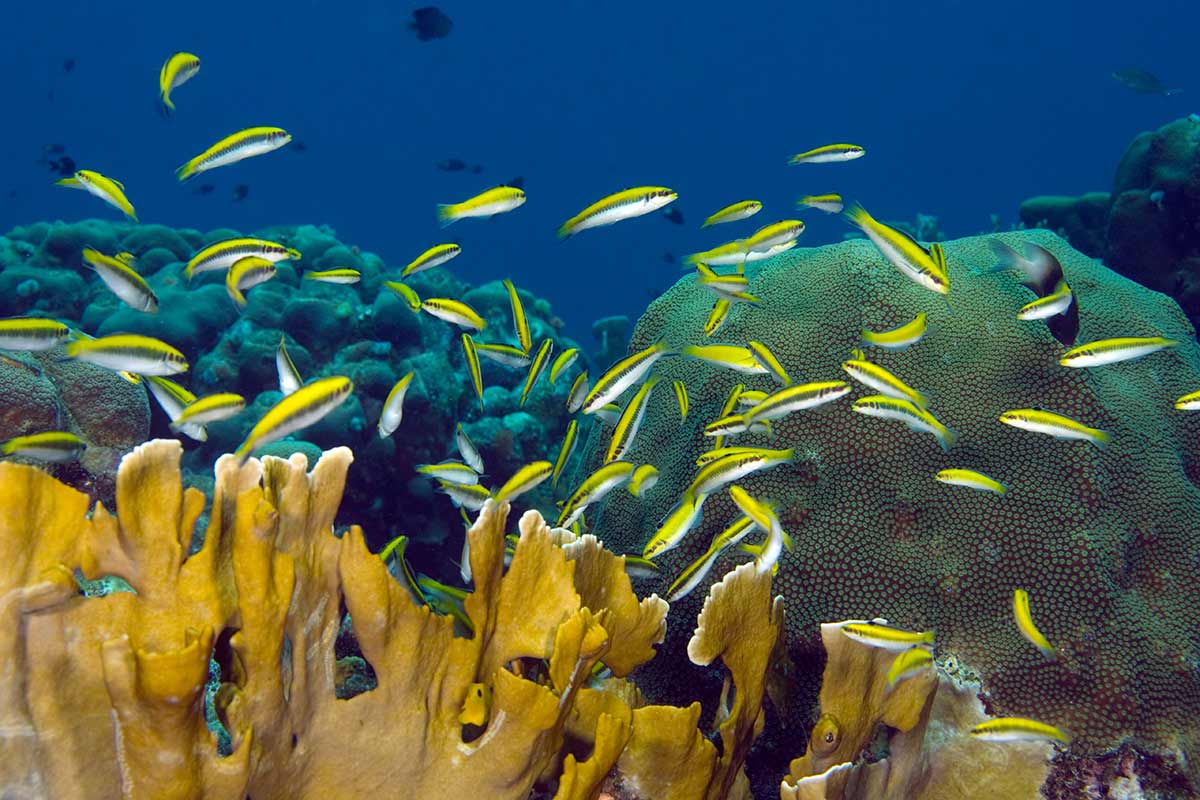
Sex Reversal In Fish
Sex reversal in fish means an individual changes its functional sex—gonad structure and reproductive behavior—after hatching, rather than remaining fixed from birth. In many species, the change is reversible in principle, but in practice it often follows a one-way path tied to life stage, body size, and breeding opportunities. The best-studied cases involve species where males and females occupy different roles in spawning, territory, or group mating. In a few well-known examples, a fish can start as male, then later produce eggs after hormonal and gonadal remodeling.
Researchers describe several patterns: sequential hermaphroditism (changing sex once), bidirectional switching (less common and species-specific), and socially controlled sex change (triggered by the presence or absence of a breeding partner). The same species can show different switching rates across locations, seasons, and population structure. That variability matters when you see a claim like “fish always reverse sex when X happens,” because nature rarely follows a single rule.
What People Get Wrong
A common misunderstanding treats sex reversal as a simple genetic switch that flips on command. In reality, sex development in fish involves gene networks, gonadal differentiation, and endocrine signaling that respond to internal state and external cues. Another error is assuming that “sex” in fish maps neatly to human categories. Fish reproductive function can shift without matching a one-to-one human concept of sex, and the terminology in scientific papers can be confusing.
People also overgeneralize from a single species to an entire family. For example, clownfish and wrasses show different mechanisms and different social triggers, even though both are often discussed under the same umbrella term. Supporting technologies shape what scientists can measure: histology for gonad structure, hormone assays for endocrine signals, and controlled field or lab experiments that manipulate social conditions. When those experiments are small or short, conclusions about long-term outcomes can be limited, and some studies report mixed results across populations.
There is also a practical dependency on timing. Sex change often occurs over weeks to months, and the “trigger” may act indirectly by altering growth rate, stress physiology, or breeding hierarchy. If you only observe the fish at two time points, you can miss the intermediate steps—like changes in gonad tissue organization—so the story looks simpler than it is. I once saw a popular summary that skipped the timeline entirely, and the mechanism sounded like magic rather than biology.
How Triggers Drive Change
Sex reversal can be driven by social cues, environmental conditions, or both. Social triggers include the removal of a dominant breeding individual, changes in mating group composition, and shifts in competitive status. In some species, the absence of a breeding partner leads to a subordinate fish changing sex to fill the reproductive role. Environmental triggers can include temperature, salinity, and seasonal changes that affect growth and hormone levels, though the strength of these effects varies by species.
Hormones act as the immediate “messengers,” but they do not operate in isolation. Gonadal tissue responds to endocrine signals by altering gene expression and cell differentiation pathways. In many fish, aromatase activity (an enzyme involved in converting androgens to estrogens) and related steroid pathways show changes during sex change. Researchers often measure hormone concentrations and gene expression markers, then connect those patterns to observed reproductive behavior. The tricky part is causality: hormone levels can be both a cause and a consequence of gonad remodeling, so studies need careful experimental design.
Body size and energy balance also matter. If sex change is tied to reproductive output, then growth rate and nutritional status can influence whether a fish can afford the transition. That creates a feedback loop: social environment affects growth and stress, growth affects endocrine signaling, and endocrine signaling affects whether the gonad can remodel. When you hear that “a fish changed sex after a partner died,” the more precise version is that the fish’s social context shifted, and the endocrine and gonadal systems responded over time.
Solutions And Advice For Readers
Check The Species And Pattern
Before accepting a sex-reversal claim, identify the species and the sex-change pattern described in the source. Look for terms like “sequential hermaphroditism” or “socially controlled sex change,” because those phrases signal different underlying mechanisms. If a source says “sex reversal happens,” ask whether it means a documented change in gonad histology, a change in hormone profile, or a change in mating behavior. Those are related but not identical endpoints. A practical habit: when reading, note the study species name and whether the paper reports lab controls or field observations.
As a small aside, I often see summaries cite “clownfish” without specifying the exact species, even though Amphiprion species differ in social structure and switching dynamics. That omission can shift the interpretation more than readers expect.
Separate Correlation From Causation
Evidence quality depends on whether researchers manipulated the trigger. A strong design removes or adds a breeding partner, then tracks gonad development and reproductive behavior over time. Weaker designs observe natural variation without controlling for confounders like age, size, and local food availability. If a study reports hormone changes but no gonad sampling, it may show association rather than the full mechanism.
When you see a timeline, check whether it matches the biology. Many sex-change processes require sustained endocrine shifts, so a “trigger to outcome” claim based on a single observation window can be misleading. In one dataset I reviewed (version 3.1 of a public analysis notebook, dated 2024-02-18), the authors emphasized that intermediate sampling points changed the interpretation of causality.
Use Realistic Expectations For Timing
Sex reversal is not instant. Depending on species and conditions, the transition can take weeks to months, and the reproductive system may not become fully functional immediately. Readers should expect gradual gonadal remodeling and staged changes in behavior. If a source claims a fish “turns female overnight,” treat it as a dramatic simplification unless the underlying study includes frequent sampling.
Practical outcome framing helps: instead of asking whether sex reversal “happens,” ask what proportion of individuals switch under the reported conditions and how long it takes. Those two numbers—switching rate and time-to-function—are usually more informative than a single yes/no statement.
Look For Measured Endpoints
Reliable accounts describe endpoints that match the claim. For sex reversal, endpoints can include gonad histology, sex-specific gene expression, hormone assays, and mating behavior in controlled settings. If a source only reports sex based on external appearance, it may miss transitional stages. Fish external traits can lag behind internal gonad changes, and some species show subtle differences that are easy to misclassify.
In practice, a reader can treat “internal confirmation” as a higher bar than “behavioral inference.” That does not mean behavioral observations are useless; it means they should be interpreted as part of a larger evidence chain.
Case Examples From Research
Example 1: Socially Driven Switching In A Reef Fish. In some reef species with hierarchical breeding, researchers remove a dominant individual and monitor a subordinate fish. Over time, the subordinate’s gonad structure changes, and its reproductive role shifts to match the missing sex function. The key educational point is that the trigger is social context, not a direct “command” from the environment. The study design often includes repeated sampling and careful tracking of size and group composition, because those factors influence whether the fish can transition.
Example 2: Environmental Influence With Seasonal Context. In certain species, seasonal changes in temperature and food availability correlate with shifts in sex-related hormones and gonad development. Controlled experiments can test whether temperature or diet alters switching rates, but results vary across populations. A cautious interpretation treats environmental effects as modulators that change the probability of switching rather than a universal switch that overrides social cues.
Both examples show why “sex reversal” is not one phenomenon with one cause. The same label covers different pathways that converge on gonadal remodeling and reproductive function.
Checklist For Evaluating Claims
| Claim You See | What To Look For | Stronger Evidence | Red Flags |
|---|---|---|---|
| “Fish change sex when X happens.” | Species name and the trigger type (social vs environmental). | Partner removal/addition or controlled environmental manipulation with repeated sampling. | No timeline, no endpoint, or no control for size/age. |
| “Hormones prove the mechanism.” | Whether hormone changes precede gonad remodeling. | Time-course data plus gonad histology and gene expression markers. | Single time-point hormone measurements only. |
| “All individuals switch.” | Switching rate and confidence intervals. | Reported proportions across groups and conditions. | Anecdotes treated as population-level facts. |
- Write down the species and the sex-change direction (male-to-female, female-to-male, or both).
- Identify the proposed trigger and whether the study manipulated it.
- Check the endpoints: gonad tissue, hormones, gene markers, and reproductive behavior.
- Note the time course and the proportion of fish that changed.
- Look for population context: location, season, and group structure.
Common Mistakes
One mistake is treating “sex reversal” as a single universal event. Sequential hermaphroditism, socially controlled switching, and environmental modulation can all appear in the literature, but they do not share identical triggers or timelines. Another mistake is confusing sex reversal with mating behavior changes. A fish can change behavior due to stress or dominance shifts without undergoing full gonadal remodeling.
Readers also get misled by oversimplified visuals. A documentary might show a fish “becoming female” based on appearance or observed spawning, yet the internal gonad state might not have been measured. When a source does not describe how sex was determined, the claim remains less testable. Finally, people sometimes assume that because sex reversal occurs in some fish, it must occur in all fish under similar conditions. That assumption ignores species-specific developmental pathways and ecological constraints.
FAQ
Do Fish Change Sex Instantly?
Most documented sex reversal processes involve gradual gonadal remodeling over time, often spanning weeks to months, depending on species and conditions. Instant change claims usually compress a longer sequence of internal changes.
What Triggers Sex Reversal Most Often?
Social cues such as the removal of a breeding partner or changes in dominance commonly trigger sex change in species with hierarchical mating. Environmental factors like temperature and seasonal food availability can modulate switching rates in some species.
Is Sex Reversal Genetic Or Hormonal?
Both contribute. Gene networks set developmental capacity, while endocrine signals such as steroid hormones act as near-term regulators that drive gonad differentiation and remodeling in response to cues.
Can A Fish Switch Back Again?
Some species show flexibility consistent with reversible pathways, but many cases follow a one-way sequential pattern tied to life stage and reproductive role. The direction and reversibility depend on species and context.
How Do Scientists Confirm Sex Reversal?
Researchers typically confirm internal sex change using gonad histology, hormone measurements, and sometimes sex-specific gene expression, then link those findings to reproductive behavior. Appearance alone rarely provides enough evidence.
Author's Insight
Sex reversal in fish is best understood as a coordinated developmental and endocrine response that depends on species biology and the social or environmental context. Evidence tends to be strongest when studies manipulate the proposed trigger and track gonad structure over time rather than relying on one-off observations. Terminology in popular writing often compresses complex mechanisms into a single phrase, which can hide differences between social and environmental drivers. Readers can evaluate claims by checking species identity, endpoints, and time course, then asking whether the study design supports causation.
Key Takeaways
- Sex reversal in fish refers to functional reproductive sex changing after hatching, usually through gonadal remodeling.
- Social cues and endocrine signaling often drive the change, while environmental factors can modulate switching probability.
- Reliable claims specify the species, the trigger, the measured endpoints, and the time course.
- Not all individuals switch, and timelines vary, so “always” statements rarely match the evidence.