How Face Memory Works
Crows can learn that a particular human is linked with danger, food, or harmless activity. In a landmark field study at the University of Washington, researchers captured seven wild American crows while wearing an unfamiliar caveman mask. Later, people wearing that mask were scolded more often than people wearing a neutral mask. The birds were not reacting to a face in isolation: they were linking a visible pattern with an event.
A 2010 study of wild American crows found that the birds recognized a threatening mask for at least 2.7 years. That result matters because the birds lived outdoors and encountered many people between tests. A separate brain-imaging study published in 2012 found different activity in several crow brain regions when birds saw familiar threatening and caring faces. The response included attention and fear-related areas, which fits a memory shaped by consequences.
“Remembering a face” is therefore a useful shorthand, not proof that a crow sees a human face exactly as a person does. A bird may combine facial features with head shape, posture, movement, voice, clothing, location, and the history attached to that person. The reliable finding is that crows can distinguish individual humans and act on that distinction.
Common Pain Points
People often mistake any crow alarm for proof that a bird has identified their face. A nest defender may react to proximity, movement, or the presence of a dog before an individual cue matters. A flock at a food source may also call at a newcomer without a long-term memory of that person. The reaction is real, but its cause needs testing rather than an instant story.
Another problem is treating seasonal defense as a permanent grudge. A resident who passes a nest each morning may experience repeated swoops for days, then see the behavior stop after the young leave. That pattern fits a nearby breeding attempt more closely than a timeless personal feud. A person who chases birds, handles a fledgling, or disturbs a feeding site can create a separate learned association, so the setting and recent event both matter.
Social learning creates a third source of confusion. Uninvolved crows may respond after observing alarm behavior from experienced birds, but researchers do not know whether the newcomers learn a face, a place, a posture, or a general warning. Calling this a detailed spoken description goes beyond the evidence. Readers also need to separate controlled mask experiments from household anecdotes, where distance, weather, clothing, route, and the number of birds may all change at once.
Researchers often use masks because a mask creates a repeatable visual stimulus. It lets them test the same apparent face while changing the surrounding context. That design does not show that a crow ignores every other cue. It shows that a stable face-like pattern can carry a learned association.
Bird vision differs from human vision, and the available studies do not identify a single “face area” that works like a human face-recognition module. Brain scans in the 2012 PNAS study showed activity across regions involved in visual discrimination, attention, emotion, and learning. Those results support distributed processing rather than a simple one-part explanation.
Context still matters. A person who approaches a nest, moves quickly, raises an arm, or appears beside a carcass may trigger a stronger response than the same person walking past a lawn. The cited mask experiments were not designed to settle how viewpoint, hats, hoods, sunglasses, or turned heads affect recognition. Those variables are plausible sources of uncertainty, not established reasons that a crow forgets a person.
That limitation helps explain mixed anecdotes. A crow may react to your coat because it predicts your route, not because it has forgotten your face. Another bird may watch quietly because it is not the bird that had the earlier encounter. Behavior is evidence of an association, not a window into the bird’s private picture of you.
Safer Ways To Respond
Change The Trigger
Start by identifying the event linked to the reaction. A nest near a doorway, a recently handled fledgling, a dog chasing birds, or repeated feeding can create a local pattern. Stop the provoking action, use a different route for a few weeks, and avoid approaching a nest. Distance breaks the repeated pairing between your presence and a stressful event.
Do not test the crow by walking closer or waving the suspected hat. That turns an observation into another learning trial. If work near a nest is unavoidable, use ordinary safety measures, keep the task brief, and ask a local wildlife authority about the species and nesting rules in your area.
Read The Warning
Scolding, repeated calls, head turns, and coordinated movement usually signal alertness or defense. A bird perched farther away and watching silently may be assessing risk rather than planning an attack. Dive-bombing is a defensive behavior that deserves more space, especially during the short period when young birds are on or near the ground.
Watch the whole group instead of one dramatic bird. If several crows change perches and call after you arrive, leave calmly. Children should not throw objects, chase birds, or handle a fallen fledgling unless a licensed rehabilitator directs them. The goal is to reduce pressure, not win a contest.
Remove Conflict Cues
Secure rubbish, compost, and pet food so that food does not draw birds into a doorway or busy path. Keep dogs on a lead near nests and carcasses. Cover open containers of water if birds repeatedly gather there and the location creates conflict. These changes address the setting rather than trying to alter a crow’s memory.
Feeding can make an individual bird approach people and can also attract more birds than a small space can support. If you choose to feed wildlife, check local rules and disease guidance, clean the area, and stop if aggressive crowding develops. A quiet yard is usually easier to manage than a predictable feeding station beside a door.
Use Calm Consistency
Move at a normal pace, keep your gaze relaxed, and give the flock a wide berth. Repeated neutral encounters may weaken a threat association, but no person can promise how quickly that will happen. Crows differ in age, experience, breeding status, and temperament. A few quiet weeks may help one bird while another remains wary.
Record dates, locations, weather, and the behavior you see if the pattern persists. A note such as “three birds called from the oak at 8:10 a.m.” is more useful than “the crows hate me.” The detail may reveal a nest, food source, or route that explains the reaction.
Two Realistic Scenarios
Consider an apartment resident who walks past a tree where crows are nesting. For ten days, the resident is dive-bombed near the entrance. The behavior stops after the resident takes a longer route until the young leave the area. This case does not show a permanent grudge; it fits seasonal nest defense and a repeated close approach.
Now consider a gardener who uses a loud tool near a crow’s feeding area. For several mornings, one flock calls from a fence when the gardener appears, even after the tool is stored. Moving the work time, covering food scraps, and staying away from the fence reduce the encounters. The birds may have linked a person, sound, place, and routine rather than relying on facial detail alone.
Both scenarios illustrate why a single anecdote cannot establish what a crow recognized. A controlled study changes one feature at a time and compares reactions across repeated trials. A household observation usually changes several features together. That does not make the observation useless; it means the conclusion should remain modest.
Evidence At A Glance
| Finding | What Was Tested | What It Suggests | Limit |
|---|---|---|---|
| Mask study | Wild American crows saw a capture mask again | A visual pattern can become a durable threat cue | A mask is not every human face |
| Field follow-up | Responses across as long as 2.7 years | Memory can persist through ordinary outdoor life | The study focused on threatening people |
| Brain imaging | Familiar threatening and caring faces | Visual recognition links with attention and emotion | Activity does not reveal a human-like inner image |
| Social learning | Naive birds observed alarm by experienced birds | Risk information can spread through a group | The exact message and route remain uncertain |
Use the table as a reading guide, not a ranking of crow intelligence. The strongest direct evidence concerns learned responses to repeated face-like cues. Claims that crows remember every person forever, identify a stranger from any angle, or pass a detailed portrait through a flock go beyond these experiments.
Common Interpretation Errors
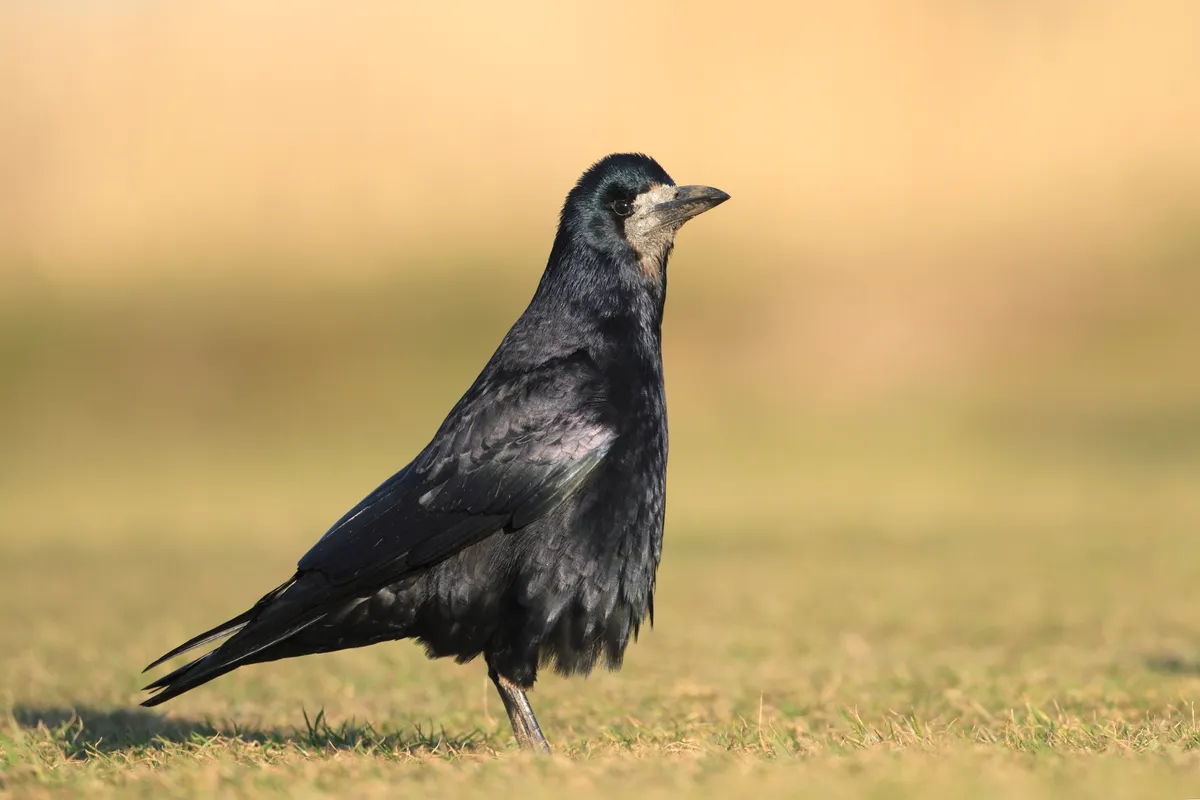
The first error is treating all black birds as interchangeable. American crows, carrion crows, rooks, ravens, and jungle crows differ in ecology and research history. A result from one species may suggest a question for another, but it does not automatically establish the same ability.
The second error is confusing recognition with revenge. A crow that calls at a person may be warning others, defending a nest, competing for food, or responding to movement. “It remembers me” is a reasonable hypothesis; “it is angry in the human sense” is an interpretation that the study cannot confirm.
The third error is assuming that clothing never matters or always matters. A face-like cue may be powerful, yet posture, color contrast, route, and voice can also accompany a person. Existing mask studies do not settle how a changed coat affects recognition. A response that survives a clothing change would be consistent with more than one cue, but still would not prove face-only recognition.
The fourth error is approaching a crow to gain its trust. Wild birds need room, and hand-feeding can create hazards for people and animals. Watch from a distance, keep food and waste controlled, and contact a rehabilitator for an injured bird rather than improvising care.
FAQ
How long can crows remember a face?
In a field study, wild American crows recognized a threatening mask for at least 2.7 years. That is a measured lower bound for that experiment, not a universal maximum.
Do crows recognize friendly people?
Research has tested caring or neutral human cues as well as threatening ones, but the clearest long-term field evidence concerns danger. A quiet response does not prove affection.
Can crows recognize a person in a crowd?
Studies show individual discrimination under controlled conditions, not reliable identification in every crowd. Distance, angle, clothing, lighting, and competing cues may change the result.
Do crows tell other crows about people?
Experienced birds can influence the reactions of nearby birds, and researchers have documented social learning around a threatening cue. The birds’ exact form of “description” remains unknown.
What should I do if crows dive-bomb me?
Increase distance, avoid the nesting area, protect children and pets, and take a different route for a short time. Do not chase, throw objects at, or handle the birds.
Author's Insight
The strongest lesson from crow research is not that birds carry a human-style grudge. It is that memory, attention, emotion, and social learning can work together in a wild animal’s daily decisions. A face-like cue becomes useful when it predicts a consequence, and the prediction can persist far beyond the original event. For people, the practical response is to change the consequence and the setting rather than challenge the bird. That approach respects both the evidence and the limits of what behavior can reveal.
Key Takeaways
Crows can distinguish individual humans and retain associations with threatening encounters for years. Their responses may draw on faces plus posture, voice, clothing, place, and past events. Flock members can acquire risk information by watching or hearing experienced birds, but researchers cannot yet translate that process into a detailed human-like portrait.
If a crow reacts to you, give it space and look for a nearby nest, food source, or repeated disturbance. Remove attractants, keep pets away, and avoid experiments that add stress. The result is safer coexistence and a more accurate reading of a remarkable bird’s behavior.