Why Defenses Get Strange
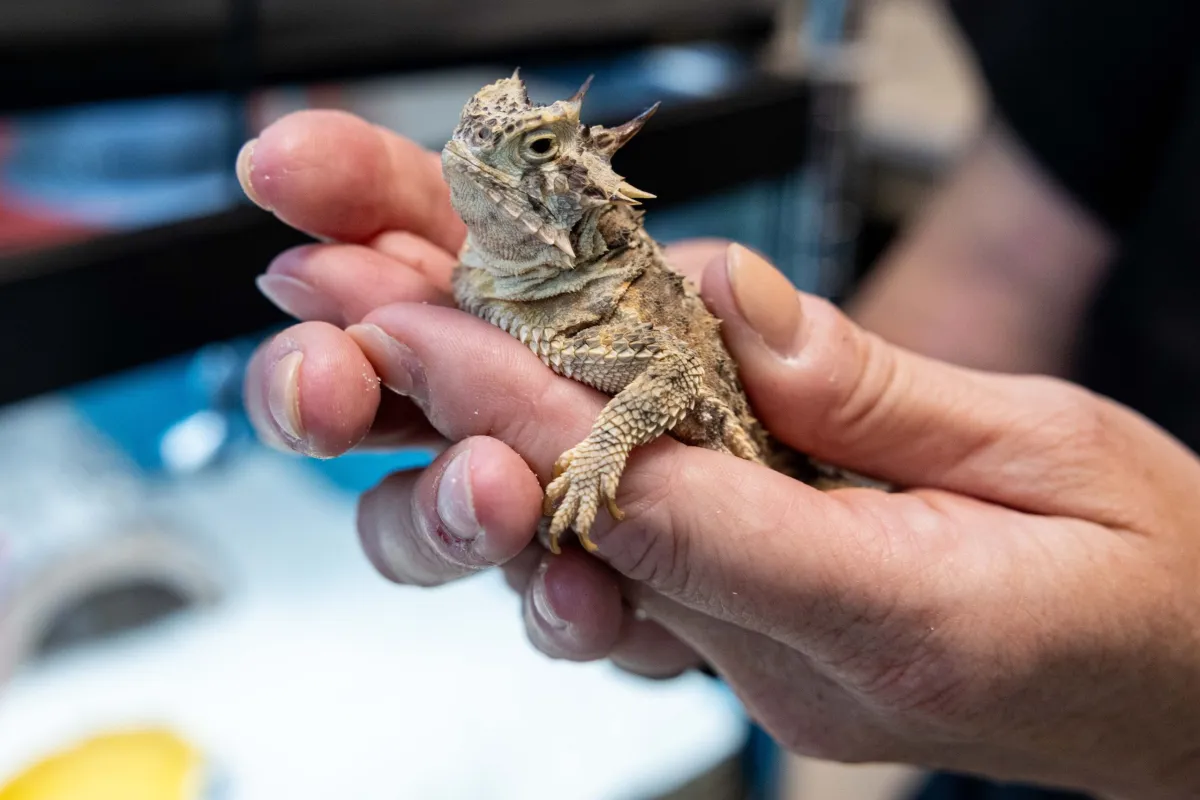
Predators create a rapid design problem: a small or slow animal must make an attack fail before the predator can finish it. Natural selection has produced camouflage, armor, toxins, startling displays, and escape behaviors, but some species combine these ideas in startling ways. The Texas horned lizard can eject blood from tissues around its eyes, while the Pacific hagfish releases a sugar-and-protein matrix that expands into sticky slime in seawater.
These responses are not magic tricks, and they are not equally useful against every enemy. Hagfish live on the seafloor from about 10 to 790 meters in the Monterey Bay Aquarium's account, and their slime is suited to a fish trying to bite or breathe through the water. A bombardier beetle mixes hydrogen peroxide and hydroquinone with enzymes, ejecting a hot spray through an abdominal nozzle. The oddity makes sense once the predator, habitat, and escape window are considered together.
Predator Problems
An animal must detect danger, select a response, and survive the response's cost. A chemical defense may require stored compounds and specialized chambers. A blood-squirting lizard spends body fluid and may hold the tactic back until camouflage, flattening, and horns have failed. A sea cucumber can expel sticky internal structures, but rebuilding them takes time and energy. The strangest defense is therefore often a last stage in a sequence rather than the first move.
Another problem is targeting. A defense that works on a fox may do little against a snake, bird, or crab. Research on Texas horned lizards found that experienced kit foxes often rejected them after encountering the blood defense, yet that result does not mean every predator reacts the same way. Claims that an animal is simply “unpalatable” can hide the more useful question: which predator is being deterred, at what distance, and under what conditions?
How Odd Defenses Work
Make Contact Unpleasant
Bombardier beetles store separate ingredients so their bodies do not react prematurely. When threatened, the compounds enter a reaction chamber with catalase and peroxidase. The resulting discharge is hot and forceful, and many bombardier beetles can aim it by rotating the end of the abdomen. The lesson is not that every beetle fires the same spray; species differ in chemistry, anatomy, and range. A predator that expects a soft-bodied insect instead meets heat, pressure, and an irritating compound.
Hagfish use a different physical principle. Their glands release mucus threads and mucin-like material into saltwater, where the mixture expands into a cloud that can clog a predator's gill surfaces. A teaspoon of secretion has been described by the Monterey Bay Aquarium as capable of forming a large volume of slime. Afterward, the hagfish ties its body into a knot and moves that knot along itself to scrape the slime away, a small mechanical detail that completes the defense cycle.
Turn The Body Into A Trap
Some defenses make swallowing or gripping difficult. A threatened horned lizard can flatten its body, puff up, and brace its head spines against a predator. If a canid persists, certain Phrynosoma species can send blood from the eye region toward the predator's mouth. A 2004 study of captive kit foxes recorded head shaking after blood-squirting trials and later rejection of horned lizards, suggesting that taste and learned avoidance matter alongside surprise.
Sea cucumbers take the idea further. Several species expel sticky Cuvierian tubules, while some sea apples can eviscerate by pushing internal organs out through the anus. This does not automatically kill the animal: regenerated structures can return. The response is costly and species-dependent, so a casual observer should not treat every white thread or expelled organ in a video as the same defense.
Use Slime As A Net
Velvet worms, or onychophorans, shoot protein-rich slime from paired oral papillae. The jets spread into an irregular web that entangles a predator or prey item. A 2015 mechanics study linked the web's rapid, oscillating pattern to an interaction between elastic tissue and unsteady fluid flow. For defense, the value is immediate immobilization: the attacker has to deal with a sticky obstacle while the soft-bodied worm moves away.
Slime also works as a barrier rather than a net. Parrotfish can form a mucus cocoon at night, which may mask chemical cues from hunting predators and reduce contact with parasitic isopods. The cocoon is a temporary covering, not armor. Its usefulness depends on the animal resting in the right place and spending energy to make the coating, so it fits a nocturnal refuge strategy rather than a chase.
Spend A Body Part To Escape
Autotomy is the deliberate release of a body part. Many lizards drop a tail that continues moving, redirecting a predator's attention while the lizard runs. Sea cucumbers show a more extreme version by sacrificing internal tissues, and some brittle stars can release an arm. Regeneration may restore the missing part, but regrowth can reduce performance for a period and consume nutrients that could have gone to growth or reproduction.
Thanatosis, or apparent death, follows a different route: the animal becomes motionless and hard to recognize as living prey. Opossums are famous for this response, but “playing dead” is not a conscious performance in the human sense. It is an involuntary state associated with extreme stress. A predator that prefers moving prey may lose interest, yet the tactic fails if the attacker eats carrion or waits nearby.
Two Realistic Field Scenarios
Imagine a naturalist watching a dog investigate a horned lizard on a dry trail. The lizard first freezes against mottled soil, then flattens its body. If the dog bites, the lizard may use its eye-region blood defense; the sensible observation is to record the sequence and back the dog away, not to handle the animal for a better demonstration. The case shows why a defense should be read as a ladder of escalating responses.
In a second scenario, a small aquarium displays a sea apple that has released sticky tubules after repeated disturbance. The animal may regenerate them, but that does not make touching or provoking it harmless. Staff would reduce handling and restore a quiet environment. The educational point is that recovery capacity is not an invitation to trigger a defense: a response can be survivable and still impose a biological cost.
Defense Types Compared
| Animal example | Main mechanism | Likely target | Main trade-off |
|---|---|---|---|
| Hagfish | Expanding sticky slime | Biting fish | Must clear its own body |
| Bombardier beetle | Hot chemical discharge | Close attackers | Needs stored chemicals and control |
| Horned lizard | Camouflage, spines, blood | Often canids | Blood loss and high stress |
| Sea cucumber | Sticky tubules or evisceration | Seafloor predators | Regrowth consumes resources |
Use the comparison as a reading checklist: identify the trigger, the intended predator, the physical mechanism, the escape opportunity, and the recovery cost. This avoids ranking defenses by shock value. A quiet mucus cocoon may be more effective in context than a dramatic spray, because it prevents detection before a chase begins.
Common Mistakes To Avoid
A frequent mistake is treating a vivid behavior as universal. “The animal shoots blood” may refer to several horned-lizard species, not every lizard, and the behavior may be reserved for a narrow class of predators. Another mistake is confusing defense with feeding. Hagfish slime protects against attack, but hagfish also use knots while feeding on carrion; the same movement can serve different tasks.
People also overlook the animal's first responses. Camouflage, distance, hiding, and freezing often come before a costly chemical or self-injury tactic. Finally, never provoke wildlife to capture a dramatic photograph. Handling can cause stress, interrupt recovery, or expose the person to toxins and defensive bites. Observe from a safe distance and follow local wildlife guidance.
FAQ
Which animal has the strangest defense?
There is no objective winner, but hagfish slime, horned-lizard blood ejection, and sea-cucumber evisceration stand out because each changes the predator's immediate physical problem.
Can bombardier beetles injure predators?
Their directed discharge is hot and irritating, and it can make a small attacker release the beetle, but effects vary by species, predator, distance, and spray placement.
Do sea cucumbers die after evisceration?
Some species can survive and regenerate expelled organs, yet regeneration takes resources and the response should not be treated as harmless or universal across sea cucumbers.
Why do horned lizards squirt blood?
The blood response can deter canid predators through surprise and an aversive taste, and it usually appears after less costly defenses such as camouflage or body inflation.
How should unusual defenses be studied?
Check the species, predator, habitat, trigger, observed sequence, and source of the claim; avoid handling or provoking animals because observation changes the behavior being studied.
Author's Insight
The strongest pattern across these examples is precision: strange defenses solve local problems rather than serving as general-purpose superpowers. Slime, heat, blood, and sacrificed tissue each work because a predator encounters a sudden cost that changes its decision. The trade-offs also matter as much as the spectacle, since storage, regeneration, fluid loss, and stress shape when the response appears. Reading the whole sequence makes animal behavior clearer and discourages sensational wildlife claims.
Key Takeaways
Nature's strangest defenses are practical responses shaped by predator behavior and habitat. Hagfish clog attacks with slime, beetles use controlled chemistry, horned lizards exploit canid aversion, and sea cucumbers can sacrifice tissue to create an escape chance. Their limits are part of the story: a defense may work only at close range, against a particular predator, or after cheaper options fail. Respectful observation reveals more than provocation ever could.