Water Freezes And Floats
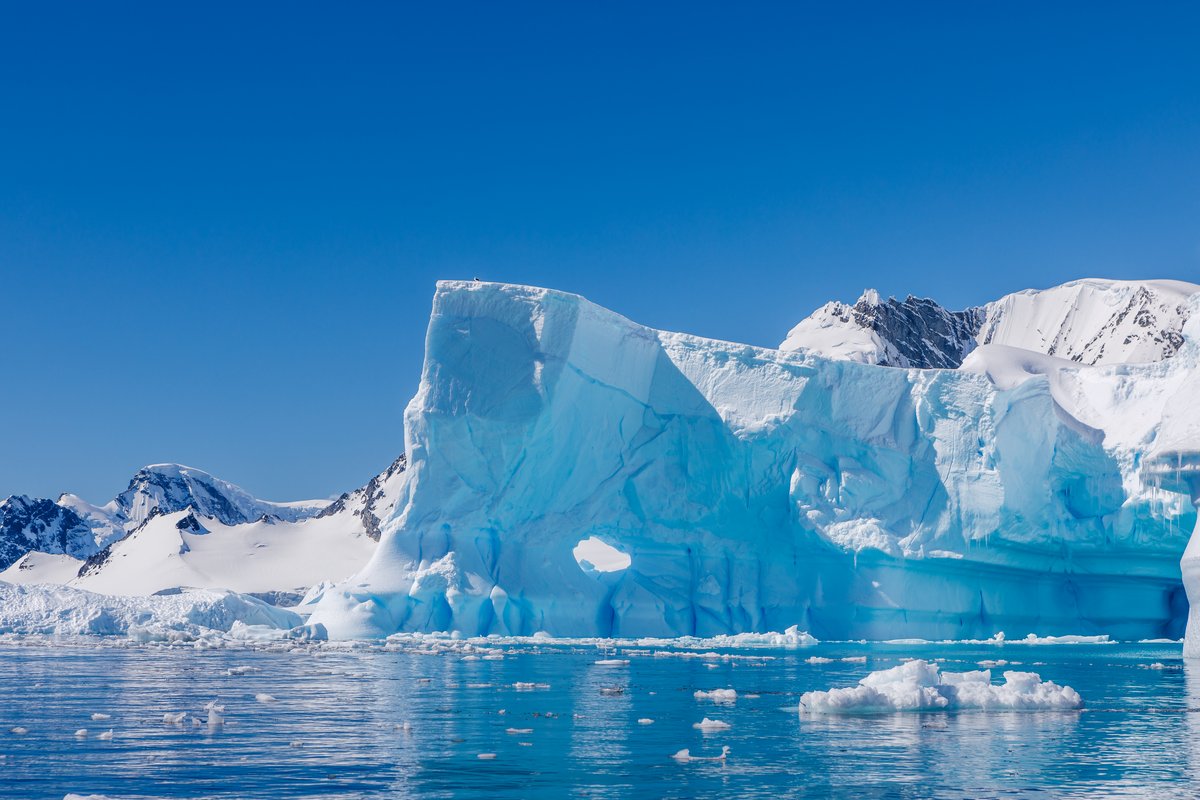
Ice floats because solid water is less dense than liquid water at the same temperature range. That density difference comes from how water molecules arrange themselves in a crystal lattice. In liquid water, molecules constantly break and reform hydrogen bonds, so the structure stays relatively compact. When water freezes, the hydrogen-bond network locks into an open framework that leaves more space between molecules.
Liquid water reaches its maximum density at about 4°C. Below that point, cooling reduces density, so the surface can freeze while deeper water stays liquid. This behavior helps many lakes avoid complete freezing, which would otherwise harm aquatic life. Ice also forms a low-density layer that insulates the water underneath, slowing heat loss.
How Freezing Changes Density
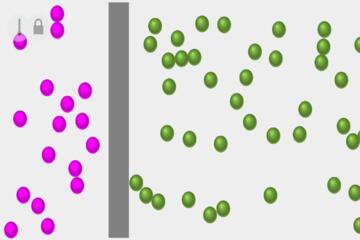
Water molecules have a bent shape and a strong polarity, so they attract each other through hydrogen bonds. In liquid water, hydrogen bonds form and break on short timescales, producing a fluctuating local structure. When temperature drops enough, the system can minimize free energy by adopting a repeating hydrogen-bond pattern. The resulting crystal lattice keeps molecules aligned in a way that increases average volume per molecule.
That open lattice is the core reason ice floats. The solid phase has more “empty space” in the sense of larger average intermolecular distances. When you compare mass per unit volume, ice ends up with lower density than liquid water near 0°C. This is why an ice cube rises and why ice can form a stable layer on top rather than mixing downward.
Most liquids pack tighter.
Comparisons help. Ethanol, for example, generally becomes denser as it freezes because its solid structure packs molecules more efficiently than the liquid. Many molten metals also contract on solidification, which is why casting designs account for shrinkage. Water’s exception comes from the specific directionality and geometry of hydrogen bonding, which favors an open network in the solid state.
Advice For Observing
Measure Density With Simple Tools
To observe the floating effect quantitatively, measure the mass and volume of an ice cube. Use a kitchen scale for mass and a graduated cylinder for volume by water displacement. Record the temperature of the surrounding water, then repeat with a second cube after it melts and refreezes. You should see that the ice occupies more volume per gram than the melted water at comparable conditions, which matches the density difference.
Use a graduated cylinder.
In practice, density measurement at home has uncertainty because temperature and air bubbles affect volume readings. Still, the qualitative result remains robust: ice floats because its average density is lower. If you want a tighter comparison, keep the water near 0°C and minimize evaporation during the measurement window.
Track Ice Thickness Over Time
Place a shallow container of water in a cold environment and mark the waterline before freezing. Check ice thickness at regular intervals using a ruler that can read millimeters. Plot thickness versus time to see how the growth rate slows after the surface freezes. The slowdown reflects reduced heat transfer through the insulating ice layer.
Check every 30 minutes.
Expect variability due to air temperature swings, wind, and container geometry. A small fan or airflow can increase heat loss and change the growth curve, which is why controlled conditions improve repeatability. A simple data log in a phone notes app can help you compare runs.
Compare Water With Another Liquid
For a safe classroom-style comparison, use a non-toxic household liquid such as isopropyl alcohol in a sealed container designed for freezing. Compare whether the solid phase floats or sinks relative to the liquid. Many liquids will behave differently from water, often sinking as they freeze because their solids are denser than their liquids.
Use sealed containers only.
Alcohol freezing points are lower than water, so you may need a colder setup. Also, alcohol can be flammable, so avoid open flames and keep ventilation. This comparison is educational, but it does not replace lab measurements because purity and dissolved water change freezing behavior.
Explain Lake Stratification Clearly
To connect the physics to real environments, model a lake as layers with different temperatures. When surface water cools below 4°C, it becomes less dense and stays near the top, slowing mixing. Once the surface reaches freezing, ice forms and blocks further heat loss. This sequence helps explain why many lakes retain liquid water under ice.
Think in layers, not mixing.
In practice, you can observe stratification using a long thermometer probe and measuring temperature at different depths. Record readings at the same times of day to reduce confusion from daily heating. If you see temperature increasing with depth up to a point and then decreasing, you are likely observing stratification rather than uniform cooling.
Understand Pressure Limits
When discussing why ice floats on Earth, specify the pressure range. At typical surface pressures, ice Ih is less dense than liquid water, so buoyancy holds. Under high pressure, other ice phases can form and may be denser than liquid water, which changes the buoyancy relationship. This matters for deep ice in glaciers and for water in high-pressure environments.
Pressure changes crystal forms.
If you are reading about ice phases, check the stated pressure and temperature conditions. Many misunderstandings come from comparing results from different phase diagrams without matching the conditions. A phase diagram from a physics reference can clarify which ice form applies.
Case Examples
Ice Cube In A Glass
An apartment resident notices an ice cube floating and melting slowly. They place a thermometer in the water and record the temperature drop over 20 minutes. The temperature approaches 0°C and then stays near that value while melting continues, because the melting process absorbs heat without raising temperature. The cube floats because its density is lower than the surrounding liquid water.
They repeat with a smaller cube.
The smaller cube melts faster because it has a higher surface-area-to-volume ratio, not because buoyancy changes. That observation helps separate “why it floats” from “why it melts at a certain rate.”
Lake Freeze-Over In Winter
A community volunteer measures water temperature in a pond during early winter. Surface water cools first, and readings show the surface approaching 4°C before it drops further. After the surface falls below 4°C, the colder water becomes less dense and stays near the top, limiting mixing. When the surface reaches 0°C, ice forms and the volunteer sees a stable ice layer with liquid water below.
They log depth every week.
The volunteer also notes that windier days change the temperature profile in the top layer, which affects how quickly the ice thickens. This scenario matches the density-driven stratification mechanism rather than a simple “everything freezes at once” expectation.
Density And Buoyancy Checklist
| Scenario | What Freezes | Density Relationship | What You Observe |
|---|---|---|---|
| Ice Ih near 1 atm | Water → ice | Ice density ≈ 0.917 g/cm³; liquid near 0°C ≈ 0.9998 g/cm³ | Ice floats and forms an insulating layer |
| Cooling from 10°C to 4°C | Liquid water only | Density increases as temperature approaches 4°C | Colder water sinks, mixing can occur |
| Cooling below 4°C | Liquid water only | Density decreases as temperature drops | Cold water stays near the surface |
| High pressure ice phases | Water → different ice forms | Some phases can be denser than liquid | Buoyancy can differ from surface conditions |
- Check the pressure and temperature range you are discussing.
- Use density values from a reference table for the relevant phase.
- Separate “floating” from “melting rate,” which depends on heat transfer.
- Account for stratification when interpreting lake or pond behavior.
- Remember that dissolved salts change freezing point and density slightly.
Common Mistakes
People sometimes claim that ice floats because it is “lighter” in a general sense. The correct framing is density, not mass, and the density comparison depends on temperature and phase. Another mistake is ignoring that water’s density peaks near 4°C, which changes how water behaves during cooling before freezing. If you skip that step, you misread why lakes stratify and why surface water can become less dense while still liquid.
Another error comes from mixing up buoyancy with insulation. Ice floating helps insulate the water below, but insulation also depends on ice thickness and air movement. A thin ice layer can still allow significant heat loss, so “floating” does not guarantee slow freezing in every situation.
Salt changes freezing behavior.
FAQ
Why does ice float on water?
Ice floats because its density near 0°C is lower than liquid water near the same temperature. The open hydrogen-bond crystal structure of ice increases volume per molecule compared with liquid water.
Does water always expand when it freezes?
Water expands when it freezes under typical Earth surface conditions, which is why ice takes up more volume than the original liquid. Under different pressures, water can form other ice phases with different densities.
Why do lakes not freeze solid?
Water’s density peaks near 4°C, so cooling below that point makes surface water less dense and it stays near the top. When the surface reaches 0°C, ice forms and insulates the liquid below, slowing further freezing.
Is the floating effect the same for all ice?
No. Ice has multiple crystalline forms, and some high-pressure forms can be denser than liquid water. Surface conditions mainly produce ice Ih, which floats.
How can I observe the effect at home?
Place ice cubes in water and measure temperature and melting behavior. For a simple quantitative check, measure ice mass and volume by displacement and compare with melted water volume under similar conditions.
Author's Insight
The floating of ice is a molecular-structure problem, not a vague “freezing rule.” Water’s hydrogen-bond network favors an open lattice in the solid phase, which lowers density relative to liquid water near 0°C. The density maximum at about 4°C explains why cooling creates stable layering in many lakes before ice forms. If you want to teach or test the idea, separate density from heat transfer so you do not confuse buoyancy with melting speed.
Small measurement details matter.
Home observations can show the effect clearly, but they rarely match lab precision because temperature gradients, dissolved impurities, and air bubbles affect readings. For deeper study, compare phase diagrams and density tables for ice Ih versus other ice phases under different pressures.
Key Takeaways
Ice floats because solid water has lower density than liquid water near 0°C, driven by an open hydrogen-bond crystal structure. Water’s density peaks near 4°C, which shapes how lakes cool and why ice forms at the surface first. Buoyancy and insulation work together, but melting rate depends on heat transfer and ice thickness.
Next steps: measure temperature and ice thickness in a controlled container, or compare water with another liquid to see how freezing behavior differs. If you are dealing with freezing pipes, focus on physical winterization and safe thawing practices rather than relying on buoyancy. Seek professional advice for plumbing issues that involve burst pipes or electrical heating systems.