Why Some Metals Melt
A metal melting in a hand is not breaking a special rule. It has a melting point close to the hand's surface temperature, so heat flows from warm skin into the cooler solid. Gallium is the familiar example: NIST reports 302.92 K, about 29.77 °C, while PubChem lists about 29.76 °C. A person's palm can sit near that range, although room temperature, circulation, contact area, and the sample's starting temperature decide how quickly it changes.
Pure gallium is solid below its melting point and liquid above it. The transition does not mean the metal vanishes; its atoms gain enough thermal energy to leave the orderly crystal arrangement and move through a liquid structure. Gallium also freezes below its melting point surprisingly easily because it can supercool, meaning a liquid may remain liquid after cooling past the usual solidification temperature until a crystal nucleus forms.
Two other elemental metals sit near room temperature. PubChem lists cesium at about 28.5 °C, while a USGS profile gives rubidium a melting point of 39.3 °C. Those figures explain why the title sounds plausible, but they do not make all three metals suitable hand curiosities. Cesium and rubidium are highly reactive alkali metals; gallium is the practical classroom comparison, yet it still deserves chemical-hygiene precautions.
The effect depends on heat transfer rather than hand pressure. Skin warms the contact surface, the solid absorbs energy, and a thin liquid layer may form first. A large lump changes more slowly than a thin bead because more mass must be warmed. A cold sample can feel solid for a long time, while a small piece already near 30 °C may liquefy almost at once.
What Makes The Effect Tricky
The phrase “melt in your hand” hides several variables. Hand temperature is not a fixed 37 °C at the skin; fingers may be much cooler in a cold room, and a metal held loosely receives less heat than one pressed against a warm palm. Airflow, gloves, moisture, and the container also affect the result. A demonstration that works in July may fail in a cool laboratory.
Purity creates another source of confusion. A trace impurity or a deliberate alloy can shift a melting interval, so a sample sold as gallium may soften over a range rather than at one exact temperature. The shape matters too. A slender casting has a high surface-area-to-mass ratio and warms quickly; a thick ingot can remain solid in the center while its surface turns liquid.
People also confuse melting with dissolving or corrosion. Gallium can wet and damage aluminum, so a liquid-looking mark on an aluminum object may involve a material reaction, not just a phase change. Cesium and rubidium present a separate danger: contact with water can release heat and hydrogen, with ignition or explosion possible. A low melting point says little about toxicity, reactivity, or suitable storage.
Finally, the hand is a poor measuring instrument. It can signal that a sample is near body temperature, but it cannot establish a calibrated melting point. A temperature-controlled bath, a clean vessel, and a suitable thermometer are better tools for a repeatable observation. Do not heat an unknown metal to chase the effect.
How To Study The Melting
Start With The Material
Identify the element, grade, and supplier before handling a low-melting sample. Read the safety data sheet and check the container label for alloy ingredients, hazard statements, and storage instructions. For a teaching demonstration, a small, sealed gallium sample with documented composition is a more defensible choice than an unlabeled metallic bead. Record the stated melting point and treat it as a range if the material is an alloy.
This step works because chemistry controls both heat and hazard. Gallium's 29.76 °C reference value applies to high-purity material under defined conditions; a commercial alloy may behave differently. A note in the lab book such as “sample received 12 May, labeled 99.99% Ga” makes later observations easier to interpret. Never identify a silvery metal by appearance alone.
Control The Temperature
Warm the sample gradually with a controlled water bath or a validated heating block, keeping the container closed when the safety guidance calls for it. A thermometer with resolution near 0.1 °C can show whether the material is approaching its transition, while a simple room thermometer explains why a demonstration varies between locations. Avoid open flames and improvised microwave heating.
Use a small mass and note the starting temperature, bath temperature, and time. If a 5-gram piece begins at 20 °C, it must absorb much more heat than a 1-gram piece beginning at 28 °C. The exact timing depends on vessel material and contact, so timing is an observation rather than a property of the element. A version number such as ASTM E794-06 can appear in old laboratory references, but a current local procedure should govern the work.
Protect People And Surfaces
Use eye protection, disposable tools suited to the material, and a tray that can contain a spill. Keep gallium away from aluminum items, jewelry, food-contact surfaces, drains, and fabrics. Wash hands after removing gloves, and collect residues as chemical waste according to local rules. Do not put the metal directly on skin merely to make a photograph.
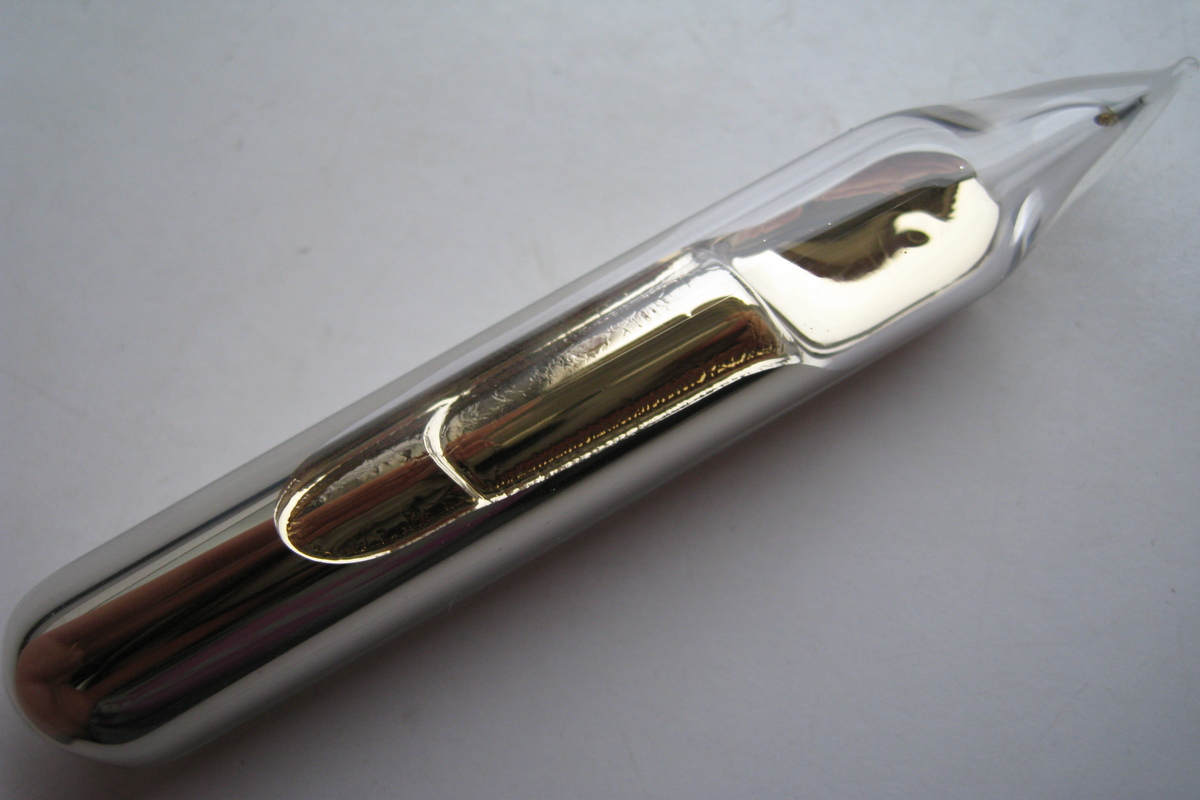
These controls address two different problems: exposure and cleanup. A low-temperature liquid can still contaminate a surface, and gallium's interaction with aluminum can weaken an object that appears intact. If a sample contacts skin or eyes, follow the product safety sheet and seek professional medical or poison-control advice; do not rely on a casual internet remedy. A sealed display vial gives viewers the visual lesson without creating a spill.
Interpret The Observation
Describe what actually happened: “the edge became shiny after warming” is better than “the metal melted instantly.” Watch for a solid-liquid boundary, changes in shape, and refreezing after the container cools. Compare a thin piece with a larger piece only if both have the same composition and clean surfaces. Photographing the sample beside a thermometer adds context, but the picture does not replace a measurement.
Explain uncertainty in the result. A hand may warm a surface above 29.76 °C while the interior stays cooler, so partial melting is normal. A liquid can also cling to a solid because surface tension and wetting hold it in place. The observation supports a heat-transfer explanation, not a claim that every room-temperature metal behaves alike.
Two Realistic Scenarios
In one educational workshop, a learner receives a sealed gallium vial kept at 18 °C. After several minutes between warm fingers, the surface becomes reflective and the sample slumps. The instructor places the vial on a cool bench, where the gallium thickens and later forms a solid mass. The lesson focuses on the 29.76 °C transition, the effect of sample size, and the need to keep the metal away from aluminum tools.
In a second scenario, a collector reads that rubidium melts at 39.3 °C and considers opening a sample at home. The safer conclusion is to stop. Rubidium reacts violently with water and can ignite in air, so a melting point near body temperature does not turn it into a hand-held novelty. The relevant decision is driven by reactivity and storage requirements, not by how dramatic the phase change might look.
Metal Comparison Checklist
| Metal | Approximate melting point | Main reason it matters | Practical decision |
|---|---|---|---|
| Gallium | 29.76 °C | Near hand temperature; may supercool | Use a labeled, contained sample and avoid aluminum |
| Cesium | About 28.5 °C | Very low transition temperature | Do not handle casually; alkali-metal hazards dominate |
| Rubidium | About 39.3 °C | Melts above ordinary skin temperature | Treat as highly reactive; use trained facilities only |
Use this comparison as a screening tool, not a handling permit. First ask what the material is and how it reacts with air, water, and nearby surfaces. Next ask whether its melting point is a sharp value for a pure element or a range for an alloy. Then check the container, protective equipment, waste route, and emergency instructions. The number in the second column explains the spectacle; the last column controls the decision.
Common Handling Mistakes
One mistake is placing gallium on aluminum foil, a soda can, or an aluminum spoon. The liquid can attack the metal and leave a weakened object that fails later. Use a compatible container named in the safety guidance instead. Another mistake is assuming “low toxicity” means “safe to touch.” Exposure data can be limited, and commercial samples may contain other substances.
A third mistake is sealing a sample while it is warm without checking expansion, then opening it over a desk. Work with the supplied container and follow its storage directions. Do not pour residues into a sink, mix them with household chemicals, or wipe them into ordinary trash. Label temporary containers with the identity and date.
People also overstate the demonstration by saying that gallium melts at exactly body temperature. The reference point is about 29.77 °C according to NIST, while PubChem lists about 29.76 °C; neither is a universal hand temperature, and supercooling can delay freezing. Say what the sample did under the stated conditions. That language keeps a neat visual effect tied to a sound physical explanation.
FAQ
Which metal most often melts in a hand?
Gallium is the usual demonstration because its melting point is about 29.76 °C and its handling risks are more manageable than those of reactive alkali metals.
Why does gallium melt near room temperature?
Its crystal structure and metallic bonding produce a relatively low solid-to-liquid transition compared with many familiar metals, placing the transition close to warm-room and skin temperatures.
Can I safely hold liquid gallium?
Direct skin contact is a poor practice because contamination, irritation, impurities, and cleanup are possible; use a sealed or professionally supervised demonstration instead.
Why are cesium and rubidium not hand experiments?
Both are reactive alkali metals, and rubidium can react violently with water while cesium presents similar serious air and moisture hazards despite its low melting point.
Does every gallium sample melt at 29.76 °C?
That value describes high-purity gallium under defined conditions; alloys, impurities, pressure, sample history, and measurement method can shift or broaden the observed transition.
Author's Insight
The striking part of this subject is not that a hand defeats a metal, but that phase changes depend on a boundary between two temperatures. Gallium makes that boundary visible because its melting point is about 29.76 °C. The comparison with cesium and rubidium adds a needed lesson: a physical property can be interesting while the substance remains unsuitable for casual contact. Good demonstrations pair a measured number with a controlled sample, a compatible surface, and a clear account of uncertainty.
Key Takeaways
Metals can melt in a hand when their melting point lies near the temperature of the warmed contact surface. Gallium is the clearest example, at roughly 29.76 °C, while cesium and rubidium show why low melting points do not define safety. Sample purity, size, starting temperature, and heat flow shape the visible result. Study these materials in labeled containers, keep gallium away from aluminum, and leave reactive alkali metals to trained laboratories. The most reliable explanation joins thermodynamics with careful chemical handling.